• Skip to primary navigation
  • Skip to main content
  • QUICK LINKS
    • CONTACT US
    • CONNECT
      WITH US
    • FACULTY APPLICATION
    • PUBLICATIONS
    • PRESS KIT
    • CAREERS
  • About
    • Mission & Values
    • Staff & Board
    • Impact
    • Accreditation & Institutional Research
    • Careers
  • Academics
    • Admissions
    • AA Degree
    • College Prep
    • Faculty
    • Apply To Teach
  • Students & Alumni
    • Students
    • Alumni
    • OpenLine Literary Journal
  • Resources
    • Practitioner Support
    • Resources for Incarcerated Students
    • Research on Prison Higher Education
  • News
    • Top MTC Stories
    • Recent Press
    • From the President
    • Commencement
    • 2026 Gala
  • Give to MTC
    • Donate
    • Shop

Mount Tamalpais College

Campus & Community

David Cowan on Reentry Support During COVID-19

May 31, 2020 by Mt. Tam College

Since returning home from San Quentin eight years ago, Prison University Project’s Director of Operations and Director of Bonafide David Cowan has been committed to fostering opportunities for formerly incarcerated people and has worked to ensure that people affected by incarceration have the material, emotional, and advocacy support they need to both integrate into society and build healthy, productive lives going forward. We spoke to David about Bonafide and how his reentry work has been affected by the COVID-19 crisis. David was honored last year by UnCommon Law at its UnCommon Heroes event.

What does Bonafide do to build social networks?

Bonafide builds social networks mostly by supporting the natural network that exists between people who have been incarcerated for long terms, “lifers” in particular. We make sure that as people are released they know that they have a community to turn to for any type of support. We also try to inject structure, funding, and facilitation into this community.

What drives your work?

There are many drivers for the work but a couple of major ones. I’m very uncomfortable with people being completely lost in the world when they are suddenly released after decades of incarceration. They are at such a huge disadvantage when it even comes to functioning in a modern society. I want to reduce the trauma that comes with that situation. Another driver for this work is that when I was incarcerated and thrust into an environment that I was unfamiliar with, the lifers helped me, encouraged me, and taught me. I spent nearly half of my life with them. Now I get the chance to return the favor.

How has your own experience of reentry informed your current work?

While I was reentering, I had the benefit of a super support system. I had a network of people that I could turn to that were available to teach me everything from how to use the internet to how to use the bike routes. I want everyone to have the same kind of support that I did. I’m saddened to think of what it is like to reenter the community without such support.

What are some misconceptions people have about reentry? What should the public know about people returning home from prison?

I used to think that the biggest misconception about reentry is that everyone coming home is a monster, but I now think that is more of a “war on crime” era misconception. Now I think that the biggest misconception is that the greatest need for people coming home is to learn how to write a resume. Although that and all of the other functional skills are necessary, I’ve learned that they kind of pale in comparison to the need for a returning person to feel supported and emotionally connected to the community. A network of people who care goes a long way to make people feel less out of place.

What challenges are you facing with reentry support right now? How has COVID-19 impacted your work and the reentry experience?

I think that it has been difficult for many of the Californian counties as well as the state to make complete adjustments to support people returning from incarceration during this crisis. However, many community organizations have come to help and depend on each other in ways that they hadn’t before COVID-19. For example, a person leaving incarceration and getting to a destination is no longer just a matter of finding transportation, but now is also a matter of doing it without contracting or spreading the virus. So organizations have been coordinating and sharing supplies to make that happen in many cases. The virus has also limited the in-person time that we spend with people. For now, we don’t run the technology workshops and teaching people to use their phones and to do things online has been a difficult remote task but we’re getting better. 

With so many businesses shuttered, have you found returning citizens struggling to find or keep a job?

Both fortunately and unfortunately most of the types of places that hire formerly incarcerated right away are low-paying “essential” services so many people in that position still have jobs. Though there are some that have lost their jobs too. The biggest barrier to looking for employment at this time has been the inability to get identification cards, which are necessary to be hired because the DMV has been closed.

With the world now essentially living online, how are you helping people with little or no experience with technology adapt?

Our technology workshops have been canceled until it is safe to gather again. Now we help people remotely. Sometimes that means getting on the computer while the person you’re helping is on the phone and being their fingers for them as we fill out forms or other things. For people who have computers, we’ve been sharing screens so that we can walk them through whatever they are doing. We’ve also started installing screen sharing apps to people’s phones so that we can remotely help them learn how to use it.

Have you been able to adapt to the conditions? What are your workaround solutions?

When it comes to meeting people at the gate, our adjustments have been to make sure that their backpacks also include hand sanitizer and masks. Our drivers wear masks and have sanitation supplies as well. We stopped going into diners for breakfast but instead go to places that will bring the food out to us. We also paused shopping for now.

What other organizations or service providers do you work with?

One of the bright spots to come out of the pandemic is that we’ve worked more closely with organizations that we only occasionally worked with in the past such as the California Reentry Program, the Insight Garden Program, the Anti-recidivism Coalition, Project Rebound, and a handful of others.

Are there any resource guides or websites you’d recommend for people who are returning home?

San Francisco has a great resource guide that I’d recommend to anyone paroling to the county. Many reentry programs have their own reentry guides. Another good one is from Root and Rebound.

How can people support Bonafide? How can they support reentry work broadly?

Bonafide could always use financial support. We’ve started paying our welcome home drivers. We could also use people with good practical experience using Android phones and have a good knowledge of how private and public systems function like banking, looking for housing, paying for things online, how to use email, etc. I think that an easy way to support reentry work more broadly is get to know people who are trying to reintegrate from incarceration. They are just trying to get jobs but they are trying to normalize their lives and that really happens when we are a part of a community.

Please note that the Prison University Project became Mount Tamalpais College in September 2020.

Filed Under: Campus & Community, COVID-19, Current Affairs, Partnerships, People

Featured Winter Events: Open Mic, Ethics Bowl, and Book Club Discussions

February 27, 2020 by Mt. Tam College

Over the past few months, the Prison University Project hosted a number of extracurricular events for students to connect and engage with outside guests.

  • On December 27, we celebrated students’ creative expression and talent with our annual Open Mic event. Students shared poetry, dance, short stories, stand up comedy, and music.
  • On January 16, students and outside guests discussed Ta-Nehisi Coates’s The Water Dancer, a magical realist take on slavery and the Underground Railroad, as part of a series of book discussions the Prison University Project hosts to facilitate connections between students in the College Program and free people.
  • On February 14, a team of students from the College Program at San Quentin faced off against a team from UC Santa Cruz in our third annual Ethics Bowl competition. Over the course of two rounds, both teams applied principles from moral philosophy to the issues of student loan forgiveness and reproduction in the era of climate change.
  • On February 21, author Daniel Handler (aka Lemony Snicket) visited San Quentin for a short reading, question and answer session, and discussion based on his bestselling novel Adverbs. Students appreciated the opportunity to learn about Daniel’s inspiration for the book, his writing process, and his advice for pursuing the creative arts.

Please note that the Prison University Project became Mount Tamalpais College in September 2020.

Filed Under: Campus & Community, Campus Events, Student Life

Board Member Spotlight: Sia Henry

February 16, 2020 by Mt. Tam College

Sia Henry, Prison University Project board member and Senior Program Associate at Impact Justice reflects on her experience teaching and tutoring at San Quentin.

When I tell people I volunteer in San Quentin the usual reactions are: “that’s fascinating, what’s it like going into a prison?”; “It’s great that you’re doing that”; and, my favorite, “do you ever get scared?”

The overall sense seems to be that I am a “good person” for going into a “dangerous” place to “help” “dangerous” people. I understand where this sentiment comes from, after all, few people have been inside a prison unless they themselves have been incarcerated. Still, however, I would love nothing more than to change the woefully flawed yet seemingly ingrained assumption that incarcerated people are “those” people on the other side of the wall. They are somehow different simply because they have been found guilty of behavior that has been deemed a crime in the eyes of the law.

The reality is that “those” people on the other side of prison walls are no different than the ones on our side. Between teaching in classrooms and tutoring in study hall, I’ve met published authors, poets, carpenters, entrepreneurs, surfers, fishermen, journalists, actors, musicians, lawyers, social justice activists, budding horticulturists, dancers, financial investors, playwrights, historians, loving sons, committed fathers, first-generation immigrants, indigenous people, bilingual scholars, young boisterous dreamers, and wise pensive elders.

So, “what’s it like going into San Quentin?” For me, it’s like going to Thanksgiving with my large Caribbean family. I’m filled with joy as I greet people during my walk to the education building. Someone rushes over to show off photos from a recent visit with a now adult child they had not seen in over a decade. I run into a student I taught during a previous semester and we chat briefly about a new assignment he’s working on. As I make my way into study hall, students are having lively debates about politics, music, and even Shakespeare. Two men approach me about helping them with a math problem. Just as I insist that math is at the top of the list of things I simply cannot help them with, another student chimes in, asks to see what they are working on, and spends the next fifteen minutes talking through the equation with them.

Meanwhile, someone is translating the original Hebrew and Greek versions of the Bible into English and explains he’s getting ready to start on the Latin text. People exchange words of encouragement as they commiserate together over their thesis statements. As I sit with one student who’s struggling to develop an outline for a research paper writing class, another incarcerated person, who already passed that course, joins us to help brainstorm ideas. A young man, probably in his early 20s, wanders in to ask how he can enroll in the college program and, before I answer, a student jumps in to offer an explanation. Later, a Prison University Project graduate, who recently had his sentence commuted by the governor of California and is now serving as a teaching assistant for a pre-college English course, stops by to explain that he developed a handout to guide other incarcerated people through the process of applying for commutation.

Each evening the line separating volunteers and students is blurred and all that is left is a singular noise, the collective sound of people picking each other’s brains, searching for meaning, and finding it together. It’s easy to get lost in the beautiful chaos of it all. Before I know it I look up and it’s 8:01 pm. The building is suddenly quiet and there are only a few students who have lagged behind and are now packing up their books to return to their housing units.

I always feel strange leaving prison after an evening inside. I trace my steps back past concrete walls with thick metal doors, past metal detectors and correctional officers, then beyond gates and barbed wire fences. Walking back outside into the moonlight, back to my car and on with my life in the “free world,” it’s in that moment that I feel how fortunate I am. Fortunate for having both parents in my life that have always supported me, fortunate for my upbringing, fortunate for my academic opportunities. Most importantly, it is in that moment that I feel fortunate to be able to walk away. Our students, and the thousands like them, don’t share that luxury. Even the ones who will one day be released will have a criminal record that will follow them to every job interview, housing application, and attempt at upward mobility. What’s more is we all suffer because we as a society have chosen to deprive ourselves of the brilliance that is each and every person behind those walls.

I have come to understand that “no one is free until we are all free.” (Dr. Martin Luther King, Jr.) I therefore celebrate our students’ triumphs as if they were my own because I believe their accomplishments and liberation is ultimately and intricately entwined with my own—with all of ours.

Please note that the Prison University Project became Mount Tamalpais College in September 2020.

Filed Under: Campus & Community, People

Former Student Jesse Vasquez’s Reentry Journey

January 16, 2020 by Mt. Tam College

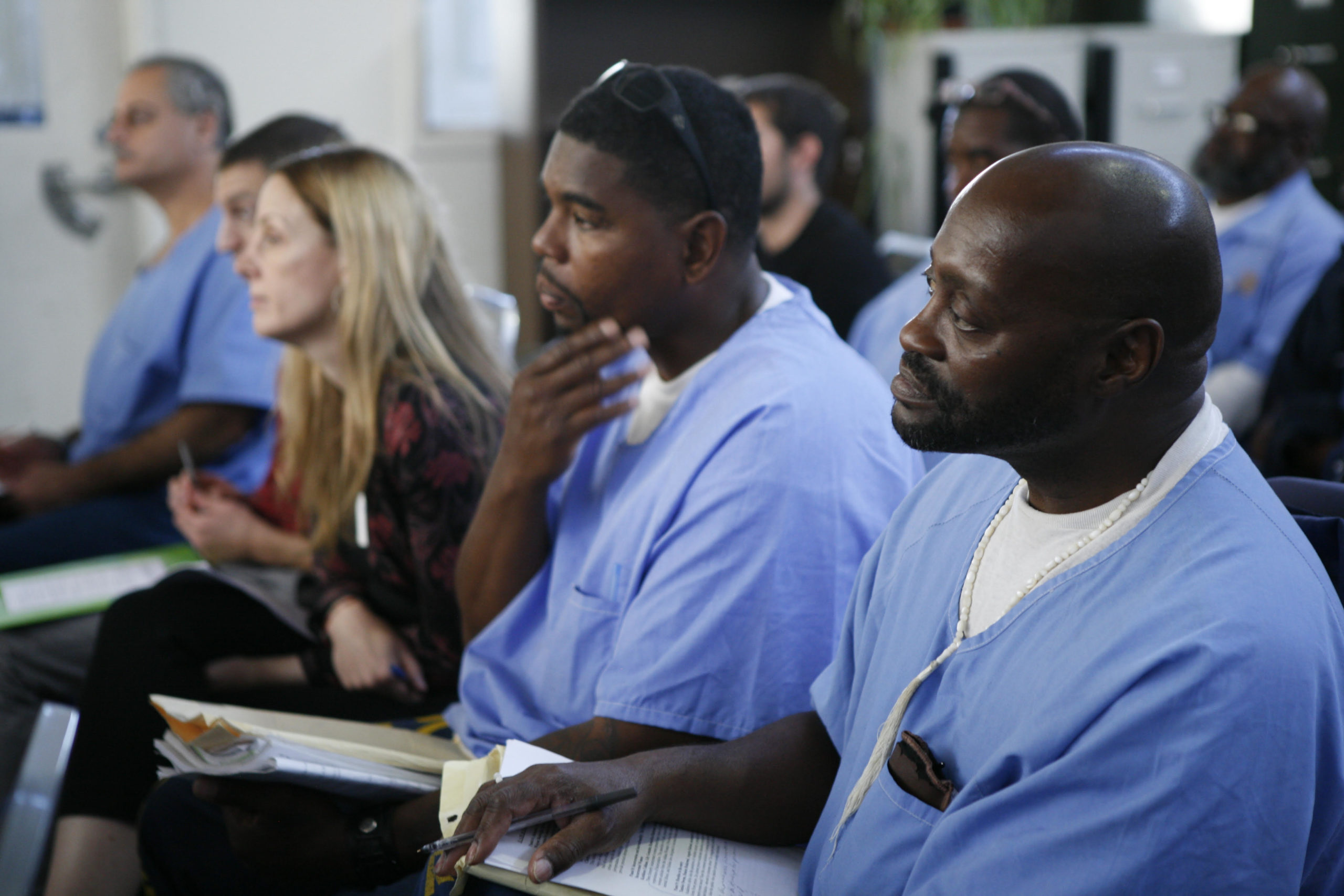
Former Prison University Project student and former San Quentin News editor Jesse Vasquez shared his reentry journey in Great Big Story’s feature on innovative housing opportunities for formerly incarcerated people.

Please note that the Prison University Project became Mount Tamalpais College in September 2020.
Filed Under: Campus & Community, Current Affairs, People, Perspectives

Jody Lewen Moderates Colloquium on Narratives of Incarceration at BAMPFA

December 13, 2019 by Mt. Tam College

Executive Director Jody Lewen moderated Contextualizing The San Quentin Project: Nigel Poor and the Men of San Quentin State Prison, a colloquium at the Berkeley Art Museum and Pacific Film Archive that brought together leading UC Berkeley faculty from the fields of law, social welfare, and literature, along with artist Nigel Poor, to discuss the power of personal narrative and how narratives of incarceration have taken shape across disciplines.

Filed Under: Campus & Community, Conferences, Current Affairs, From the President, Partnerships, Research & Outreach

Prison University Project Board Member Sia Henry on Impact Justice’s Trip to Norway and Finland

November 6, 2019 by Mt. Tam College

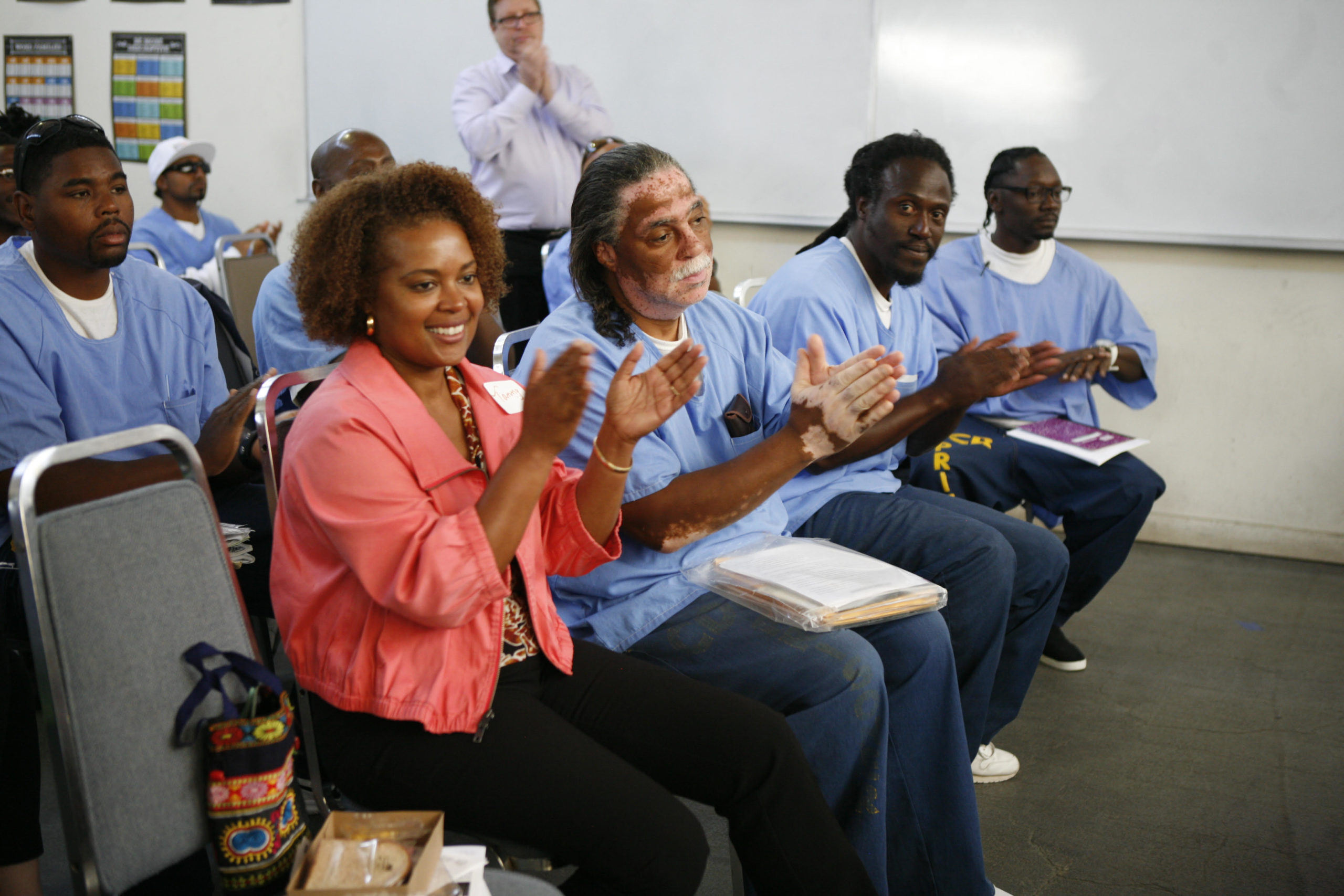
In the fall of 2019, Sia Henry, Prison University Project board member and Senior Program Associate at Impact Justice, organized and led a delegation of 23 California state officials, community-based advocates, and funders to visit correctional facilities in Norway and Finland as part of Impact Justice’s Building Justice initiative. We spoke with Sia about her experience and how the lessons learned could help transform California’s criminal justice system.

What was the original idea for this trip?

A housing unit in a Helsinki prison: all incarcerated people have their own rooms, each equipped with a bathroom, desk, storage closet, and windows that open.

Impact Justice is a national innovation and research center dedicated to significantly reducing the number of people entering the criminal justice system, improving conditions for incarcerated people, and providing meaningful support to people as they re-enter society. From September 29 – October 5, 2019, Impact Justice took a group of 23 California state officials, community-based advocates, funders, journalists, and others with relevant backgrounds to visit correctional facilities in Norway and Finland to meet with incarcerated people, facility staff, and members of relevant government agencies and non-profit organizations.

Anne Irwin, founder and director of Smart Justice California and a former Prison University Project board member, worked with Brie Williams at UCSF to arrange a similar trip to Norway in mid-September for a group of about 30 individuals (mainly California Department of Corrections and Rehabilitation wardens and other officials, including CDCR Secretary Ralph Diaz; representatives from the California Correctional Peace Officers’ Association; and a couple of California state legislators). Anne’s group only visited Norway, and their tour focused more exclusively on prison reform rather than broader, criminal justice system reform.

Our next step is to work with Anne’s group to organize a convening for attendees from both of our trips, along with other stakeholders, to debrief lessons learned and identify concrete opportunities to use those lessons to transform California’s criminal justice system. I anticipate that convening will take place around the end of 2019 / early 2020.

Who was invited to attend?

The library in a Helsinki prison

We invited a large and diverse range of people, namely California state legislators; formerly incarcerated, criminal justice reform advocates; journalists; and criminal justice reform funders. We deliberately invited people with such a diverse background because we wanted attendees to have the opportunity to learn, not only from the tours, meetings, and presentations, but also from each other through informal conversations. It was especially important for us to bring formerly incarcerated people, who are truly the most important experts when it comes to discussing prison and criminal justice system reform.

What were the stated goals of the trip?
Our goal was for the group to gain an in-depth understanding of how these two countries have significantly reduced their prison populations while radically shifting the focus of their penal systems from punishment to rehabilitation and healing.

Impact Justice planned this trip with the support of California State Senator Nancy Skinner. Senator Skinner shares Impact Justice’s belief that, as a shared experience, the trip would not only inform and inspire this influential group but also unite them in a common purpose: to transform the lives of the people who live and work in California prisons and others affected by the state’s criminal justice system and, in so doing, the lives of their loved ones and the greater community.

The group visits an “open” prison on Suomenlinna Island in Finland. The men at this prison sleep there but can leave to go back to the mainland for work, school, or to visit loved ones during the day.

What were your personal goals for the trip?
Groups from all over the world have been traveling to Norway to tour their prisons for the last couple of years. Norway is frequently praised as having the “world’s most humane” prison system. While I think it was important for our group to understand that there are much healthier ways to approach incarceration, my real goal was for the group to realize that, in order to move towards a prison system similar to the ones found in places like Norway and Finland, we must significantly and sustainably reduce the number of people we are incarcerating by introducing much-needed resources and services into the communities most impacted by our criminal justice system. On the last day of the trip, we met with the National Mediation Service (a federal agency that started a restorative diversion type of program for youth in Norway a couple of years ago) and the Norwegian Association for Penal Reform (a prison reform / abolition group founded in the late 1960s). I deliberately chose to end our trip with these two groups because I want to challenge the popular belief that the Scandinavian prison system should be our end goal. I wanted to challenge the assumption that we “need” to incarcerate people in order to achieve “public safety” and, instead, push our attendees to really consider the possibility of prison abolition and what it would look like to live in a society that provides universal access to the resources people need to live whole, happy, and healthy lives.

What were your key takeaways from the experience?

  • An outdoor gym overlooking the water at the “open” prison on Suomenlinna Island

    Norway’s approach to incarceration stresses the importance of maintaining “normalcy” for incarcerated people, to the extent possible (i.e. their removal from society should be the only punishment).
  • Before our tour of a maximum security prison in Norway, the director gave us a presentation. One of the correctional officers stopped by the presentation around the same time someone from our group asked about violence at the prison. The prison director introduced the officer and said: “He runs one of the housing units…he could make the men [who live in his unit] dangerous if he wanted to but since we treat everyone here with kindness and respect, we get the same in return.”
  • Even in a country known for having the world’s most “humane prison system,” the Norwegian Association for Penal Reform (the largest prison reform group in Scandinavia that’s been around since 1966) makes it clear that prison abolition should still be the end goal.
  • We can’t reform the criminal legal system, or even prisons, in a vacuum. Instead, in order to bring about meaningful change, we will have to also create a strong foundation / system of welfare to ensure all people within our society have a quality, standard baseline of care.
  • In Finland, crimes committed by people under 15 years old are addressed through the child welfare system because children cannot be charged with a crime.

How might any lessons from this trip inform the work of the Prison University Project? How will they inform your own professional endeavors?
In line with the commitment to maintaining “normalcy” for incarcerated people, in Norway and Finland, the Ministry of Health runs healthcare inside prisons. Similarly, the Ministry of Education runs educational programs and libraries inside. I think the Prison University Project is doing a good job of providing the same level of education offered to people in the community (i.e., the Prison University Project is doing what it can to maintain and instill a sense of normalcy in the area of education for incarcerated people at San Quentin). If possible, I think it’d be valuable to find opportunities for the Prison University Project to collaborate with the broader educational field (especially grade schools) to improve the trajectory for young people at the greatest risk of being impacted by the criminal legal system.

Professionally, I want to be more intentional about engaging with other fields (e.g., education, public health, mental health, architecture, urban planning, etc) to support the creation of the kind of society necessary for prison abolition to be possible.

For more information, read Sia’s “Building Justice Project: Reflections on the Finnish justice system” on Impact Justice’s website.

Please note that the Prison University Project became Mount Tamalpais College in September 2020.
Filed Under: Campus & Community, Partnerships, People, Perspectives

Using Education to Struggle for Justice: An Interview with Josh Page

October 28, 2019 by Mt. Tam College

Published in the November 2019 newsletter, which you can read in its entirety here.

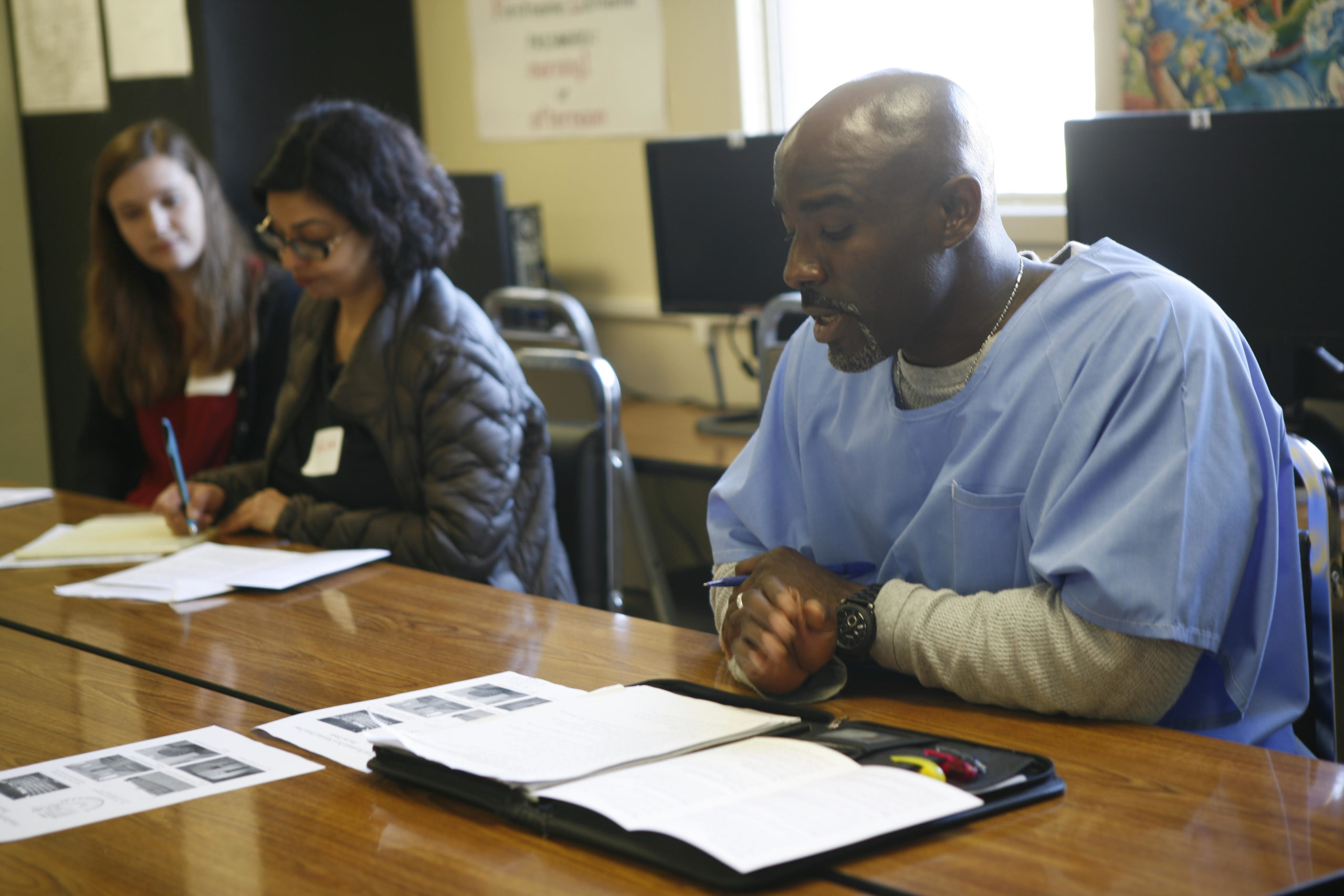
Since the College Program at San Quentin was founded in 1996, hundreds of people have worked as instructors, teaching assistants, tutors, and guest lecturers. Even years later, many of them describe having been impacted by the experience in profound ways, both personally and professionally, and many find their work at San Quentin has changed the trajectory of their lives and resulted in strong community bonds and professional networks among fellow instructors. Lately we’ve been working to compile testimonials from former faculty, in order to better understand how their experiences engaging with the students and the program at San Quentin have created ripple effects in their lives, and document how students at San Quentin are impacting the larger world.

What did you do at San Quentin, and what are you currently doing professionally?

In 1998 and 1999, I was a teaching assistant for Introduction to Sociology, Creative Writing, and English 99. Today I’m an associate professor of sociology and law at the University of Minnesota. I also have a not-so-secret life as a food writer, and I’m the co-founder and associate editor of Meal Magazine, a new print publication that aims to reimagine food writing and food writers.

How did the experience of teaching at SQ impact you?

It literally changed my career trajectory—and life. I went to graduate school to study racial inequality and politics (not the criminal-legal system). Early in my first semester, I received a random email requesting volunteer teaching assistants for the Prison University Project’s College Program at San Quentin and signed up. After a couple sessions, I began to wonder why so few college programs exist in U.S. prisons. That question became the basis of my master’s thesis, which focused on Congress’s ludicrous (but politically expedient) decision in 1994 to eliminate Pell Grants for prisoners.

I’ve continued to research the politics of criminal punishment and related issues. For my first book, The Toughest Beat: Politics, Punishment, and the Prison Officers Union in California, I analyzed the rise of the CCPOA (the California Correctional Peace Officers Association) as a powerful interest group and traced its influence on penal policy, prison conditions, and carceral labor. My second book (co-authored with Phil Goodman and Michelle Phelps), Breaking the Pendulum: The Long Struggle Over Criminal Justice, offers a new perspective on how penal policy and practice change over time. I recently studied the bail bond industry while working as a bail agent in a large urban county. I am currently writing a book with my colleague Joe Soss that explains how and why government agencies and for-profit companies (including bail bonds) use the criminal justice system to extract billions of dollars every year from poor communities (primarily communities of color). The book, Preying on the Poor: Criminal Justice as Revenue Racket, should be out in 2021.

Did the experience impact how you actually approach your work? Do you see any differences between you and your colleagues who have not had similar experiences?

While participating in the program, I learned to always question one-dimensional visions of justice-involved people, including those who work in the system. Destructive public policy, bad scholarship, and ignorant comments often result from an unwillingness to see people (especially incarcerated people) as multi-dimensional people with varied experiences, desires, and goals.

Unlike some of my colleagues, I do not think recidivism rates and similar quantitative outcomes are very effective for assessing prison-based programs. They don’t consider how programs (like the Prison University Project) inspire hope, self-assurance, and commitment to helping others; improve prison climate; and help people develop the skills and confidence to become effective advocates within and beyond prison.

How do you believe that the community of San Quentin has impacted the larger world?

Over the years the College Program has facilitated strong relationships between publicly engaged scholars with a common vision of using education (teaching, research, and writing) to struggle for justice. Three of my closest colleagues also taught at San Quentin. All three are leaders in their fields and have changed how scholars, advocates, and policymakers think about critical criminal-legal issues.

The first is Amy Lerman (associate professor of public policy and political science at UC Berkeley). She has published path-breaking research on how prisons affect the attitudes, well-being, and behaviors of prisoners and prison officers. Amy and I collaborated on research on the organizational and political determinants of prison officer attitudes in California and Minnesota. Amy’s important, co-authored book, Arresting Citizenship: The Democratic Consequences of American Crime Control, shows how contact with the criminal justice system shapes political attitudes and civic engagement; this research has changed the conversation about the political consequences of mass incarceration and related penal developments.

Karin Martin (assistant professor of public policy at the University of Washington), is a renowned expert on legal financial obligations (e.g., court fines, fees, and restitution). Along with publishing first-rate articles in peer-reviewed journals, she has provided testimony on the scope and effects of criminal justice debt to the New York State Assembly and to the United States Commission on Civil Rights. Joe Soss and I rely on Karin’s research and consultation for Preying on the Poor. 

One of my dearest friends, Keramet Reiter (associate professor of criminology, law, and society at UC Irvine), is the author of 23/7: Pelican Bay and the Rise of Long-Term Solitary Confinement, an incredible study of the rise, transformation, and consequences of the Security Housing Unit (SHU). I assign 23/7 in my course, The Sociology of Punishment; the book successfully challenges students to reconsider their understandings of solitary confinement and popular images of prisoners. (Keramet has participated in the class remotely, and the students love her.) In my opinion, 23/7 is one of the best books written about prisons, because Keramet shows that the book’s subjects (SHU prisoners, state officials, advocates, et al.) are multi-dimensional people with complex backgrounds, a fact that gets lost behind denigrating, simplifying terms like “the worst of the worst.”

Please note that the Prison University Project became Mount Tamalpais College in September 2020.
Filed Under: Academics, Campus & Community, Current Affairs, In the Classroom, People, Perspectives

The Opportunity to Be a Living Example: On Becoming a Teaching Assistant

October 28, 2019 by Mt. Tam College

Published in the November 2019 newsletter, which you can read in its entirety here.

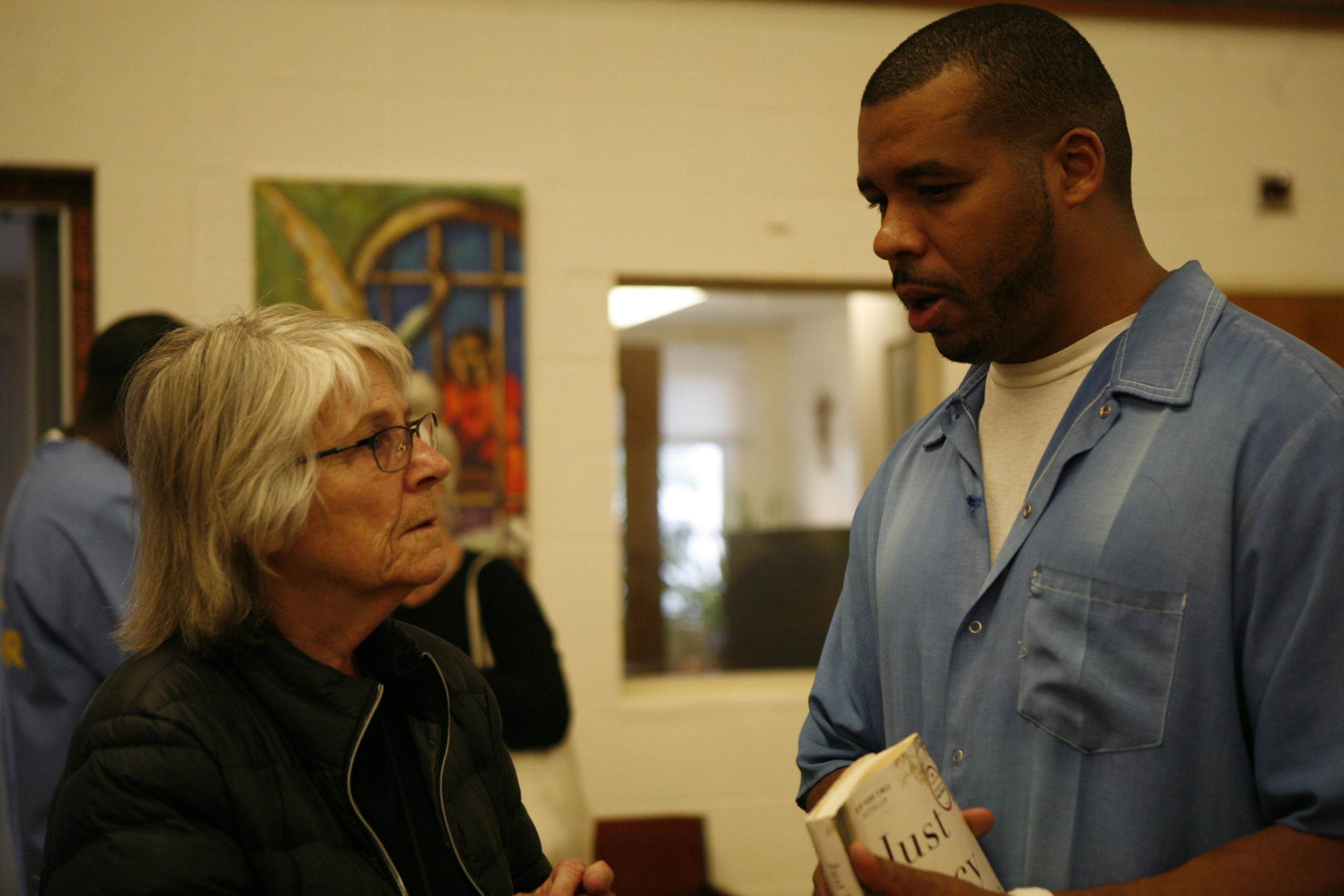
In 2017 I graduated from the College Program with a GPA of 3.22. Thereafter, I found myself involved with the teaching assistant program because I desired to give back to a community that has given me, and others like me, so much. My pursuit of higher education has given me insight into the illiteracy and learning disabilities that once arrested my mental and educational development, which resulted in me succumbing to the psyche of the streets, crime, and gang subcultures of society.

During my 25 years of incarceration, I’ve witnessed thousands of juvenile men of color who entered the prison system, as I did at 16, and came from a subculture that gave them the same thing it gave me: the generational inheritance of being psychologically enslaved to a mindset of the sociopath and psychopath.

This antisocial behavior that clouds over the subcultures of our society ignites within me a passion to strive for positive change—not just for myself, but for all who are affected by a system that dishonors and devalues human life and its right to thrive healthy and happy.

Becoming a teaching assistant and tutor has allowed me the opportunity not only to assist new students in their education, but also to have a platform to create positive dialogue to challenge the mindset of men who hold dear to antisocial behavior. It is through higher education endeavors and my passion for positive change that I seek to obtain my BA and master’s in juvenile justice and counseling.

My experience and observations as a student and teaching assistant have given me the ability to recognize new students’ strong and weak points in their learning skills, and have given me the opportunity to be a living example for new students to see what higher education can achieve. It is important that incarcerated students witness men, like them, incarcerated, who have achieved their college degrees, and are now displaying their educational transformation in the form of a civil servant, with a genuine heart to give back to the community.

Please note that the Prison University Project became Mount Tamalpais College in September 2020.
Filed Under: Academics, Campus & Community, Creative Writing, In the Classroom, Open Line, Student Life

Footnote to What It is Like to Be an Older Inmate Doing Time in Prison

October 28, 2019 by Mt. Tam College

Published in the November 2019 newsletter, which you can read in its entirety here.

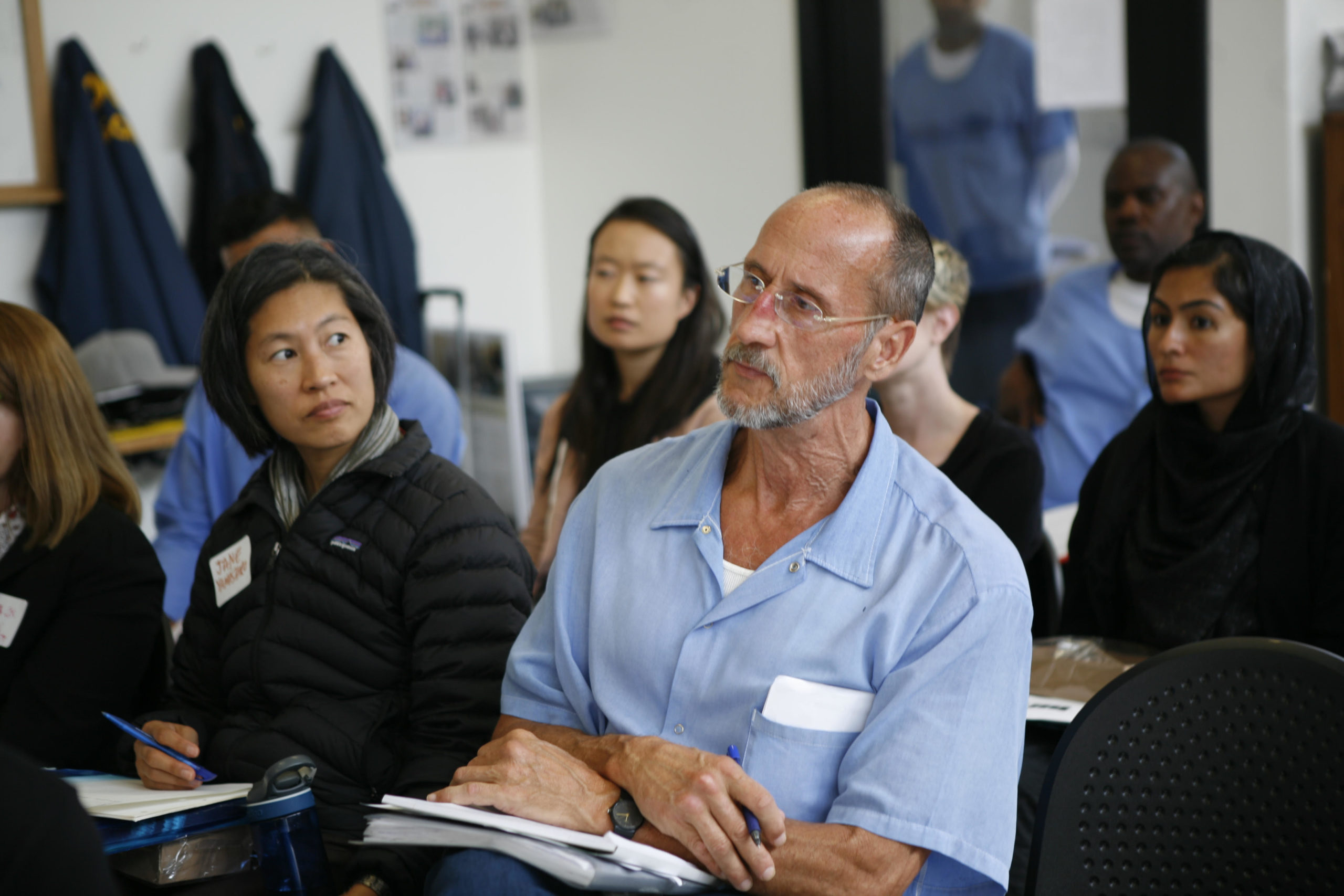
Being incarcerated is physically and mentally stressful enough, even for a young, able-bodied person, but for someone older, the challenges are even more intense. When I invited Peter Bergne to write for this newsletter about the experience of being incarcerated while an elderly person, I imagined he would write about the vulnerability to abuse or exploitation, the sense of social isolation, challenges of accessing medical care, lack of appropriate toiletries, poor nutrition, sleeping on a bad mattress with older bones, or the fear of being involuntarily moved to another prison with far fewer programs due to one’s physical limitations. Instead he wrote a very personal account of what it is like to be repeatedly denied parole. My immediate reaction was to think he’d veered off topic, so I asked him to write some more in response to the original prompt. It was only when I saw his second response that I realized that he was in fact answering the question. I am grateful to Peter both for writing this piece, and for his patience with me. —Jody Lewen

My life as an older inmate is different in that it is more oppressive psychologically, and it is the egregious unconstitutional prison overcrowding that has made incarceration much more difficult today. This is only one issue. Secondly, the isolation and very restricted contact with people on the outside is a problem for older inmates who need better interaction with community volunteers and reentry facilities. Also, time is very valuable to older inmates who are trying in good faith to salvage what time they have left in a free society under parole supervision.

What is not understood very well by others outside in society are the overt abuses in the state’s existing parole system. Life in prison would be made a lot better and more fair if elderly prisoners would be released unconditionally without the “suitability” hurdle by the parole board commissioners if they have served more than 30 years and who 1) are over the age of 70, 2) have not taken the life of a police officer, child, or governmental official, 3) have not been sentenced to death or life without the possibility of parole, 4) have not committed multiple murders, and 5) have not been convicted of first-degree murder except for those who have been granted relief by the courts pursuant to Senate Bill 1437.

Currently, and most unfortunately, California’s parole commissioners with their excessively broad authority and discretion over the fate of life-term prisoners create an atmosphere of fear and even terror in the hearts and minds of many elderly prisoners hoping to be released on parole. Like other deserving and reformed lifers, my 15-years-to-life term is being unjustly and unconstitutionally prolonged and unreasonably hampered by findings of “unsuitability” by unduly biased and prejudicial parole commissioners who have the unfettered liberty of using any one of a dozen or more “highly suggestive reasons” as a basis for denying parole.¹ This abusive practice needs to be overhauled and changed.

Finally, in a higher dimension of human and spiritual thought and awareness, I will add that the principalities and rulers of this Earth shall never dictate to me who I am, where I may be, or where I am going, for I am a reborn child of God and a new creature founded in Christ. I will never know what it is to be an old man because I am still young in spirit, mind, and body. Only my Father in heaven knows when, and if, I will ever become an old man.

¹”Highly subjective reasons” include, for example, “lack of insight,” “lack of remorse,” “lack of appreciation for the impact of a crime on the community,” etc. Also, there is unfair discrimination due to parole applicants’ autonomy, personal beliefs or sexual orientations or tastes in clear violation of the U.S. Supreme Court ruling and precedent set forth under Obergefell v. Hodges, 135 S. Ct. 2584, 192 L. Ed. 2d 609, 621-631 (2015).

Please note that the Prison University Project became Mount Tamalpais College in September 2020.
Filed Under: Campus & Community, Creative Writing, Current Affairs, Open Line, Perspectives, Student Life

Call for Papers: Academic Conference Spring 2020

October 7, 2019 by Mt. Tam College

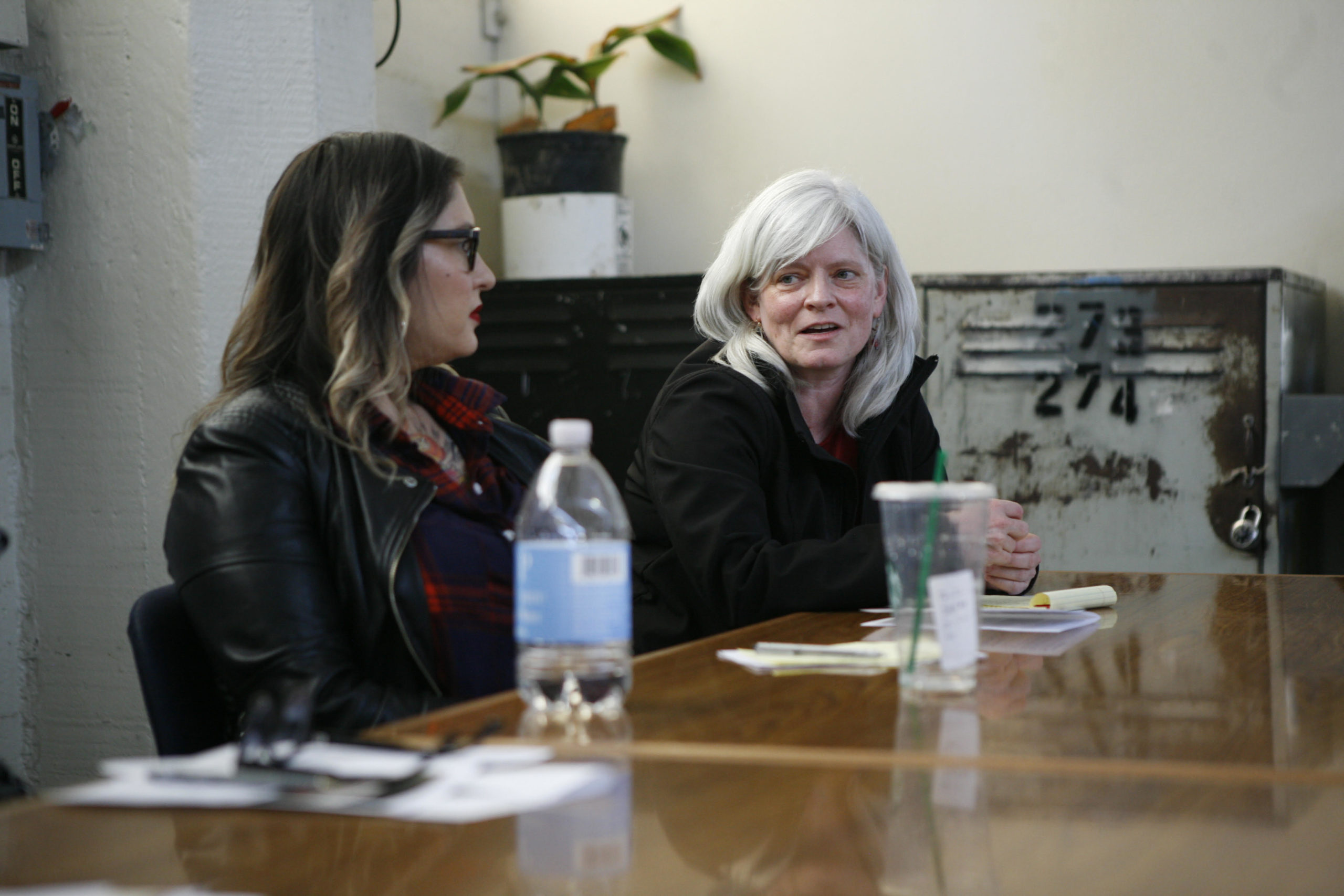
In the spring of 2020, the Prison University Project will host its second academic conference at San Quentin State Prison. The conference, conceived and planned by a committee of Prison University Project College Program students and staff, will take place inside San Quentin on April 17, 2020, from approximately 8AM-5PM and will involve panels of incarcerated and nonincarcerated scholars. Last year’s conference demonstrated the influential perspective shifts that can occur when different communities contribute to dialog around central debates. We welcome proposals for individual papers (20 minutes in length) and full panels.

This year, our theme is “We Are All Directly Impacted: Mapping Societal Wellness, Institutions, and Self.” Starting with the observation that both self and institution are socially constructed, our conference aims to explore the ways in which pathways to reaching our individual full potential intersect and conflict with the various social contracts and norms that we are born into. Some institutions, like marriage, effectively create more rights for many participants, while others, like prison, purport to create a safer society by denying rights to those people within its confines. In a similar vein, some institutions like higher education are exclusive to varying degrees, while others, like gender, are largely assigned at birth and difficult to opt out of. At various times throughout the history of this nation, the freedom to drink alcohol, love or marry whom one wants, have various medical procedures, and travel freely, have been deemed detrimental to a healthy society, at the expense of personal wellness. Conversely, institutions that perform policing, military operations, border control, and health or education are considered by many to be essential to our personal wellness.

We hope to discuss these topics and more at our conference:

  • What is wellness?
  • Is it possible in the context of institutions?
  • How do the individual and the institution intersect?
  • What roles can institutions play in helping individuals reach their full potential?
  • What institutions are missing from our society?
  • What are some empirical indicators of societal wellness?
  • How could these indicators be improved?
  • What are pathways for people with different political ideologies or identities to dialog more effectively?
  • How do wellness and freedom play out across societal structures, identities, and communities?
  • How do different social ways of being affect personal wellness?
  • What roles can or should individuals play to help systems or institutions reach their full potential?
  • How should society respond to people who don’t conform to our institutions or norms?
  • How can institutions of education be reimagined to help more people reach their full potential?

The Prison University Project has been running a college for people incarcerated at San Quentin State Prison since 1996. We run twenty classes each semester and have over 700 active students. The mission of the Prison University Project is to provide an intellectually rigorous, inclusive Associate of Arts degree program and college preparatory program, free of charge, to people at San Quentin State Prison; to expand access to quality higher education for incarcerated people; and to foster the values of equity, civic engagement, independence of thought, and freedom of expression.

To propose a paper or panel please send a 300-500-word proposal, 100-word abstract (for the conference program), and a 50-word biography to conference@prisonuniversityproject.org. Submissions will be accepted on a rolling basis through the end of November. Presenters will not have to pay a registration fee. Unfortunately, it won’t be possible to have non-presenters attend the conference because of severe space limitations. Please send any questions to conference@prinsonuniversityproject.org.

For more info on last year’s conference, see our news post, “San Quentin’s First Academic Conference: “Corrections, Rehabilitation, and Reform—21st Century Solutions for 20th Century Problems.”

Please note that the Prison University Project became Mount Tamalpais College in September 2020.
Filed Under: Academic Papers & Studies, Announcements, Campus & Community, Campus Events, Conferences, Events, MTC News, Research & Outreach

  • « Go to Previous Page
  • Page 1
  • Interim pages omitted …
  • Page 5
  • Page 6
  • Page 7
  • Page 8
  • Page 9
  • Page 10
  • Go to Next Page »
mtc seal

Contact Us

PO Box 492
San Quentin, CA 94964
(415) 455-8088


Please note: Prior to September 2020, Mount Tamalpais College was known as the Prison University Project and operated as an extension site of Patten University.


Tax ID number (EIN): 20-5606926

Quick Links

CONTACT US
CAREERS
PRESS KIT
ACCREDITATION
PUBLICATIONS
DONATE


Join Our Mailing List

© 2026 | Mount Tamalpais College | Photography by RJ Lozada | Design & Development by //DESIGN AGENCY//

  • About
    ▼
    • Mission & Values
    • Staff & Board
    • Impact
    • Accreditation & Institutional Research
    • Careers
  • Academics
    ▼
    • Admissions
    • AA Degree
    • College Prep
    • Faculty
    • Apply To Teach
  • Students & Alumni
    ▼
    • Students
    • Alumni
    • OpenLine Literary Journal
  • Resources
    ▼
    • Practitioner Support
    • Resources for Incarcerated Students
    • Research on Prison Higher Education
  • News
    ▼
    • Top MTC Stories
    • Recent Press
    • From the President
    • Commencement
    • 2026 Gala
  • Give to MTC
    ▼
    • Donate
    • Shop