I, too, dream of a carefree life in paradise. A place bursting with the small-town sentiment of “see a need, do a deed.” A place where good cheer, grace, and harmony shine so brightly that there can be no shadows. Where thoughts of pay-it-forward are as ordinary as Sunday following Saturday. Unfortunately, adolescent deeds—unfeeling, caustic deeds–assured me a possibly permanent berth in the purgatory that is San Quentin State Prison. Sentenced to life as a reckless and callous sixteen-year-old, I have come to recognize that paradise is now the solemn and remorseful reflections of a 62-year-old who still dreams.
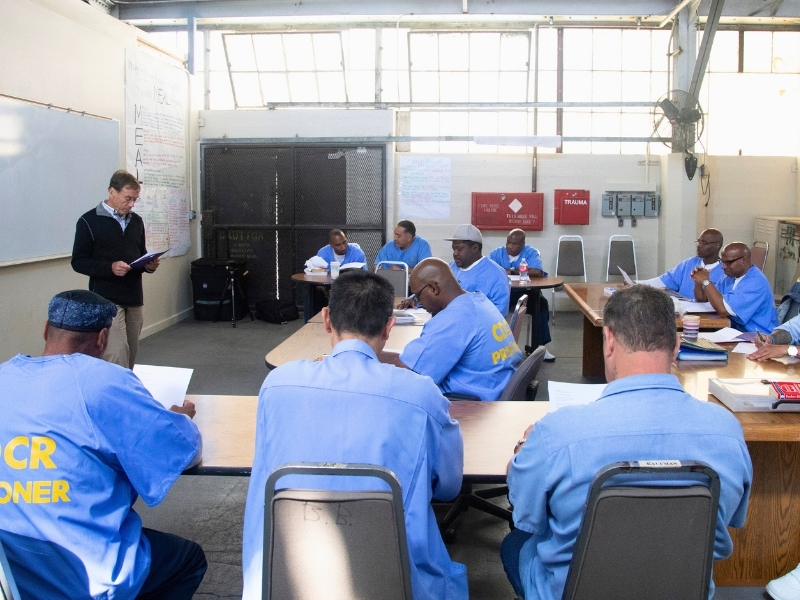
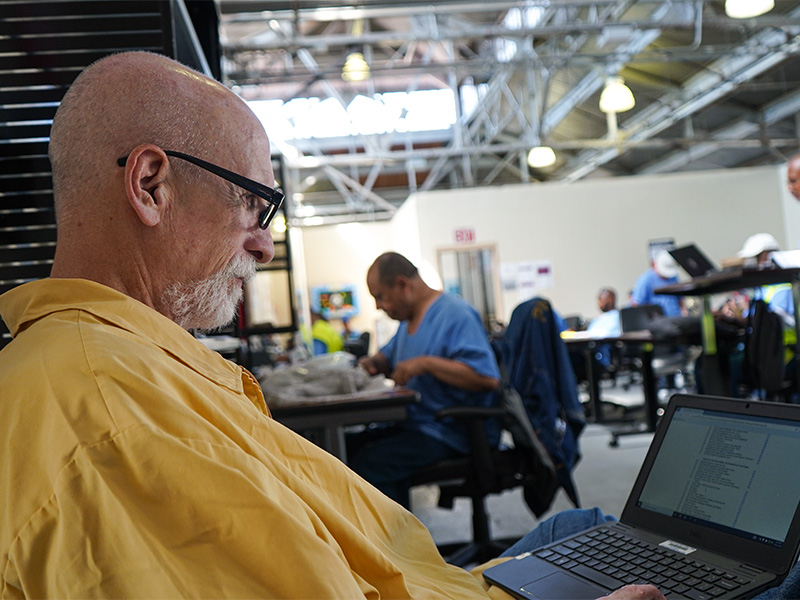
During these past 46 years, I have worked many prison jobs: kitchen worker, carpenter, stationary engineer (HVAC), and maintenance mechanic. The major benefit of this employment was not the pay, 0.35 to 0.75 cents an hour. No, the confidence and self-reliance were the dividends that transformed this broken teenager into a young adult with marketable skills.
Thus, my first steps to rehabilitation had begun, negating the faulty thinking processes of my youth. and creating a natural barrier to criminal thinking. Employment, work — that which embodies the discipline and responsibility of a human being at a constructive endeavor — is only one part of the story: gainful employment, however, dramatically changes that story. The dream, the grace, and the lifeline that gainful employment was to me arrived when my request to become a Yellow Jacket — an Inmate Disability Assistant Prisoner (IDAP) was approved. As an IDAP worker, I have a uniform— the Yellow Jacket.
My duties: Rendering assistance to wheelchair bound inmates; changing their linens; carrying packages; helping fill out forms or write letters. In many ways, offering support to those men unable to help themselves. I wanted this job not for the pay ($0.25 an hour), but for the opportunity to somehow give back and serve my community. Yes, my community of the incarcerated. Like a lifesaving line thrown to a drowning man, the Yellow Jacket is the life jacket where my soul finds refuge.
The distressing and regrettable reality of this place — prison — is that here, kindness is perceived as weakness, and weakness is a target for predators. Nowhere has the phrase “Brother, can you spare a dime?” held so much potential for deliberate deception. Legal tender in prison is violence — projected, promised, and applied. One prisoner’s reaction to another’s offer of assistance is traditionally hostility and suspicion.
However, providence or fate — and my Yellow Jacket— have allowed me to transcend these convict customs of purgatory. When I don the Yellow Jacket, like a life preserver, the buoyancy transports me to a different place. If not paradise, then a place of paradisiacal possibilities. My fellow prisoners recognize the neutrality of the Yellow Jacket, recognizing that I am just here to help, without an agenda, angle, or hustle. The terrible truth of prison’s harsh ethos of retribution and indifference is mitigated by the tolerance and compassion conveyed by my simple yellow Jacket.
Helping a fellow human being in need is a rare and solemn opportunity in prison. Any chance to atone for the harm and injuries resulting from the caustic deeds of my past is a crucial element allowing me to retrieve my humanity. Finding purpose and meaning in my lost life is yet another step on the path to rehabilitation and personal salvation. I may be helping others, but I am the true beneficiary. a soul searching for redemption. Redemption comes through atonement, and atonement is the solace for that weary soul in need.
That being at Humanity’s edge, a soul in need, sinner or saint, who quietly suffers in resigned solitude, is searching for his or her own salvation and redemption. It is an emotional experience to assist and support the abandoned, expecting only indifference. At that edge — in or out of prison — where indifference is the rule rather than the exception, an affirmative service from a perceptibly legitimized person can be a transformative experience. Emotional experience stems from an understanding and insight into our essential human condition. The crying of the newborn baby signals suffering, and the last breath of the dying man, a sigh, the same. The need to alleviate another’s discomfort begins and ends with humanity’s kindred spirit, that human connection, those feelings and thoughts, “there, but for the grace of God.” As a social species, we need to interact and make connections, or sometimes, in San Quentin, we need a Yellow Jacket.
In this environment — a state penitentiary — so full of dark and primal shadows, it is the bright yellow light of a simple jacket that continues to illuminate my dreams of paradise. Lighting the thoughts of atonement, redemption, and paradise always ignite from our moral center. our core being. That core survives through the grace of one’s commitment and obligation to principles of morality. Finding and keeping one’s moral balance starts with examples. Just one or two rays striking those dark shadows of penitentiary deception and hostility can ignite the process of self-worth, self-reliance, and one’s true human nature — generosity of spirit.
Past the labels of “offender” and “prisoner,” there remains a human being — flawed, regressed, and broken but remaining. On humanity’s edge, there are many labels: Homeless, Addict, Convict, Ex-convict, and sometimes even the unheard victim. A society should not label and castaway our fellow human beings. Where are the yellow jackets, where is the good cheer, grace, and harmony?
We are, but mere mortals, with weaknesses and strengths, but commitment, participation, and accountability to our communities can make a difference. The creation of recovery and validation, where emptiness and rejection once ruled, builds a society steeped in restoration. There should be no shadows in paradise. On this edge, the gentle breeze of compassion can displace the shadows. and shine grace upon beings worthy of inclusion, respect, and opportunity. Building paradise on the edge, one deed, one dream at a time. Dreams of restoration awaken one’s faith in humanity’s forgotten and forsaken. It is not carefree dreams that drive my sentiments, but perseverance, resolution, and belief in humanity’s true nature – generosity.