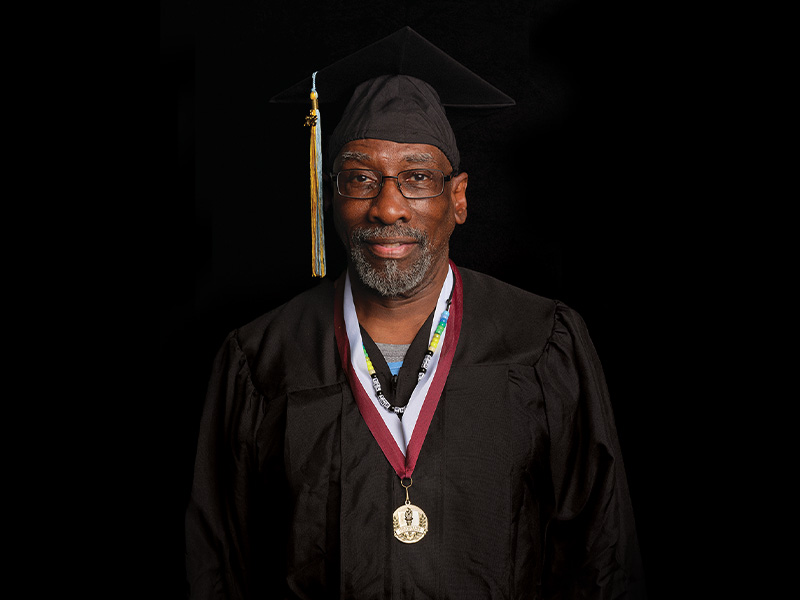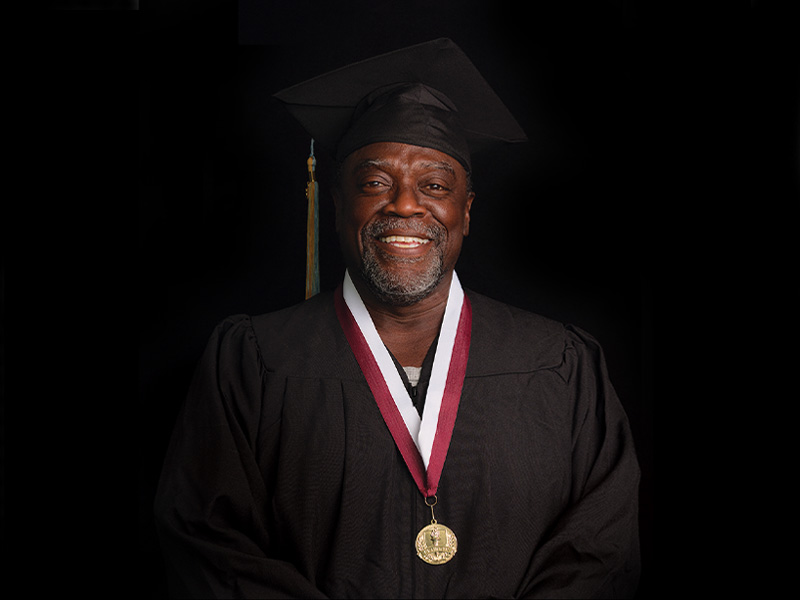
My chance encounter to take in-person courses at Mount Tamalpais College inside San Quentin State Prison happened in the winter of 2011. At the time, the school was an extension site of Patten College, and was known as the Prison University Project.
I was transferred to Quentin under Assembly Bill 109, “Realignment,” California’s plan to reduce overcrowding in its prisons. This was 12 years before Gov. Gavin Newsom rebranded the prison San Quentin Rehabilitation Center.
“Let’s go check out the college program,” I said to a couple of people who transferred with me from Folsom State Prison. We left North Block. Our destination was the main Education building on San Quentin’s lower yard, where we met Kara, a staff member at the College.
“You’re just in time for orientation in a few days,” said Kara. She was courteous as she wrote down our names, prisoner identification numbers, and housing assignments. Then she handed us information about the College, and paperwork to complete.
I arrived in prison with a Bachelor of Arts degree in mass communication. Journalism and writing were essentials in my major. The first 15 years of my incarceration afforded me only one opportunity to enroll in a college course, through correspondence. I was thrilled at the idea I could attend Patten College, in a real academic environment, to receive in-person instruction with a professor and other students.
The first two courses I signed up for were English and journalism. To say the latter was pivotal to my pursuit of higher education would be an understatement, but it would be more than a decade before my plan to continue my education at an advanced level finally materialized.
Before incarceration, I considered applying to graduate school. However, I questioned the certainty of my readiness. Moreover, the unforeseeable events that led to my confinement practically dashed the idea to carry on with my studies.
Arrest, trial, conviction, prison, and my self-imposed education—attained in every prison that became a university, and in each cell that became my classroom—taught me more about self-determination. Resiliency and my abiding fortitude to prevail under the weight of oppression had driven me. In the course of more than a decade of imprisonment, I had written more than a dozen unpublished political essays, short stories and poems. In addition, I had read nearly 300 books on a variety of subjects.
Booker T. Washington taught me to come Up from Slavery. Viktor Frankl provided me with Man’s Search for Meaning. Daniel Levinson taught me about The Seasons of a Man’s Life. The Autobiography of Malcolm X showed me why all of this was important. George Jackson’s Soledad Brother gave me a blueprint; and Ernesto Che Guevara’s Guerilla Warfare admonished me to move “Forever onward, toward victory.”
In early 2012, I started writing for the inmate-run San Quentin News. It was during that time that I shifted my viewpoint on my situation and began to frame a plan to continue my education beyond prison. In the summer of 2019, Prison University Project offered a Black Studies course. That class provided me with an added focus on African history. In contemplation on the larger Black diaspora, it also instigated grander designs for my future.
When 2019 ended, I had completed reading 400 books during my 23 years of incarceration. The greatest significance of those books, to me, was the fact that it was also the 400th anniversary of when the first African slaves arrived in North America. They were denied humanity, education and were forbidden to learn how to read.
I did not intend to earn an Associate of Arts degree while at San Quentin. My sights were fixed on applying to the Graduate School of Journalism at the University of California, Berkeley. That is no small undertaking to do from inside prison. Beyond the online application process, essays, transcripts, telephone interview, and other details, I needed three letters of recommendation from respectable people in the community who knew me—and not someone from my life 23 years ago. By late 2022, I decided it was time for me to execute my plan. By then, I had completed an audio engineering program at San Quentin (offered by The Last Mile), studied and had became an electrician at California State Prison Solano, earned a two-year paralegal diploma at Folsom State Prison, and worked ten years for the San Quentin News. More than 300 of my articles have been published, which included nearly 100 in other publications. MTC augmented my education with workshops and weekly lectures.
Jody Lewen, president of Mount Tamalpais College, was one of the three people who penned a letter for me when I applied for admission to UC Berkeley. I had known her for a decade, and always found it so unusual how she made herself available to MTC students, given her position and tenure with the College. She cared about the success of each student’s education, and life beyond incarceration.
April 20, 2023 was another defining moment in my educational journey. That’s when I received a letter from UC Berkeley that read, in part: “Dear Kevin Sawyer, Congratulations! I am delighted to offer you admission to graduate study in the Journalism MJ program,” wrote the Vice Provost for Graduate Studies and Dean of the Graduate Division.
It is doubtful I would have attempted to apply for admission to UC Berkeley if it were not for that Journalism course. I used to believe the chance to continue my education ended with a life sentence and incarceration. Mount Tamalpais College changed my outlook on that notion, and hopefully the trajectory of my life after prison.
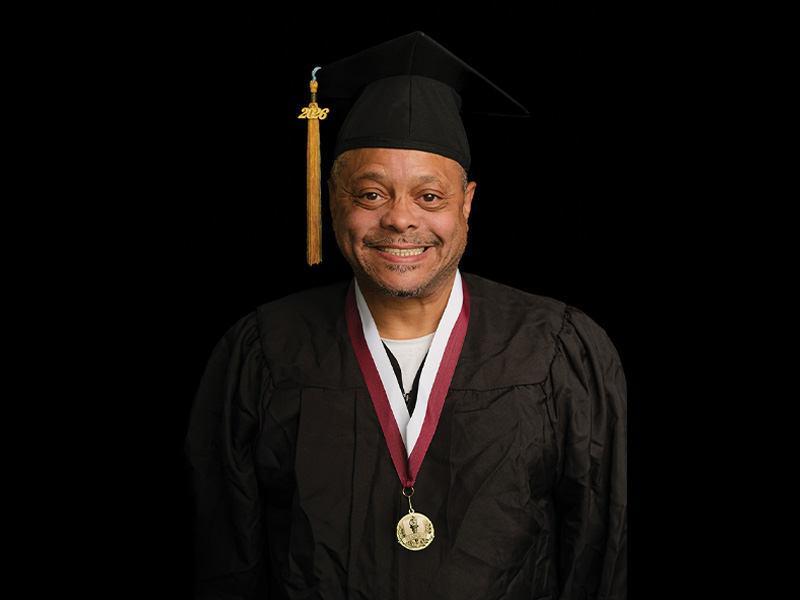
KEVIN D. SAWYER is an African American native of San Francisco, California, born in 1963. He is a long-time member of the Society of Professional Journalists and writer of news articles, essays, short stories, memoirs, poems, journals on incarceration, and other subjects.
Sawyer’s published work appears in Columbia Journalism Review, San Francisco Chronicle, The Guardian, UCLA Law Review, Bay City News, Harvard Journal of African American Policy, Oakland Post, Filter Magazine, Cal Matters, Iron City Magazine, The News Station, The Harbinger (NYU), Journal of Prisoners on Prisons, PEN America, Prison Journalism Project, San Quentin News, San Francisco Bay View, Solitary Watch, The Davis Vanguard, California Prison Focus, The Pioneer, Wall City, 580 Split, Apogee Journal, El Tecolote, and many others.
Formerly the San Quentin News Editor-in-Chief, Sawyer led the publication to win the 2025 American Penal Press Award for “Best Prison Newspaper.” In 2024, he received the Stillwater Award for a “Best News Story,” the California News Publishers Association’s “Community Focus Award,” and the San Quentin Film Festival’s “Best Documentary Film Pitch” award. In 2021, the San Francisco Press Club presented him with its “Bay Journalism Award Newspaper.” In 2019, he received an “Honorable Mention” for nonfiction from PEN America. In 2016, he received The James Aronson Award for “Exemplary Community Journalism,” and in 2014, he was on the San Quentin News staff that won the Society of Professional Journalists’ “James Madison Freedom of information Award.”
Prior to incarceration, Sawyer worked 14 continuous years in the telecommunications industry for several corporations. He is an NCCER certified electrician, a trained audio engineer through The Last Mile, and a practiced guitar and piano player. He holds a Bachelor of Arts degree in mass communication with a special broadcasting option from California State University Hayward, and a Diploma as paralegal/legal assistant from Blackstone Career Institute. In April 2023, he was accepted and offered admission to the Graduate School of Journalism at the University of California Berkeley.