• Skip to primary navigation
  • Skip to main content
  • QUICK LINKS
    • CONTACT US
    • CONNECT
      WITH US
    • FACULTY APPLICATION
    • PUBLICATIONS
    • PRESS KIT
    • CAREERS
  • About
    • Mission & Values
    • Staff & Board
    • Accreditation & Institutional Research
    • Careers
  • Academics
    • Admissions
    • AA Degree
    • College Prep
    • Faculty
    • Apply To Teach
  • Students & Alumni
    • Students
    • Alumni
    • OpenLine Literary Journal
  • Resources
    • Practitioner Support
    • Resources for Incarcerated Students
    • Research on Prison Higher Education
  • News
    • Top MTC Stories
    • Recent Press
    • From the President
    • Commencement
    • 2026 Gala
  • Give to MTC
    • Donate
    • Shop

Mount Tamalpais College

Open Line

San Quentin YellowJacket

January 29, 2026 by Mt. Tam College

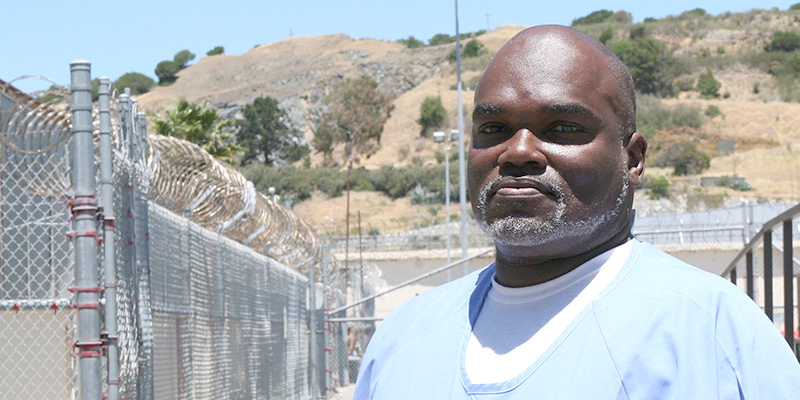
I, too, dream of a carefree life in paradise. A place bursting with the small-town sentiment of “see a need, do a deed.” A place where good cheer, grace, and harmony shine so brightly that there can be no shadows. Where thoughts of pay-it-forward are as ordinary as Sunday following Saturday. Unfortunately, adolescent deeds—unfeeling, caustic deeds–assured me a possibly permanent berth in the purgatory that is San Quentin State Prison. Sentenced to life as a reckless and callous sixteen-year-old, I have come to recognize that paradise is now the solemn and remorseful reflections of a 62-year-old who still dreams.

During these past 46 years, I have worked many prison jobs: kitchen worker, carpenter, stationary engineer (HVAC), and maintenance mechanic. The major benefit of this employment was not the pay, 0.35 to 0.75 cents an hour. No, the confidence and self-reliance were the dividends that transformed this broken teenager into a young adult with marketable skills. 

Thus, my first steps to rehabilitation had begun, negating the faulty thinking processes of my youth. and creating a natural barrier to criminal thinking. Employment, work — that which embodies the discipline and responsibility of a human being at a constructive endeavor — is only one part of the story: gainful employment, however, dramatically changes that story. The dream, the grace, and the lifeline that gainful employment was to me arrived when my request to become a Yellow Jacket — an Inmate Disability Assistant Prisoner (IDAP) was approved. As an IDAP worker, I have a uniform— the Yellow Jacket. 

My duties: Rendering assistance to wheelchair bound inmates; changing their linens; carrying packages; helping fill out forms or write letters. In many ways, offering support to those men unable to help themselves. I wanted this job not for the pay ($0.25 an hour), but for the opportunity to somehow give back and serve my community. Yes, my community of the incarcerated. Like a lifesaving line thrown to a drowning man, the Yellow Jacket is the life jacket where my soul finds refuge. 

The distressing and regrettable reality of this place — prison — is that here, kindness is perceived as weakness, and weakness is a target for predators. Nowhere has the phrase “Brother, can you spare a dime?” held so much potential for deliberate deception. Legal tender in prison is violence — projected, promised, and applied. One prisoner’s reaction to another’s offer of assistance is traditionally hostility and suspicion. 

However, providence or fate — and my Yellow Jacket— have allowed me to transcend these convict customs of purgatory. When I don the Yellow Jacket, like a life preserver, the buoyancy transports me to a different place. If not paradise, then a place of paradisiacal possibilities. My fellow prisoners recognize the neutrality of the Yellow Jacket, recognizing that I am just here to help, without an agenda, angle, or hustle. The terrible truth of prison’s harsh ethos of retribution and indifference is mitigated by the tolerance and compassion conveyed by my simple yellow Jacket. 

Helping a fellow human being in need is a rare and solemn opportunity in prison. Any chance to atone for the harm and injuries resulting from the caustic deeds of my past is a crucial element allowing me to retrieve my humanity. Finding purpose and meaning in my lost life is yet another step on the path to rehabilitation and personal salvation. I may be helping others, but I am the true beneficiary. a soul searching for redemption. Redemption comes through atonement, and atonement is the solace for that weary soul in need. 

That being at Humanity’s edge, a soul in need, sinner or saint, who quietly suffers in resigned solitude, is searching for his or her own salvation and redemption. It is an emotional experience to assist and support the abandoned, expecting only indifference. At that edge — in or out of prison — where indifference is the rule rather than the exception, an affirmative service from a perceptibly legitimized person can be a transformative experience. Emotional experience stems from an understanding and insight into our essential human condition. The crying of the newborn baby signals suffering, and the last breath of the dying man, a sigh, the same. The need to alleviate another’s discomfort begins and ends with humanity’s kindred spirit, that human connection, those feelings and thoughts, “there, but for the grace of God.” As a social species, we need to interact and make connections, or sometimes, in San Quentin, we need a Yellow Jacket. 

In this environment — a state penitentiary — so full of dark and primal shadows, it is the bright yellow light of a simple jacket that continues to illuminate my dreams of paradise. Lighting the thoughts of atonement, redemption, and paradise always ignite from our moral center. our core being. That core survives through the grace of one’s commitment and obligation to principles of morality. Finding and keeping one’s moral balance starts with examples. Just one or two rays striking those dark shadows of penitentiary deception and hostility can ignite the process of self-worth, self-reliance, and one’s true human nature — generosity of spirit. 

Past the labels of “offender” and “prisoner,”  there remains a human being — flawed, regressed, and broken but remaining. On humanity’s edge, there are many labels: Homeless, Addict, Convict, Ex-convict, and sometimes even the unheard victim. A society should not label and castaway our fellow human beings. Where are the yellow jackets, where is the good cheer, grace, and harmony? 

We are, but mere mortals, with weaknesses and strengths, but commitment, participation, and accountability to our communities can make a difference. The creation of recovery and validation, where emptiness and rejection once ruled, builds a society steeped in restoration. There should be no shadows in paradise. On this edge, the gentle breeze of compassion can displace the shadows. and shine grace upon beings worthy of inclusion, respect, and opportunity. Building paradise on the edge, one deed, one dream at a time. Dreams of restoration awaken one’s faith in humanity’s forgotten and forsaken. It is not carefree dreams that drive my sentiments, but perseverance, resolution, and belief in humanity’s true nature – generosity.

Filed Under: Creative Writing, Open Line Tagged With: Openline_P-1

The Feast of El Capitan 

January 23, 2026 by Mt. Tam College

See past the twitching tree frog striking with its tongue at the swarm of mating lace-winged gnats. And look further than the indigo-plumed birds nestled atop a jumble of banana trees. A seaside village comes alive with the restless movement of young people. In between palm leaf thatched huts, the murmurs of voices emanate from a gathering crowd. 

In the central plaza clearing, the dancing light of lanterns project flickering shadows that illuminate the faces of teenagers and smaller children who flock and eventually settle. 

Just above the ebony and cinnamon-haired heads of the young people sitting on woven nipa palm mats, a middle-aged woman’s voice pierces the din. “Please behave while Grandfather speaks. Steamed fish and rice will be served after Grandfather’s story-lesson. Just be good, and listen patiently. And enjoy these snacks for now.” 

The older and younger adults carry in trays of deep fried banana and crispy pigs’ feet appetizers and distribute them to the calming crowd. Moving past them to the center of one end of the plaza, saunters a slow-moving man with strands of braided white hair. Pearly cowrie shells and soft yellow scallops adorn his neck and torso. He carefully squats upon a low, wide bench composed of dried stumps fastened together with twine. He occasionally wafts a palm frond fan in front of his face revealing the web of creases caused by decades of sunlight, salt spray and the whip of coastal winds. 

The man takes a moment to clear his throat.

“Let me begin. Untold generations before my own, the world awoke from a frozen slumber. The ocean began in recession and slowly rose. Our original people lived on just a handful of expansive sea lands where the coast stretched on and on, requiring weeks of travel by kayak to circumnavigate. Amidst these larger land tracts, the highlands and mountain ranges eventually formed our present day archipelagos. We, as the ocean-borne, maintained ties with this network of cozy sea lands ever since.

“Our neighboring Southern cousins began sharing stories of far-off explorers uncovering the great cities of our violent pale-skinned distant relatives who inhabited somewhere past Western waters. Those same Western distant relatives who generations ago dismayed us by harming our ancestors upon first meeting—via gouging out their eyes. 

“By the ocean gods, why would I ever want to deprive my at-first enemy of the sight of our lush rice terraces and the deep azure of our hidden lagoons? Have we not, for generations, lulled at-first enemies into joining our people and partaking in our customs, eventually swearing them into our folds as new-members? 

“In the past, these violent relatives of the West arrived in what we initially called floating shanties. We later learned that they left their homelands, which supposedly spanned one hundred times the size of our Big Big Northern and Big Big Southern Sea-lands. Ridiculous. Despite their boasting, when outnumbered these Western brutes initially fled from our ancestors, and they spread stories to their people about the savagery of the ocean-borne. 

“Of the ocean creatures, we ocean-borne are a race of the least wild and savage amongst peoples of any known lands. We know we are not ravaging marauders who stalk our inner seas waiting to take unwary sea-travelers captive. 

“They had not spoken of their people who stayed on our lands over time. They who first loved our women, then later our customs and way of life. So we eventually made peace with these same Westerners by agreeing to trade bushels of our surplus produce for their hearty grain-paste and delicate pottery. Thus—we sealed a bond with these men of since we are forever linked by our common domain, the easy waters of the Sunset Sea in the West and the people who now thrive amongst us as our own.

“These new Western folk had called our lands ‘isle-lands,’ and the people of my generation started to use their foreign words like ‘islands,’ as if our homelands were somehow isolated from each other. A member is nothing on their own, remember this young people: members participate and in that way the group lives and breathes. 

“And how long would the lone mangrove shrub exist to the world were it not for the ocean to carry its buoyant seed by way of currents to local and distant shores? It’s these same ocean currents that would batter and erode the coast into beach sediment were it not for the thriving mangroves to resist its turbulence. The mangrove protects, the soil nourishes, the waters link all of life.

“And it’s these same ocean waters that brought us the men from another world, in that fateful afternoon long ago when I was known not as Grandfather, but rather as one of the first few ocean-borne members to unlock the floodgate to worlds beyond our imagination.” 

A hand is raised high and steady from the crowd. 

“Yes,” Grandfather says, “What is it?” 

Popping up from the mat, planting both feet, the energetic boy known as Benjo in his mid-teens speaks in bursts. “My parents tell me of the brave warriors who battled and defeated the sailors who first arrived. Also the elders tell me the battle was only a tale and that really, instead our great grandparents made the sailors’ stay more than welcoming. So we got all the sailors got drunk on guava liquor, and raided their camp capturing their leader. How is this possible since they now control all the harbors and ports that we helped them build?”

Grandfather nods his head, “Yes. I hear you Benjo. Lately, I’ve noticed you. You have sat close by, listening to the elders’ fireside talks these past new moons.” He motions the young man to sit. 

“The youngest ones among you know only part of the story. You might even heard parts of this story from ones who have travelled abroad.” 

A hint of ash and soot swirls in the sinking glow of early evening. “In the past, yes there was a clash between their strange world and our tiny homelands. The tale most of you heard went something like this.” Grandfather takes in a slow steady breath. 

“Upon first sighting, I could not fathom the immensity of their floating ships of billowing fabric, thick rope and sea-stained wood planks. Those vessels propelled by the breath of ocean wind somehow towered above the waves, reaching the heights greater than two coconut trees stacked root to crown. Upon the water, the wind-powered ships moved like clouds that rested a good distance from our shores, just before the rocky reefs and the watery murk of mangrove fields. Those ships are what we now call galleons. From a single galleon, emerged a few large, wide vessels not unlike our nimble one-man kayaks.” 

“In the distance, the rowing men appeared without war spears or torches. Our own armada of coastal guards patrolling by kayak escorted five rowing ships in crews of five or so of their men toward our shores.

“Their landing party of two dozen appeared first to our sands. These formidable men, armed with peculiar metal rods and long knives, guarded a stout, tall man in the middle rank. He alone carried no obvious weapon of just a salt-encrusted metal pole that held a lilting flag and tipped with a rusty spike. His body appeared to be covered in an ornate, shiny metallic plate draped over layers of woven fabric. Below the dull glimmer of a curved metal helm, his eyes shone like a twin pair of crystal blue stars on a sun-kissed face resembling the sky at dusk. 

“Of the twenty and five ocean-borne that appeared from the depths of the trees, just seven of us, including myself, made a procession lead by the head shaman. The remaining ocean-borne made a loose crescent in close rank behind our seven. We approached in awe before this man from beyond the great ocean. The shaman slid his feet in the circular, rhythmic gait of a purification ritual, while shaking bundles of smoky herbs at the star-eyed man. 

“Then that’s when the lightning flashed from the hip of one of the star-eyed’s company. After that deafening thunderclap, the shaman clasped the side of his head, as his fishbone earring and earlobe fell to the sands. Then the blood began to flow down his back. Another crackling boom and the sacred shaman met the sands motionless, face scowling at the sky. A small cavity in his neck spilled a generous flow of red into beach sands. 

“The wind ships belched thunder, splitting palm trees and sending a barrage of soil and sands to our backs. Pockmarks of craters appeared at the tree lines just beyond our procession. 

“In a quick crouching dash of ten paces with heads low to the sands, crews of two and three from our ranks pulled violently at ropes that controlled the weighted and sharp-hooked nets that were hidden in the sands. Many of our at-first enemies tumbled and tripped prone unto these snares as the talons of fish hooks pierced their palms, forearms and shoulders. 

“From twenty and thirty paces a dozen ocean-borne perched against coconut tree trunks bared their arms swinging in circular arcs holding on to tails of twine. Wrapped at the end of the tails were palm-sized stone flints that when released, connected with the heads and chests of these men from beyond. The hollow coconut knocks of these impacts confirmed the unerring skill of these silent attackers in proximity.

“At tree-lines behind us, the bulk of our defenses opened with a round of small hand spears thrown at distance using curved spear throwers, with a few piercing their intended targets. 

“Then, when maybe only two dozen face-painted bladed chargers appeared before them in full sprint toward the fallen and netted prey, a few men from the galleons showed their backs in order to hop into available rowboats, and only after firing their weapons in haste at long range. The explosions failed to intimidate the chargers. The pulse of their enraged blood coursed in their eardrums while intensifying their focus for mayhem, slitting the throats or wrists of those who resisted the counterattack.

“The star-eyed man’s inner circle formed a defensive vanguard around him with long knives and thunder-sticks after hacking through the initial netting. After discharging blasts from stowed weapons and bloodying several ocean-borne, a great number of the invading crew in the vicinity started a mass retreat to the galleon evading the coastal guard armed with long fishing spears; these deft guards aboard swift kayaks harried any remaining aggressors of those retreating.

“Slowly the star-eyed man’s gestures of surrender were made clear: The battle is over, his deep bow indicated. Release my men and I am yours to reckon with, signaled his hands and face. Then he sternly stepped toward us while suppressing two men locked in close quarters, disarming one of his own by knocking the long knife from his grasp. 

“Two days later, we allowed most of the captured crew to escape to the safety of the galleon. Wounded and strong enough to travel on, they and the rest of the crew already aboard the galleon sailed to the next way port, though their leader was not amongst that small number. At the port, the surviving men reported that their leader was boiled and stewed and served as a ceremonial delicacy to the savage man-hunting marauders who nearly wiped them out.” 

Hushing can be heard from the attentive audience. 

The elder coughs out a dry wheeze. “Some of the younger ones I see here may have heard this story of the battle at the beach front. I can tell you, it never happened. Please listen closely, this tale is repeated by these same outsiders in order to secure and maintain exclusive trade routes, thereby wedging out future competitors and other adventurers. 

“The story of the battle at the beach was told with the expectation that the story’s finale of the grim feast would become a myth and a harsh warning to future would-be invaders of this supposedly treacherous land. As a result, other foreigners dared not sail into these indomitable lands for at least a generation, which gave these original foreigners time to normalize relations with our people.”

Small piles of emptied trays have been stacked. The middle-aged woman from earlier began picking the stacks up from the mats. 

Grandfather draws in a breath of the humid and fragrant tropical air. “Here’s what I clearly remember, like the taste of saltwater, from that day long ago, weeks after one beast of an ocean storm.

“That very first galleon appeared battered, and it moored down far from the reefs. It appeared they were caught at open sea during the monsoon, surviving the latent cyclone like stubborn, lucky fools. The spotted crew were too ill to even navigate past the reef rings and mangrove fields and to reach us on the sands. Our guard escorted a few of the rowing scouts, who after beaching, could only stand by using their oars as support. The ones still in boats who remained entrenched at the mangrove barriers seemed to be the worst off, like a convoy of living cadavers awaiting rescue.” 

“The remaining coastal guard rowed out to these dying men by kayak to deliver coconut water, fermented guava juice, and dried papayas. They beckoned and appeared willing to wait even more as we delivered more food and drink and other goods in which they quickly ferried to those perhaps even worse off aboard the galleon.

“Eventually they sent just twelve men, plus their leader, whom they called ‘El Capitan,’ to drive onto our shores in order to establish trade agreements, however, at the time, we remained curious to know the purpose of these alien men who had survived the watery ravages of the waves and wind.

“They looked nothing like our dark honey-skinned relatives from the South Seas or our once-violent pale neighbors from beyond the Western Sunset Sea.Our people expressed ourselves in the best way we could to the aliens. Our people made drawings done with bonfire charcoal and used signs formed by hand. They seemed to understand and made drawings in return. They shared with us pictures from books and strange maps of the world beyond. An alien of aliens, they were then called ‘the strangest,’ as a term of affection.

“Eventually these strangest of aliens began to enjoy their stay. The strangest learned the words of our ocean-borne dialect, amazing us with their adaptability. The barking and facial contortions of the strangest El Capitan turned out to be intelligible as well, and we began to learn key words of his native tongue over time.

“Together we developed a pigeon tongue spoken in the local seas of our known world at the time. These pigeon words and phrases were used locally between the strangest and the ocean-borne in these One Hundred One Small Sea-lands. We also learned that they worshipped just a single god-man who conquered death just like our legends of lore who exist beyond death. When asked if their god-man was ever lonely being their only god existing beyond death, they scoffed at us then whispered apologies into trinkets around their necks.

“In time, the strangest began arriving in galleons that increased in number with each passing dry season. After the first, there were three, then five, and soon they began to build harbors and ports on our lands and our neighbors’, delivering endless goods and holy book men. They also traded with our neighbors of the Sunset Sea over time.

“Let it be known that El Capitan was the kindest of the aliens and popular amongst our tradesmen and especially the droves of women who swooned before his blue star-eyes. After many moons, his accompanying twelve men boarded that first-arriving galleon that still harbored beyond the reefs. The men decided to say farewell and set sail for their far-off home. Except for El Capitan, who stayed for nearly a year and married six lucky women who each bore him a baby. 

“His legacy included a score of grandchildren of whom he was never able to meet since El Capitan died of a fever during his stay. Many say he had severe homesickness, but to those of us who he lived amongst, he died smiling. He was never lonely amongst the people and wives who loved his otherworldly charm, his exotic stories and ways. You know that some of you are descendants of El Capitan, who is known in their native tongue, outside of these sea lands, as …. Ja’mellan.” 

Soft chuckles erupt from the torch-lit crowds. 

“Oh excuse me, my children. My old age is catching up with me. El Capitan’s name was Magellan. Yes. El Capitan has played a role in our history and ancestry as the great ocean-borne explorer from beyond the seas …. Magellan.” Grandfather raises both his arms, closes his eyes, and then crosses his arms over his chest. His head tilts into a bow. 

The patient crowd responds with hoots, whistles and the steady percussion of applause and foot stomps. At this cue, wisps of steam trail past several younger men and women walking and chattering while delivering a flurry of bountiful trays of spiced fish and boiled rice to Grandfather and his listeners. In all eight directions toward lands linked by endless seas, the sitting young people stretch the length of their limbs. Then each tuck morsels of the feast using just a single hand, skillfully feeding without metal or wood implements ever touching their lips. 

Headline photograph courtesy of the Community Archives of Belleville & Hastings County (public domain)

Filed Under: Creative Writing, Open Line Tagged With: Openline_P-2

My Literacy Journey

September 29, 2025 by Mt. Tam College

My literacy journey began with a solid grade school education. I was fortunate enough to have grade school teachers who were interested in giving their students a basic ability to read and write through the grade school level. At all points I was in the top three of my classes up and throughout sixth grade. 

Grade school gave me a desire to learn in spite of the segregation of the schools at the time. I went to a Northern school in the midwest: Omaha Nebraska to be exact. I went to an approximately ninety-five percent African-American patronized school and we didn’t have any overt racial issues that seemed to restrict my education at the time—or so I thought. That is until I entered the seventh grade and had to go to another school as my grade school discontinued seventh and eighth grades. 

 At the time, there was a new junior high school just built in the African American community that would admit approximately ninety percent of new Black students for attendance.  At the elementary school I had been attending, we were expected to go to that new junior high school. But I somehow got the notion that I wanted to attend the integrated junior high school at Technical High instead of the heavily segregated new junior high. The year was 1960, a couple of years before the civil rights movement began, and a lull between open “Jim Crow” warfare in the South and openly practiced segregation and apartheid nationally. I had felt no overtly heavy sense of deprivation in my education and thought I was literate enough to go to school with White students. Literate in the sense of reading and writing at grade level, so I went to Tech. 

Only one of my relatives was known to attend college at that point; Black men who graduated from high school were known to get a ‘good job’ only at either the packing house or as garbage men. I had yet to see a Black post office worker. I had not felt the stigma of what we couldn’t do. Speaking as a member of the Black community, I only felt the facade of what we were allowed to do. I watched the stereotypes of Black people portrayed on “Amos and Andy,” and also “Rodchester” on the Jack Benny shows. I saw limits placed on my roadway to literacy to live in a wider community than my projects, but had not yet felt them. That was about to change. My literacy in life education was now to be juxtaposed to my “booklearnin” education, as Jeb Clampet would say. 

 On my fourteenth birthday I was told by my father that if I was to get another pair of socks I would have to buy them, so he told me to go out and get a job. I was steered to the Town House Hotel by my two-year-old brother. There was a busboy position working for sixty-five cents an hour, which came to about fifty-five dollars every two weeks. At that time, the legal work age was fifteen and a half. Of course, I lied about my age. When I received my first paycheck my father told me to give him twenty dollars, then to give my stepmother another twenty. I was left with fifteen dollars to buy my clothes, pay bus fare to and from work and school, lunch and any other expenses I incurred. 

You see, my father had a fourth-grade education and worked at the packing house part-time and as a waiter or porter for the Union Pacific Railroad. He was making me see that with his education he had been raising three boys and a wife, and now it was my turn to learn what I could do with an eighth-grade education. My two-year-older-than-me brother was put out when he was fifteen, and my other brother who was two years older than him was put out when he was fifteen. I was the last of his responsibilities and he was showing me the way to the real world via the door. He showed me, not told me, “See what your eighth-grade White education can do for you.” 

Upon receiving my second paycheck, my father repeated what he did when I got my first one:twenty to him, twenty to my step-mother, and I was left with the rest to support myself. The third paycheck he caught me when I came home at about twelve-thirty a.m., told me to sign my paycheck, and give it to him. I’ve never seen a dime of that money. I was at the end of my rope. I had worked for weeks, practically for nothing but my room and board, and could not afford shoes or clothes to go to school. I had been getting up at six a.m., going to school from eight to three p.m., going to work from three-thirty to about eleven-thirty or twelve p.m., then doing it all over again, with nothing to show for it.  

I got up the next day and went not to school but to my older brother’s house to sleep and rest all day. I was at my wit’s end, tired and broke. When I got home that night about midnight or thereabouts, my father told me that the school had called and said I didn’t attend that day. He told me to go get the rubber hose off of the washing machine, go to my room, take off my clothes, and wait for him to come give me my earned beating. I went to my room, packed a bag and left out of his house and never went back.  

I soon found that busboy jobs could not sustain a lifestyle up to the level of comfort I wanted to live. I continued my education until I secured a GED, which allowed me to enter Los Angeles Trade Technical College to become a surgical technician. Later I became a cosmetologist and a Class “A” truck driver to also give me better chances at obtaining higher-paying employment. All of these forms of training required me to continually read and study different subjects which increased my vocabulary.

My vocabulary expanded but not necessarily my knowledge in life. I learned more words, but not until I received and read an Abdulla Yusuf Ali translation of the Holy Quran did my life’s merged education begin to transition me to a station where I could commence to access my literacy, if I have any. Literacy is not just the ability to be able to read and write alone, but also consists of the resourceful use of knowledge, of being able to survive and thrive in one’s environment using whatever devices one can utilize. I since have found that ignorance, such as the kind I found myself harboring in facing the corrupt legal system, can still be devastating to your existence. 

Filed Under: Creative Writing, Open Line

The Poetry of Illiteracy

July 3, 2025 by Mt. Tam College

My name is Alex Ross. I am 58 years old and I’ve been incarcerated 31 years on a 54-to-life sentence. In 1983, I dropped out of the 11th grade because of my poor comprehension. I told everyone I dropped out because of the multiple suspensions and gang fights that I was involved in. I was too ashamed to tell them that I could not understand nothing in school but math and music. 

I was raised in a neighborhood where I was taught that fighting is how problems are solved.

My mother faced the obligations of a single mom raising eight kids alone so she decided to join the church. Soon I became an outsider to my friends who started teasing, taunting, and bullying me for being a church boy; not being able to read made things worse. 

Fighting solved the teasing problem, but it couldn’t help with the Illiteracy.

Below are two poems by MTC student Alex Ross highlighting his experiences with illiteracy trauma.


ILLITERACY TRAUMA

Illiteracy trauma 
Where those who were friends laughed at me 
Not even momma could ease the pain. 

Illiteracy trauma 
58 years old sitting in a college class? 
Still hearing the laughs from my 7th grade pass. 

Illiteracy trauma 
Raising my hand in a college class 
Happy to retain information at last 
Never realizing I Exceeded the ratio of question 
That one man should ask. 

Illiteracy trauma 
Sitting in a jail cell staring at a magazine 
While everyone else read books, papers, 
And articles written in magazines. 

Illiteracy trauma 
A safe place, called community; 
so they say? 
Where I share my Illiteracy pass. 
Suddenly I become the lesser 
Of an equal community because of my pass 

Illiteracy trauma 
Where my advice is overlooked 
Where my words have no meaning 
Where others feel less then 
If I get the answer before them 
Not so safe for the illiterate 

Illiteracy trauma 
Where we come to a prison and trust people they jest met 
With something as fragile as “I cannot read” 

Illiteracy trauma 
One day I’ll go to the Prison Board 
I must explain the lessons I retained 
While praying illiteracy do not block my brain. 
As I repeat my thoughts in my brain! 
My stuttering wards do not come out the Same 
I did not properly explain 

Denied! 
Will there ever be an understanding 
Of people who are attracted by their own brain. 


“The Place I Used to Be”

Sitting in class lending a helping hand

Never get tired of those who are where I been

A teacher’s aide who me, the kid who could not rcad?

It feels like yesterday I entered the seventh grade where

Everybody laughed at me.

Mean people unfiltered minds

Laughed, giggled,

And sniggled

Just because I could not read

How do I process this?

What does this mean?

How do I learn when I am afraid to read?

Right now this very day

My pet peeve is awakened when I read aloud.

As I sat in my class,

My self-esteem was blemished

Even the pretty girls laughed at me

The anger

The fights

Suspensions

Butt whippings

All because I could not read

Now that I am a teacher’s aid

I love helping people in various ways

I am not the smartest person,

I am not the brightest light,

I will find them help

If I cannot get it, right

No one should be in the place

I used to be.

Filed Under: Creative Writing, Open Line

Contributing Factors to the Extinction Vortex of Normal Life on Earth:

June 3, 2025 by Mt. Tam College

The author’s artwork, completed during MTC’s Entomological Illustrations elective

In the South American country of Peru, there exists an important stopover location for the migratory bird known as the North American sanderling. Sanderlings are similar to the tern and sandpiper species. As shorebirds, they perform some extraordinary feats.

With the uncanny ability to travel more than 15,000 miles a year, sanderlings are a superb example of God’s creative ability in the natural world of biodiversity. The migratory wintering ground of the sanderling is along the river mouths and estuaries of the two major rivers of Peru that flow into the Pacific Ocean. Upon their well-timed arrival in the autumn of each year for centuries, the agile birds frolic, preen themselves, feed, and bathe in and around the water’s edge of the estuary they have chosen. 

However, due to the Industrial Revolution and mankind’s ever-increasing dependency on the use of chemicals since the 1940s, avian populations worldwide have declined precipitously. Scientists and ornithologists from the Manomet Bird Observatory in Plymouth, Massachusetts, found that from 1975 to 1995, the population of the sanderling declined a staggering eighty percent. The birds had been closely monitored as they flew southward along the East Coast of the United States toward their wintering ground. The plight of the sandpipers was nearly as bad over the same time period.

The problem that led to the decline of sanderlings is disturbing. Nearly every stream and rivulet in western Peru reeked of pesticide molecules or PCB particles, which, no doubt, the birds were ingesting as they fed or bathed along the riverbanks. Downstream in Peru, pesticides have been and are still used aggressively to combat insects and rodents in wheat fields, orchards, rice fields, and livestock farms. Toxaphene is used as a cotton field pesticide to combat the boll weevil. The Peruvian government has been very lax and way behind the United States in the regulation and enforcement of pesticide use. Thousands of sanderlings and other migratory birds pick up and transport a substantial number of pesticide particles to various way stations on their return flights to North America. 

Scientists and ornithologists have learned that PCB contaminants in avian species have interfered with their reproductive abilities, navigation sensory systems, and neurological functions. There is now good reason to regard endocrine-disrupting chemicals as a major long-term threat to the world’s biodiversity. There exists a deep and complex interconnection between man, animals, and avian creatures in the natural environment, and as intelligent beings, we must realize that our very survival in future generations depends largely on how we respect and manage our industrial activities and products in relation to nature and the environmental habitats of other living species.

A prime example of how manmade chemical compounds and pesticides began to inflict real harm on animal life in the United States is the mink crash of the early 1950s in the Great Lakes region. Minks are very sensitive to PCB molecules or related particles and were nearly wiped out over a three-year period from exposure to polychlorinated biphenyl molecules present in fish, which are a major food source for the mink population of North America. The fish themselves had been contaminated from industrial waste materials released into Lake Erie, Lake Ontario, and Lake Huron. Biologists discovered that muskrats were barely affected because they are plant eaters and not carnivores like the minks. The impact was felt when female minks failed to bear offspring as a result of being exposed to as little as 3 to 5 parts per million of PCBs. A number of minks examined post-mortem also revealed 8 to 10 parts per million of PCB molecules in their body tissue.

During the mid-to-upper 1950s, a similar decline in Britain and western Europe occurred in the case of English otters, which had been exposed to PCBs. The chemical substances in microscopic amounts had been carried by windborne air currents across Great Britain from the industrial heartland of Europe.

After decades of manufacturing and industrial development in the Great Lakes region of the United States, a spawning ground for a myriad of chemical substances and molecules had developed. Biologists and toxicologists from the Environmental Protection Agency (EPA) found that there were at least 600 different kinds of chemical compounds and toxins present in the waters of Lake Erie, Lake Ontario, and Lake Michigan during a survey conducted in 1995. Both lake trout and salmon nearly became extinct before 1960 but have rebounded modestly since that time. When exposed to as little as 4 parts per million of dioxin (or 2,3,7,8-TCDD), trout eggs show significant mortality rates. At the higher level of 6 or 7 or more parts per million, all living trout eggs will surely perish. After the mink crash in the Great Lakes circa 1960, the price of mink coats for women skyrocketed in the boutiques of New York, London, and Paris.

Much further away in the 400-mile-long Lake Baikal in Russia, a related toxic chemical spill from an industrial waste dumping incident in 1987 caused the death of more than 9,000 seals. Further west, in the waters of the Baltic Sea and Wadden Sea, the populations of gray seals and harbor seals of Western Europe declined by nearly two-thirds between 1960 and 1985. They have only rebounded slightly since then.

In a different environmental venue in Central America and the southern United States, the loss of frogs has been alarming over the past four decades. The known cause, as in many other cases, is the impairment of the frogs’ hormone and reproductive systems, which are extremely sensitive to chemical impostor molecules. Some PCBs significantly limit the frogs’ ability to reproduce. Even the now-rare golden toad of Costa Rica has declined drastically in number. According to respected herpetologists from the University of California, Berkeley, a comprehensive study concluded in 2010 confirmed this trend.

It will take a few decades for the affected environments and ecosystems to be cleaned up. Many chemical compounds today are classified as biohazard materials, and extra care should always be applied when transporting, delivering, or disposing of such materials. It is hoped that through improved waste disposal methods and good stewardship, mankind will salvage and preserve the health of his planet. As stewards of our world, we all share a responsibility to manage our resources wisely, without unreasonable excess or wastefulness. 

It is of great concern to scientists and sociologists around the world what the destiny of the human race will be unless mankind is able to achieve more effective control of the environment, including the biological and chemical forces that influence it. The biological anomalies and endocrine disruptors affecting animals and avian species of Earth will, in time, have a profound impact on humans because we are all connected. There should be no doubt that the laws of biogenesis and divine creation established a perfectly balanced world, and that our presence here is a great gift—with fundamental obligations attached.


Bibliography

  • Journal of Toxicology and Environmental Health, 33(4): 455–520, by T. Kugiak & J. Ludwig (1991)
  • Ecology and Conservation, by C. Mason, Cambridge University Press (1990)
  • Environmental Science and Technology, 22(9): 1071–1079, by Derek Muir & R. Norstrom (1988)
  • British Medical Journal, 305: 609–613, by Dr. Niels Skakkebæk (1992)
  • Clinical Endocrine Psychology, by W.B. Saunders (1987)
  • American Journal of Epidemiology, 121(2): 269–281, by T. Colton (1985)
  • The Physiology of Reproduction, 2nd ed., by T. Neill (1994)
  • Between Earth and Sky: How CFCs Changed Our World and Endangered the Ozone Layer, by S. Cagin, Pantheon (1993)
  • Journal of the Fisheries Research Board of Canada, 35(11): 1401–1409, by D. Hallett & R. Sonstegard (1978)
  • Distemper Virus in the Baikal Seals, 338: 209–210, by P. Ross & L. Visser (1988)
  • Suffer the Children: The Story of Thalidomide, by Dr. John Meter, Viking (1979)
  • Mosby’s Medical, Nursing, and Health Dictionary, 8th ed., by D.M. Anderson, Chief Lexicographer (Mosby’s Inc., St. Louis, 2018)

Note From the Author

On this day I would like to gratefully thank everyone in the bibliography of the article named herein living and deceased and other contributors for their inspiration which led me to draft my condensed interpretation of the crisis our world is experiencing and facing for many decades to come, both in “The Perils Created in the Manmade Production of Chemical Pesticides and Other Toxins.” We must preserve to the best of our ability the gift of planet Earth which God has so graciously given us without prejudice. 

-Peter M. Bergne, May 12, 2025

Photo and Illustration courtesy of Peter M. Bergne

Filed Under: Academic Writing, Open Line

SOÜLVANDER

May 14, 2025 by Mt. Tam College

Jarn’s haggard breath could no longer warm his numb hands. The talisman that the tribe’s shaman, Almok, had gifted him, had not been enough to keep the chill from creeping insidiously into his fingertips and did nothing for his hunger. It was known that such magics were only as potent as the belief that one had in them. 

It’s not that Jarn didn’t believe in such things. He had seen Almok breathe life back into Charla  when she had fallen through the tok, the thin layer of spring thaw ice. Jarn remembered holding her flaccid blue body, remembered feeling empty, because her spirit had already left. It was Almok who found her in the Nether, the land of spirits, and reunited soul and body. He knew Almok’s magic was strong. 

Jarn’s shuddered. 

No, the spirit world, and the people who practiced with such dangerous forces were not to be trifled with. The shamans worked with such things for decades before being trusted to heal and guide the tribes. Jarn had been on the ice for over seven suns now. He had wandered the brutal Sevik Glacier in pursuit of his soulvander, a mystic vision of purpose achieved when one’s mind and body had parted ways. His rations had run out three days ago and his mind began to stray in earnest over the last two days. 

Jarn slipped into a memory as his grasp on reality faded. 

***

Two winters earlier, Jarn and Charla had slipped out of their families’ tents to meet with their friends and go swimming in the nearby hot springs. It was in the cacophony of laughter and voices that their hearts intertwined. His heart beat in rhythm with hers. <baBum> Their hearts beat so loud, <baBum>, the surrounding discord faded into nothing <baBum>. 

Hours later in the quiet of the night, beneath a billion stars, they swam in each other’s arms. The cold night air prickled their exposed skin. They had never known such joy, such intimacy. In this intimacy they dreamed. 

“Jarn?” He had never noticed how beautiful her voice was before. 

“Yes, Charla?” 

“Do you think your father will approve of me?” 

Protective anger welled in his breast. “I don’t care what my father thinks! If he does not approve 

I will run away and take you with me.” 

He stared up at the billions of stars. 

“I would defy the very gods themselves to be with you!” 

***

He snapped back to reality. “Potoc!” Jarn said, admonishing himself, spitting the last thoughts from his mouth. He looked around to make sure he had not garnered the attention of a wandering spirit. His mind was beginning to disconnect from his body on its own accord. Such is the way of the soulvander. 

He shook himself back to his senses and the blasphemy from his mouth. No, it was safer not to trade in the things of the spirit world. Safer to trust in only what he could do with the sweat of his brow and the brawn in his back. 

The solstice marked Jarn’s sixteenth winter. Over that time his muscled frame was honed as he learned the ways of his father, Karlic One Eye. Karlic worked iron for the village and Jarn was his prodigy. So skilled was Jarn that even at his young age he earned the trust to shape the sacred black metal, zell. 

To distract himself from his gnawing hunger, he unslung the hammer from his back and admired the weapon that he and his father had forged together. The runes on the side were an old Kjeldovian script that roughly translated to bone breaker. He holstered his hammer. 

He spotted the sea-green discoloration he was looking for through the stinging wind. Still, a shadow could look deceptively like a patch of the edible lichen grüp. His stomach rebelliously growled. He had pursued countless false patches earlier; however if he didn’t eat soon, no shamanic talisman would keep him alive. 

The biting wind made it hard to verify. Regardless, his hunger propelled him forward chasing yet another mirage. The wind harried him from all directions, blowing in the faint scent of some dead animal that reminded Jarn of how unforgiving this land could be. He pushed on. The patch looked no more than a mile away. And as he pushed on numbly, his thoughts drifted to the last time he saw his father alive. 

***

“Father?” Jarn asked. “Tell me about your soülvander.” 

They had been at the forge for hours working the black zell into the brutal head of a large war hammer. Karlic pulled the head from the forge’s flames and laid it on the anvil. The black metal glowed bright violet signifying its readiness to shape. Jarn began hammering out tiny imperfections with expert skill. 

“Jarn, you know that everyone’s time on the ice is different. Do not vex. Have I not taken you out and shown you the ways of the ice? Do you not know the song of snowy seetle? Or the signs of the spring-toothed seal? Have you not learned of the Sevik bear and how to avoid him? Your soulvander will be for you and you alone. It will last as long as needed, and when you return, you will be a man. My son, you are ready.” 

And so was the head of the hammer. It was perfect, and before it cooled, the etching needed to be performed. Karlic took a bone tablet that Almok had prepared. As he began to read the letters written in a flowing Kjeldovian script, his voice, gentle at first, gained intensity and strength. Strange incense and ozone tinged the air. His voice reached a crescendo. Eldritch energies arced from the tablet striking head, yurt, Jarn, and Karlic. 

Fiery runes burned themselves into the head surface, and when Jarn could bear no more he thrust the head of the maul into the temper bath. The oil hissed and guttered, releasing an odorous cloud of mauve smoke. When the haze had cleared, the head thrummed as its runes slowly pulsed with power. Elated, Járn looked up from the hammer to share his joy. He spotted his father’s body lying motionless on the ground. 

Even though Jarn had pleaded, Almok had said that it was the spirits’ choice to return or not. He would not rob Jarn’s father of his place with his forefathers. 

***

Jarn slipped, jarring him to the present as he slid down a ten-foot embankment. The smell of death was stronger now. He ignored the gagging smell; the patch was only a stone’s throw away. He staggered towards it.Tears filled his eyes as he realized it was indeed grüp. Jarn dropped to his knees on the nearest mound. He grabbed at it, stuffing handfuls of ice and lichen into his mouth. The flavor was a mix of rotten meat and lichen. His stomach twisted in protest, and something was wrong. 

The wind died, and even the normally boisterous snow crickets seemed to hold their breath. Then the mound next to him exploded, throwing ice and lichen in all directions. Rising from its snowy tomb came a large skeletal horror. Only a few scraps of meat and sinew clung to its great frame, along with a miasma of death. But it was the pinpricks of red glowing hate that came from the creature’s otherwise empty eye sockets that made Jarn’s skin crawl. It lunged for Jarn, raking him. Bright lines of blood began to well up across his chest. 

Jarn scrambled back to his feet and just out of reach of the skeleton. And in a smooth well-practiced motion, he slid the great maul from his back to his hand. As if sensing the danger, the hammer-fired to life, energizing Jarn’s exhausted muscles with crackling violet vigor. The thing was fast and agile and would duck and dodge Jarn’s every swing. Jarn swung his hammer in a wide arc. The thing ducked to the left, slicing into Jarn’s side. He brought his maul around while turning to face it, but it followed Jarn’s steps, turning faster, and dug its bone claws into Jarn’s back. 

Jarn was now bleeding from a dozen wounds. He would have to do something more than just react. As he swung clumsily, exposing his flank, the skeleton struck. Jarn took the hit and pain erupted from his side. Yet his feint paid off. Mid-swing Jarn brought the butt of the maul down on the thing’s skull with an impactful crunch. The thing staggered back three or four steps, shaking the remains of its skull. However, its shattered head slowed the skeletal monstrosity little. 

Back and forth their strange and desperate dance played out. Even with the supernatural energy coursing through Jarn’s veins he was beginning to tire. His arms began to grow heavy again. Nevertheless their pas de deux served Jarn. He was beginning to see a pattern in the horror’s strikes. The thing had a bobbing repetition in its swings. Left, left, right. Right, right left. His father’s voice played in his head: “My son you are ready!” 

Jarn spotted a hole in the fell creature’s defenses and struck with all his remaining might. He struck the creature’s chest and violet lightning exploded from the maul’s head. The creature’s chest had a big semicircular hole blown in it as it slowly sank to the ground and ceased to move. He checked the rest of the patch to make sure no other surprises were waiting for him. None were. The lichen towards the outer edge was not tainted by the foul creature. Jarn nursed his wound, then began to gather more grüp. 

The soulvander had shown Jarn many things. Not ignoring signs of enemies was one of many lessons he would learn on the ice. He would return to the village a man and take Charla to wife. He would honor his father for the many gifts bestowed on Jarn. He would raise a son of his own and prepare him for his own soülvander.

Photo courtesy of Bonaru Richardson

Filed Under: Creative Writing, Open Line

A Counter-Culture of Hope

December 17, 2024 by Mt. Tam College

Mass incarceration is, by its nature, dehumanizing. When I became one of the faceless persons in California’s prison system, my sense of personal worth and dignity gradually waned. But upon my transfer to San Quentin, I found Mount Tamalpais College–a sort of counter-culture thriving in the heart of the system. As a student, I was welcomed by the college’s staff and faculty as a member of the community, and treated with respect and courtesy. This was a bit surreal, in contrast to my previous prison experiences, but I gradually adjusted to it. I felt re-humanized.

Later, I became a Program Clerk for the college. The staff told me that I was an integral and vital member of their team, and treated me accordingly. I watched how they conducted their business, responding to the daunting problems of operating a college in a prison. I saw their calm, collaborative, patient, and insightful approach, and I strove to emulate that. In this clerk role, I am training for life after prison.

In May, I will appear before a parole board after more than eleven years in prison. In preparation, I am building a parole packet, a voluminous written argument for my return to society. At my hearing, I will face an hours-long interrogation before a committee that will decide if I am suitable to return to society. The tools I’ve gained at MTC are essential as I prepare my parole packet and build my case. The confidence I’ve gained through my time with MTC will help me face this next challenge.

I am always mindful of the generous supporters of this program. I have been given hope, a purpose, and the belief that I can create a better future for myself.

You have quietly made all of this change and growth possible for me. Thank you for being a part of this journey.

Mount Tamalpais College is committed to providing a rigorous education to residents of San Quentin, enriching lives and expanding opportunity. Your support allows us to continue to act as “a counter-culture thriving in the heart of the system.”

MAKE A GIFT TODAY

Filed Under: Creative Writing, Open Line

After years in California prison, voting is a personal triumph over my silent past 

October 25, 2024 by Mt. Tam College

I was sent to juvenile hall at 10 years old, and never once did I think about losing my voting rights or any other rights — besides my freedom.

While most kids were exploring the world, I was either being bounced around from one dysfunctional foster home to another or behind bars, having my formative years masked under the umbrella of shame and oppression the legal system imposes on children.

At 18, my mom told me to register to vote. When I got to the part about whether I was a Democrat or a Republican, I froze. “What am I?” I asked myself. I’m unsure what I checked, but it wasn’t Democrat or Republican. 

By the time Election Day came around, I was again incarcerated and didn’t get the opportunity to vote.

The reality is that most of my adult life was spent in the California Department of Corrections and Rehabilitation. I didn’t care about voting or laws that didn’t apply to me. My daily concerns were survival and coping with the harsh violence and deprivation of prison life. 

My life, marked by early incarceration and systemic failures, has been a continuous struggle for recognition and rights. The act of voting is not merely a civic duty, but a personal triumph over a past that sought to silence me. 

My views on voting and civil rights changed drastically in 2004 when Proposition 66 was on the California ballot. Prop. 66 was the first attempt to roll back the draconian three-strike law responsible for putting men and women behind bars for life, in some cases for trivial infractions. This initiative would have allowed me to get out of prison early if passed by voters.  

I remember that election season encouraging our friends and family to vote for Prop. 66. We campaigned in the prison yard and passed out fliers with information about Prop. 66. I remember watching the election results on my tiny black-and-white television in my prison cell at Centinela State Prison. Prop. 66 led by a wide margin that evening as more votes poured in.

Sitting in my prison cell, I thought the proposition would win. But as the evening went on, Gov. Arnold Schwarzenegger appeared on my television screen, declaring that if Prop. 66 passed, California would release thousands of “rapists, murderers and child molesters.” When I saw this commercial, my heart and hopes diminished. 

When the polls closed the following morning, the measure was defeated.

Since that somber day, I’ve always wondered if money, fame or votes mattered in that election.

Most people impacted by the criminal legal system take civil and voting rights for granted. We have witnessed time and time again how rights only apply to privileged people. A friend I met during my incarceration even voted for the three-strikes law. 

He realized his mistake when he was sentenced under the law he supported. 

It added over six years to the time he spent behind bars. He then understood how he and many California voters were misled into thinking the law only applied to repeat offenders. He also told me he believed laws are written for a select portion of society and did not think of himself as the part of society the three-strikes law targeted. 

We laugh today when he tells me it was the first time he realized he did not belong to one of the privileged groups.

I was released early, not because of a change in law but because Gov. Jerry Brown saw the flaws in the California criminal legal system. My sentence was commuted at 48, which marked the end of a long and arduous journey. I missed many milestones, including the opportunity to exercise my right to vote — but that will change this year.

Registering to vote made me uneasy. I was now being asked to participate on a jury. I know as a “citizen” it is supposed to be my “duty” to vote. Nothing said this more to me than when I received a postcard from Assemblymember Juan Alanis asking me to help “eliminate early release for inmates” with my vote.

My ability to vote is even more relevant in 2024, given that it is my first opportunity to vote in a presidential election. The candidates, former President Donald Trump and Vice President Kamala Harris are polarizing figures with solid support and opposition on both sides. I am somewhat disillusioned and question whether my vote will make a difference, though. 

My skepticism stems from a lifetime of systemic neglect and my personal opinion that we have always lived in a divided country where rights don’t matter and laws are only applied to the underprivileged.

However, my internal struggle mirrors a broader societal question: Is voting worthwhile when the change we seek seems far-fetched? For me, voting is an act of empowerment, a symbolic gesture of resilience and determination.

Each vote I cast will be a step towards reclaiming my voice and identity and participating in a society I will always be somewhat excluded from. While doubts about the efficacy of voting persist, the importance of this right cannot be overstated. 

It is through voting that I affirm my place in a democratic society and contribute to the collective voice seeking change.

Attributions: This article originally appeared in Cal Matter on September 11, 2024.

Photo Courtesy of Cal Matters

Filed Under: Open Line, Published Works

Lessons from a Bird

August 5, 2024 by Mt. Tam College

One day while walking around the dirt track at Soledad prison, an unfamiliar loud noise drew my attention to that strip of bare earth known as “no-mans-land.” Between the inner and outer perimeter prison fences, I saw a bird on the ground and it looked to be having some sort of a seizure. Approximately two feet above the distressed bird were twenty to thirty of its companions. They were circling around and around while flapping their wings and loudly chirping. It appeared as though they were calling out words of encouragement to the distressed bird. Saying, “Come on, come on” – “you can do it” – “get up”! After a few minutes passed the distressed bird stopped moving and died. Its hovering companions, supportive when any signs of life were present, immediately recognized death and flew off to resume the business of being a bird. 

Why was I invited to witness this intimate view of nature? I cannot say! But it marked me; setting me on a path of discovery. I began to question why human beings with their wisdom, intelligence, technology, etc., struggle with mortality. Can peace be found with our mortality in today’s world of COVID-19, global warming, terrorism, and their combined in-your-face message of vulnerability and the possibility of imminent death? 

My path of discovery began with a study of research known as “Terror Management Theory”. TMT attempts to explain human behavior and attitudes as a response to our anxiety about death. I followed with copious works by Ernest Becker, author of the 1973 Pulitzer Prize- winner book The Denial of Death. I ended my cognitive path of discovery with a study on how the concept of death differs between Western and Indigenous Cultures and Western and Eastern cultures. The American Psychological Society combines and defines these studies under a single title: “thanatology”, a study of death. 

Today I have the confidence to bodily state, “Yes!” it is possible to embrace your future death with a knowing peace of mind. I urge one-and-all, all to turn and face your mortality. Develop an intimate relationship with it, sustained by personal knowledge and by being in service to others. Celebrate your life today, and let others celebrate your death tomorrow, as they dance upon your grave with smiles and laughter in remembrance of you.

To be afraid of death is only another form of thinking that one is wise…people dread it as though they were certain that it is the greatest evil…this ignorance, which thinks that it knows what it does not, must surely be ignorance most culpable…

Socrates

Filed Under: Creative Writing, Open Line

A day in the life of a formerly incarcerated organizer

July 25, 2024 by Mt. Tam College

When you’re in prison, the state strips you of all of your agency and your dignity. You feel completely powerless. From what you eat to what you wear to when you wake up and when you sleep, to being forced to work for almost no pay — your life is no longer your own when you’re behind bars.

So it’s still a shock to me, now as an organizer with the Ella Baker Center for Human Rights, that I’ve gone from feeling utterly powerless to accessing a seat of power in California and speaking directly with lawmakers about legislation that will impact incarcerated and formerly incarcerated people.

I felt out of place the first time I went to the State Capitol in Sacramento. My typical attire is hoodies, jeans, and Jordans, but I had to don what felt like a costume of “appropriate attire” to fit in. Now, I’m used to this code switch and show up excited and ready to go.

Walking into the State Capitol–surrounded by trees, open lawns, and often construction–you first have to go through metal detectors before walking to the lobby where you usually run into legislative staff, legislators, and policymakers heading to legislative hearings where legislators consider several bills. Getting there early is a must since the hearing rooms fill up quickly with advocates and witnesses. Once the hearing rooms are full, you have to wait in the hallway for your bill to be called before lining up to speak in support or opposition. Outside the hearing rooms, you can also hear classes of young students excited to tour the Capitol and learn about the legislative process.

For our most recent lobby days in Sacramento, we met a week ahead of time to assign our roles, run through the day, and prepare our talking points on the bills we were pushing for — the Racial Justice Act for All (AB 2065), Judicial Review of Old Sentences (SB 94), Voting Options for Incarcerated Californians Expanded (AB 544), and the Parole Hearing Language Accessibility Act (AB 2310), among others.

We arrived in Sacramento at 8:45 AM, checked in with our team, and then split up into small groups to talk to legislators and their staff.

Lobbying is dope because you get the chance to talk to the legislators who have the power to get your bills passed. For me, the most exciting part is talking to legislators who oppose our bills or are on the fence about it because that challenges me to influence them to be on our side. I have to be on top of my game, telling my own story of incarceration and connecting my story to the bill I’m lobbying for like SB 474, for instance — which was passed last year to limit canteen markups in California prisons to no more than 35% for basic necessities like toothpaste, food, deodorant, and medication.

My goal is always to build relationships with politicians to help them see the people trapped in prisons and encourage those in power to join us in imagining and creating just alternatives to confinement.

During our recent lobby day, we had breaks but we were pushing and attending meetings most of the day, engaging in as many impactful conversations with legislators as we could. Another powerful part of the day was sitting in legislative hearings. We showed our support and solidarity for bills our coalition allies were sponsoring, and when our bills were up for debate our allies also stood with us. This is a way for us to build our collective strength. There is always some opposition to bills from police who want to put more people in cages rather than help us tear down a system that locks up Black and Brown men, women, and children with no opportunities for transformation. But our stories are stronger because we speak truth to power and come from a place of hope and justice instead of prejudice and fear.

Advocating for #SmartSolutions with my brother in this movement, Phil (Philip Melendez), at a press conference at the State Capitol

I’ve been an organizer on the outside now for almost 2 years and I was organizing on the inside for over 5 years. But I learned to be an organizer while I was still incarcerated. I went into prison for the first time when I was 15 and was shuffled between facilities for decades. At San Quentin, I co-founded and organized the San Quentin Civil Engagement group and developed inside/outside organizing opportunities for incarcerated people to impact policy. At the same time, I was preparing to go before the parole board, mentoring other incarcerated folks, and trying to survive the day-to-day humiliations of incarceration. So, I wasn’t able to fully appreciate or celebrate how much we were accomplishing. Our inside organizing was instrumental in winning two bills — SB 483 and SB 136 — which repealed inhumane laws on the books that added 3-year and 1-year “enhancements” to sentencing.

In 2023, after returning home, I became an Outside Policy Fellow with the Ella Baker Center’s Inside Outside Policy Fellowship, a transformative program that normalizes working with currently incarcerated and formerly incarcerated organizers in movement spaces and paying these organizers for their labor. We know that those closest to the problem are closest to the solution.

In prison, there are so many different people from different backgrounds forced together under very stressful and dehumanizing conditions. I had to learn to meet people where they were instead of where I thought they should be. Being honest and authentic, I learned, is the best way to relate to people who come from different places and have different life experiences than you. I still use the skills I learned behind bars when I talk to legislators today.

My focus now is on justice for incarcerated youth. You have kids going into the system like I did at 14 or 15 and spending the rest of their teen years and much of their adult lives behind bars. We always aim to get people out of prison because we know prison doesn’t work. So we formed a coalition to free our children from prison because, at the time I was incarcerated, nothing like that existed.

Transformation does work. Liberation and empowerment work.

Locking people up and beating down and oppressing people who are already beaten down and oppressed is never going to work. But transformation does work. Liberation and empowerment work. I’ve taken the horrible experience of being incarcerated and transformed into an organizer. I want others to have the same opportunity. I want to bring young folks into this work and share everything that’s been given to me. I’ve learned from those who came before me, and now it’s time for the next generation to step up and carry the torch. Young people will have to keep this movement going.

Just like incarcerated people should lead the movement to transform the system that puts us behind bars instead of giving us opportunities, young people should have the agency to lead the youth justice movement against juvenile incarceration.

If you’re reading this now, I hope you can join us in this fight for liberation for all our people.

Attributions: This article originally appeared in Medium on July 2, 2024.

Photo Courtesy of Medium

Filed Under: Creative Writing, Open Line, Published Works

  • Page 1
  • Page 2
  • Page 3
  • Interim pages omitted …
  • Page 11
  • Go to Next Page »
mtc seal

Contact Us

PO Box 492
San Quentin, CA 94964
(415) 455-8088


Please note: Prior to September 2020, Mount Tamalpais College was known as the Prison University Project and operated as an extension site of Patten University.


Tax ID number (EIN): 20-5606926

Quick Links

CONTACT US
CAREERS
PRESS KIT
ACCREDITATION
PUBLICATIONS
DONATE


Join Our Mailing List

© 2026 | Mount Tamalpais College | Photography by RJ Lozada | Design & Development by //DESIGN AGENCY//

  • About
    ▼
    • Mission & Values
    • Staff & Board
    • Accreditation & Institutional Research
    • Careers
  • Academics
    ▼
    • Admissions
    • AA Degree
    • College Prep
    • Faculty
    • Apply To Teach
  • Students & Alumni
    ▼
    • Students
    • Alumni
    • OpenLine Literary Journal
  • Resources
    ▼
    • Practitioner Support
    • Resources for Incarcerated Students
    • Research on Prison Higher Education
  • News
    ▼
    • Top MTC Stories
    • Recent Press
    • From the President
    • Commencement
    • 2026 Gala
  • Give to MTC
    ▼
    • Donate
    • Shop