• Skip to primary navigation
  • Skip to main content
  • QUICK LINKS
    • CONTACT US
    • CONNECT
      WITH US
    • FACULTY APPLICATION
    • PUBLICATIONS
    • PRESS KIT
    • CAREERS
  • About
    • Mission & Values
    • Staff & Board
    • Accreditation & Institutional Research
    • Careers
  • Academics
    • Admissions
    • AA Degree
    • College Prep
    • Faculty
    • Apply To Teach
  • Students & Alumni
    • Students
    • Alumni
    • OpenLine Literary Journal
  • Resources
    • Practitioner Support
    • Resources for Incarcerated Students
    • Research on Prison Higher Education
  • News
    • Top MTC Stories
    • Recent Press
    • From the President
    • Commencement
  • Give to MTC
    • Donate
    • Shop

Mount Tamalpais College

Homepage

Letter from the President: Reflections on MTC’s 30-Year History

December 18, 2025 by Mt. Tam College

Dear friends,

As many of you know, what is now Mount Tamalpais College started in 1996 as an extension site of Patten College. In 2026, we will celebrate—with amazement and gratitude—the thirtieth anniversary of the College.

In its very first semester, the program offered two classes. By spring of 1999, the first semester I came into San Quentin to teach a class, about 100 students were enrolled in ten classes. Most were still writing their assignments with pencil; pens were scarce. Students scrounged together paper from clerical jobs or quarterly packages, and textbooks were donated by publishers or the occasional bookstore. 

Gang culture and the constant threat of violence dominated the lives of students. In the classroom, students generally engaged across racial lines, but on the yard, talking, playing basketball, sharing food, or even shaking hands with someone of a different race, could get a student hurt or killed.

After I began leading the program in 2000, our first major purchase was an industrial strength pencil sharpener. The first time we bought pocket dictionaries for the entire student body was a joyous occasion. Pocket calculators were a miracle. Every object brought into the prison was physically inspected by staff. Maps, considered escape paraphernalia, were categorically prohibited. Books could be banned simply because of their title or cover.

A teacher talking to a student one-on-one out of earshot of prison staff was viewed with deep suspicion; students were routinely placed in solitary or transferred out of the prison based on accusations of “overfamiliarity.” Lockdowns, generally due to violence, were frequent and often lasted for weeks. Violence within or between racial groups typically led to those entire groups being locked down; we routinely arrived to class to find all students of a particular race missing. Getting through a thirteen-week semester could take six months.

While there is no single explanation for all that has changed at San Quentin since then, a few factors played a critical role. Above all, people incarcerated at San Quentin wanted it to change. In many respects, MTC is in fact the manifestation of that desire for change.

From the earliest years, students played a vital role in running the college program—organizing supplies, managing classroom space, personally delivering verbal messages and mountains of paper correspondence—all without internet access, or even a reliable mail system. It was students who recruited, mentored, and inspired each other. They did homework without tables or chairs. They looked out for program staff and faculty, de-escalated interpersonal conflicts, and through their constant studying, stood out starkly in the world of the prison. 

In those days, prison staff who openly supported “rehabilitative programs” were often mocked, ostracized, and even threatened by their colleagues. Without the integrity and commitment of a handful of key allies, the college program would not have survived. Yet many initially skeptical prison staff and administrators witnessed the impact of college on individual students; over time, they watched the social climate of the entire prison start to change. The respect that those students earned from both the rest of the incarcerated community and from prison staff—as a result of their hard work and intellectual growth—eventually formed a powerful protective shield around the College that persists to this day. 

Another one of the College’s superpowers has always been its all-volunteer faculty, whose intellectual brilliance and preternatural patience—in the face of delays, cancellations, scant technology, sweaty classrooms, pouring rain, and Bay Area traffic —have for decades been a powerful motivating force for students, and surely the single most stabilizing force for the College itself. From the earliest years, it was instructors who encouraged their colleagues to come in to teach; who forged the philanthropic origins of the fledgling program; and in myriad other ways catalyzed its growth.

Today, as a privately-funded, independent, accredited institution, Mount Tamalpais College is sustained by this same spirit of resilience, dedication, and belief in human potential upon which it was founded. Our thirtieth anniversary will mark a celebration of both the journey we’ve traveled and the one we now embark upon, as we enter yet another remarkable phase of growth.

We are deeply grateful for all you do to help carry MTC’s vital mission forward, and hope you will be inspired to continue generously supporting this work.

With warm wishes for a happy and healthy holiday season,

Jody Lewen
President

Make a gift to support MTC


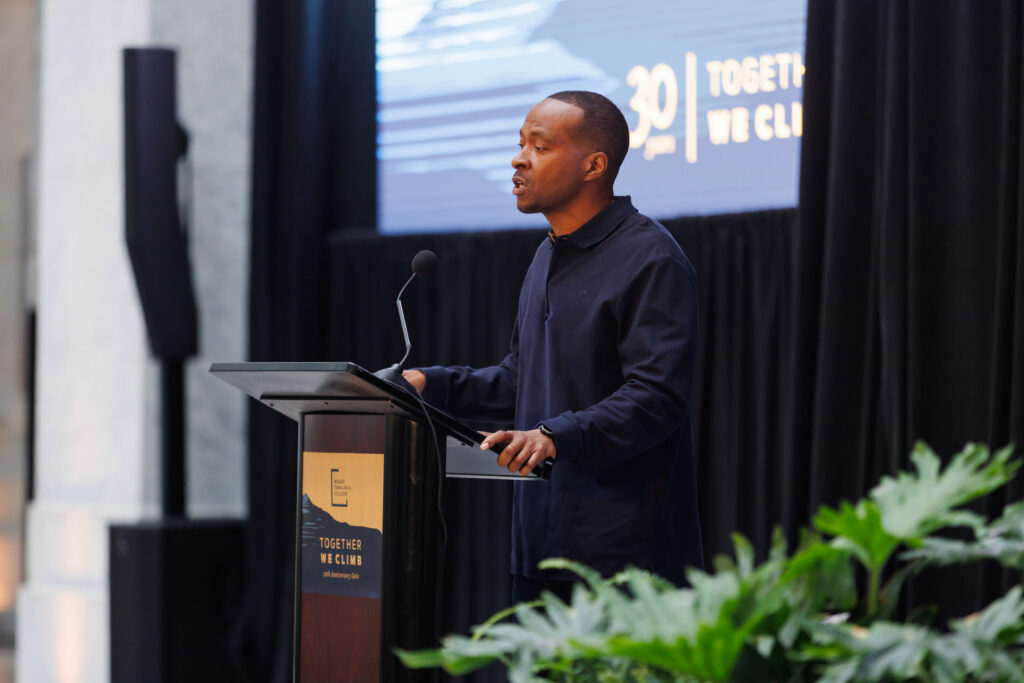
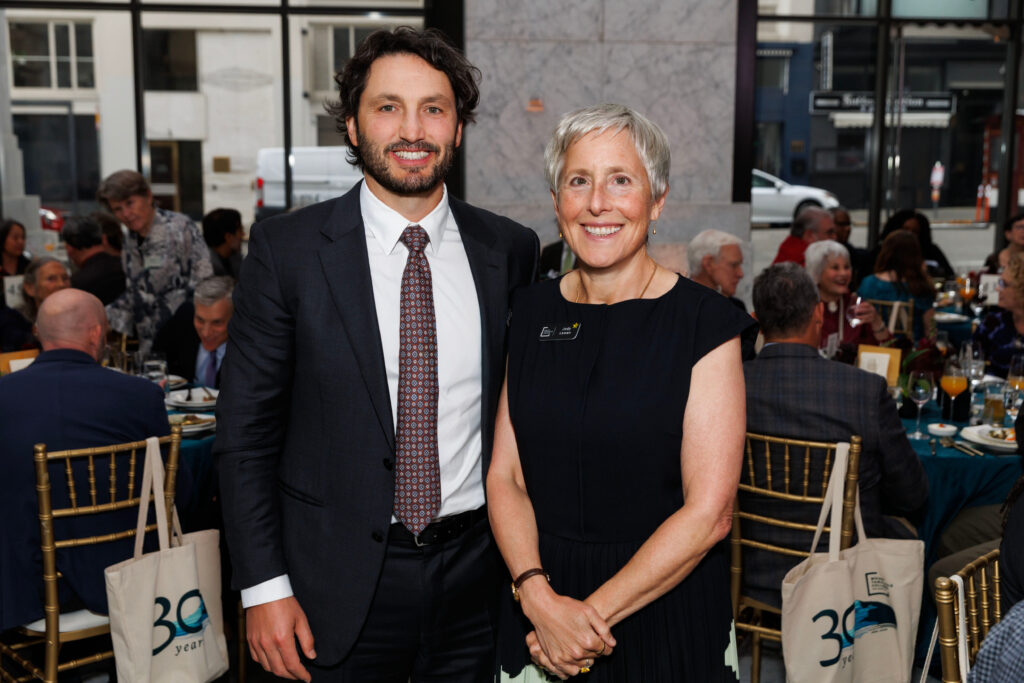
P.S. Please save the date for Together We Climb: MTC’s 30th Anniversary Gala on Saturday, April 18, 2026 at the Conservatory at One Sansome in San Francisco, CA! 

Filed Under: Current Affairs, From the President, Homepage, Uncategorized

MTC Resource Fair Connects Students with Reentry Resources

October 29, 2025 by Mt. Tam College

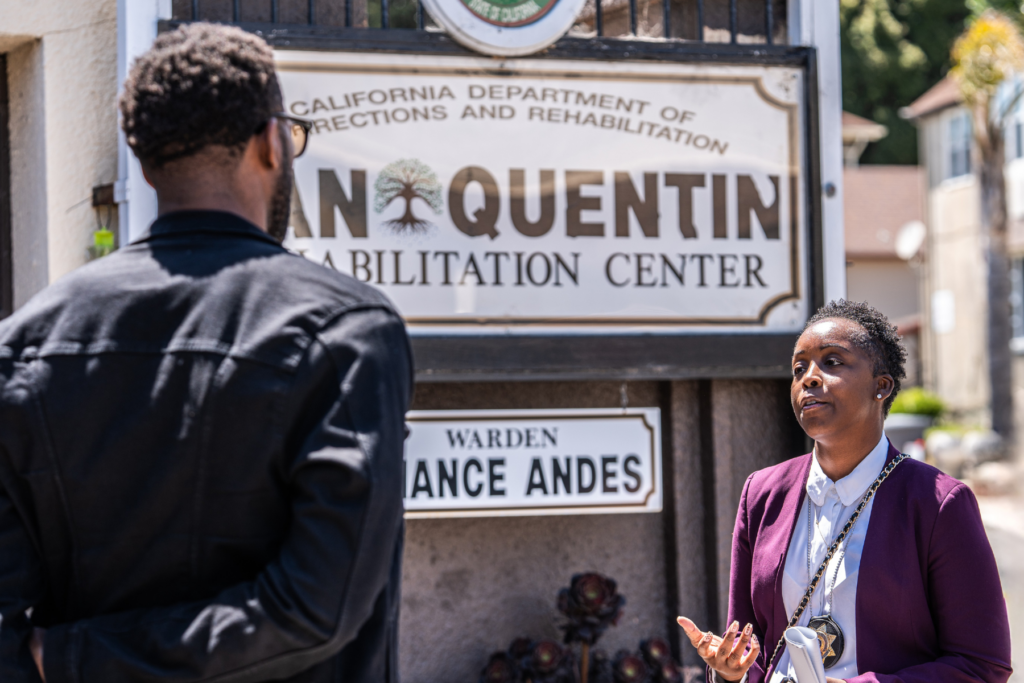
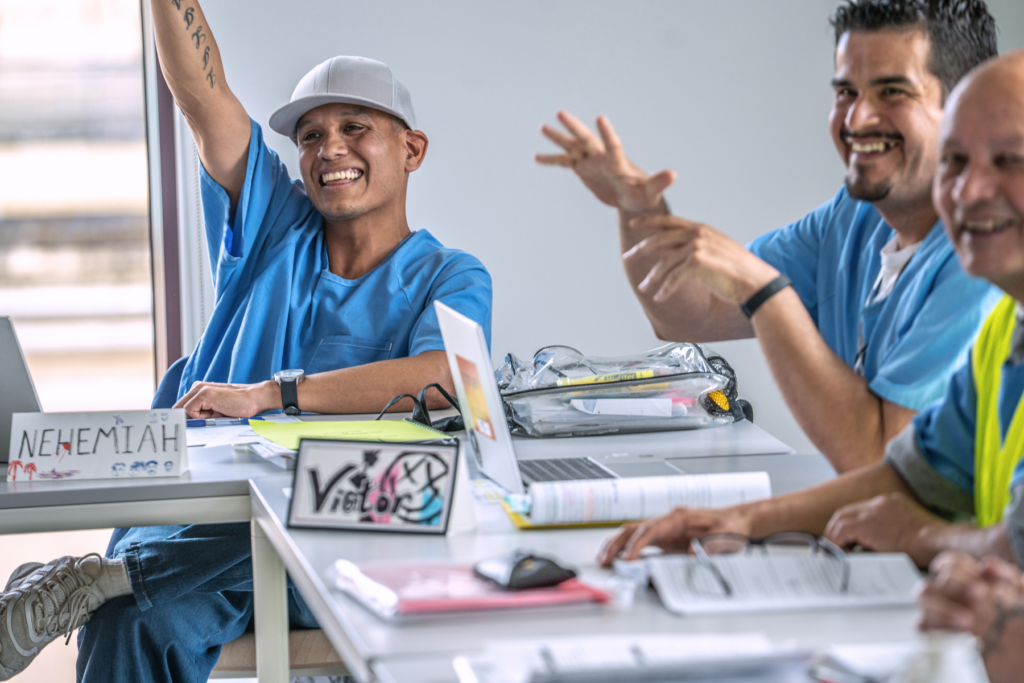
More than 150 Mount Tamalpais College students and alumni joined representatives from 16 community organizations inside San Quentin for the College’s 3rd annual Resource Fair on October 10. The event connected attendees with education, employment, legal, and reentry services designed to support their transition home.

The 2025 Resource Fair featured a broad range of reentry and educational resources. Among the organizations in attendance were Stay Out Solutions, The Uncuffed Project, and ThArrive, all of which provide reentry and transitional services, while UnCommon Law provides legal guidance and advocacy. Career development opportunities were represented by Resilience Education, and civic engagement was supported by Initiate Justice Action and the League of Women Voters.

For many students, the event was a chance to explore what reentry could look like in tangible terms and to connect directly with community partners. MTC student Steven Warren said he attended to learn what resources were available and to meet community members who could be part of his support network. “All of it—further education, the transitional support connections, voting organizations—are things I can utilize,” he said.

Continuing education programs were strongly represented, including UC Berkeley Extension, UC Berkeley Underground Scholars, and several Project Rebound programs (CSU East Bay, San Francisco State University, and San Jose State University). One student, Elmer David Rodriguez, described how networking with local university programs gave him a sense of optimism about continuing his studies after release.

“Networking with UC Berkeley and Cal State East Bay felt most valuable to me,” Elmer shared. “After meeting with the school bridge programs, I feel confident that I will find peer support and that I will acclimate.”

Additional partners included the Veterans Transition Center of California (reentry support for veterans), the San Francisco Public Library and Alameda County Library (public resources and education programs), and Planting Justice (job opportunities and community-based initiatives), all of which offer career development and reentry support.

For student Andrew R. Lopez, the event was as much about connection as it was about information. “I am practicing my reintegration into society, and find being around positive people aids me. Being around positive, free people is good for the soul,” said Andrew. “I am old and have been incarcerated for 35 years. I know the world outside has changed a lot. I hope to be able to enjoy the years that remain, both financially and with the least amount of stress.”

Following the Resource Fair, survey responses indicated that most attendees found the event valuable and relevant. Eighty-six percent of attendees said the event reflected their needs in planning for their release from San Quentin, while 79 percent reported feeling more confident about their parole plans after attending. In addition, 90 percent said they plan to follow up with organizations they connected with during the event.

“I’m an entrepreneur, so I loved accessing these resources,” student Zachery Rideaux said. “They were all geared to help me reach my goals and dreams. When I think about going home, I don’t fear anything but coming back in here.”

Get Involved

If you or someone you know represents an organization working in reentry (providing services for those reentering into society after incarceration) and would like to participate in future Resource Fair events, please contact Corey McNeil, MTC’s Alumni Affairs Associate, at cmcneil@mttamcollege.edu.

Filed Under: Campus & Community, Campus Events, Events, Homepage, MTC News, Partnerships, Research & Outreach, Resources Tagged With: News_P-1

MTC Welcomes New Chief Advancement Officer, Carolyn Salcido

October 29, 2025 by Mt. Tam College

Earlier this month, Mount Tamalpais College welcomed the newest member of its leadership team—Chief Advancement Officer Carolyn DeVoto Salcido.

In her new role, Carolyn leads the College’s advancement strategy and builds meaningful partnerships to sustain and expand MTC’s transformative mission.

“I feel so lucky to be joining the remarkable community of Mount Tamalpais College at such an exciting time,” said Carolyn. “As MTC approaches its 30th anniversary, there’s incredible momentum and possibility ahead. This position feels like the perfect fit—the perfect moment—to apply my experience in higher education toward shaping what comes next for the College.”

Carolyn brings more than fifteen years of experience in nonprofit fundraising—twelve of those in higher education—and a deep commitment to advancing equity in education and social justice. 

Most recently, she served as Associate Vice President of Advancement at California College of the Arts, where she guided a high-performing team through leadership transitions, completed a major capital campaign, and helped secure transformational gifts that strengthened the institution’s future. She holds a Master’s in Nonprofit Administration from the University of San Francisco and a Bachelor’s in Elementary Education from Loyola University Chicago.

A lifelong Marin County resident, Carolyn views her work at MTC as a natural extension of her passion for expanding educational equity in her community and beyond.

“MTC represents the perfect intersection of my professional experience in higher education and my personal commitment to expanding access to opportunity,” Carolyn added. “As a seventh generation Bay Area resident, I’m deeply proud to contribute to an institution that is transforming lives right here in our community—while helping to redefine what equitable education can look like nationwide.”

Mount Tamalpais College President Jody Lewen welcomed Carolyn’s arrival, noting the importance of her role in supporting the College’s tremendous impact and future growth. 

“Carolyn brings to Mount Tamalpais College not only deep expertise in advancement and fundraising for higher education, but also an understanding of what it means to build trust and community around shared values,” said Jody. “We are excited to have her as a partner as we continue working to advance the College’s mission and strengthen its foundation for the years ahead.”

Filed Under: Announcements, Campus & Community, Homepage, MTC News, People Tagged With: News_P-2

MTC Alumni Scholarship Awardee: Anthony Ammons Jr.

October 16, 2025 by Mt. Tam College

When Anthony Ammons Jr. arrived at San Quentin in 2012, the basketball court became his entry point into the prison’s broader community. As a member of the San Quentin Warriors basketball team, he found camaraderie, mentorship, and a sense of purpose that extended far beyond the game. That experience, he shared, sparked a deeper interest in personal growth, community service, and education.

“At San Quentin, I learned how to be a follower of good people,” Anthony said. “Instead of being a follower of the gang mentality, the negativity, I became a follower of good habits, because I was trying to train myself to do things differently.”

Although Anthony had been a standout basketball player all his life, he had never experienced the same success in the classroom. As he became involved in San Quentin’s many programs, he discovered that the prison’s education opportunities were unlike those he had encountered elsewhere.

“I was never a big fan of school, and what I saw at other prisons with education programs was that you can go to class, but there was no community afterwards. So I didn’t attend school there,” said Anthony. “Mount Tamalpais College was different, and that is what really motivated me to enroll.”

Through Mount Tamalpais College, Anthony began envisioning a future beyond prison. Education became a way to build on the lessons he had learned through basketball—teamwork, perseverance, and accountability—and to turn them toward achieving his personal and professional goals.

“I went to prison at age 16 with a sentence of 102 years to life, and I served 20 years,” Anthony said. “I knew my professional experience alone wouldn’t get me where I want to go in my career. MTC helped me understand that with an education to ground that experience, there is no door I cannot walk through and no community I cannot help.”

He credits MTC staff and volunteer faculty for their consistency, care, and high expectations, noting that their support encouraged him to shift his priorities toward education.

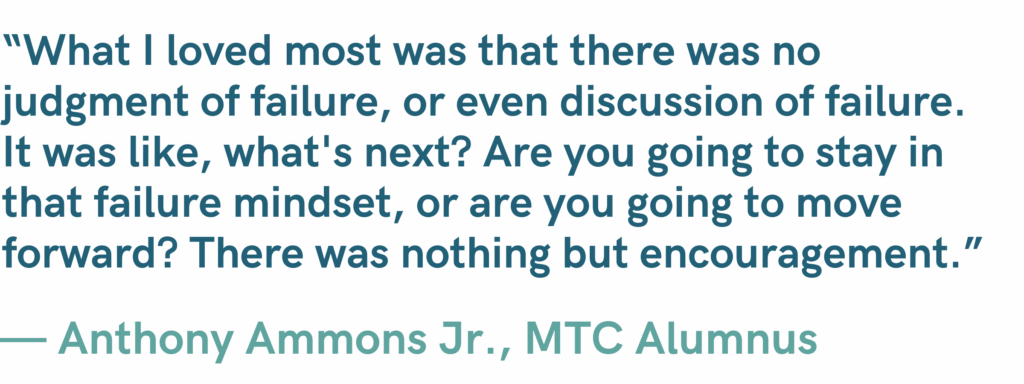
“I thought, wow—you’re coming to a prison to teach a class, with a smile on your face? I gotta get my education,” Anthony said. “And what I loved most was that there was no judgment of failure, or even discussion of failure. It was like, what’s next? Are you going to stay in that failure mindset, or are you going to move forward? There was nothing but encouragement.”

On the court, basketball was also opening new doors for him. His talent, energy, and work ethic led him to star as one of the central figures in the 2019 documentary Q Ball, which chronicles the relationships, challenges, and growth of the San Quentin Warriors basketball team.

Due to his participation in MTC courses and other programs, as well as his work responsibilities at the San Quentin hospital, Governor Jerry Brown commuted Anthony’s sentence in 2018, and he was ultimately released in 2020. As he navigated reentry into society, Anthony continued to focus on serving his community and furthering his education.

Anthony’s first job after release was as an elevator operator for the Golden State Warriors. While in that role, he was struck by a stray bullet in Oakland, leaving him with significant nerve damage to his foot.

“Because of the gunshot wound, I couldn’t play anymore,” he said. “It put me in a cold depression.”

Anthony committed himself to recovery and professional growth, eventually earning a position with Assemblymember Mia Bonta’s office as district scheduler and public safety advisor. He relearned how to run and has recently returned to the basketball court. He remains close with his former San Quentin Warriors teammates.

Today, Anthony serves as a Special Projects Coordinator with the California Attorney General’s CARE Team, connecting with community-based organizations on reentry, disability rights, and immigration. In addition to his full-time work, he is pursuing an associate degree in Criminal Justice Administration at Long Beach City College, and was recently selected as a recipient of MTC’s Alumni Scholarship Program, awarded in partnership with 10,000 Degrees.

Explore the MTC Alumni Scholarship Program and get to know the 2025 recipients.

MTC Alumni Scholarship Program

Filed Under: Campus & Community, Current Affairs, Homepage, People Tagged With: Alumni, News_P-4

Guest Lecture Features MTC Alumni on the Power of the Written Word

September 14, 2025 by Mt. Tam College

Alumnus and Author Emile DeWeaver Discusses his Newly Released Book with MTC Trustee and fellow Alumnus Sha Stepter

On July 28, Mount Tamalpais College’s Guest Lecture Series brought together two distinguished alumni—author and activist Emile DeWeaver and MTC Trustee Sha Stepter—for a conversation with students inside San Quentin Rehabilitation Center. Drawing on their lived experiences of incarceration, DeWeaver and Stepter explored ways education and storytelling can foster personal growth, agency, and advance prison reform.

DeWeaver discussed his recently released book, Ghost in the Criminal Justice Machine, which chronicles his path from incarceration to author and activist. While in prison, DeWeaver became a community organizer, writer, and journalist, and co-founded Prison Renaissance, a platform that supported incarcerated artists and authors in fostering artistic and personal growth. His sentence was commuted by Governor Jerry Brown in 2017 in recognition of his community service and transformation.


MTC Trustee Sha Stepter, who had his sentence commuted in 2018, spoke about his shared experiences with DeWeaver: “We were in West Block together. I have a lot of history with this man. I’ve seen through him the power of organizing—and his book is a testament to that.”

DeWeaver also focused on the themes of power and accountability. He urged students to think critically about power not as domination, but as agency—the ability to act, to choose, to create. “Your relationship to power is the most important thing to consider,” DeWeaver said. “We must be intentional about how we focus that power.”

For Stepter, Mount Tamalpais College played a critical role in helping him understand his own power and influence. “I began living my opportunity in 2012, when I was in the hole [solitary confinement]. An MTC administrator came and found me to check on my work for one of my classes. That’s when I realized I was doing things that were actually getting me further away from going home. I started to understand that I was accountable for my own healing and happiness.”

Stepter noted that his relationships with MTC faculty and classmates deeply shaped his sense of self. “Seeing faculty walk down the yard, especially for the night classes, made a big impression on me. At MTC, people told me I mattered—and it wasn’t just the volunteers. It was also people in blue telling me they needed me.”

The power of the written word was a focal point of the conversation. DeWeaver described how writing became central to his life in prison. “When I was on trial, my kid was born, and it changed my entire world. Facing a life sentence, I was 19 years old, with a newborn. It was too much for me to hold. So I decided I would write myself out of prison, and 21 years later, that is literally what I did.”

Reading and writing, he explained, became both survival and resistance. “By the time I got out of county jail and into prison, I was writing sometimes 14, 16 hours a day in my cell. Getting books from different programs, anyone who would send me something, I just read everything.”

He worked steadily at his craft for more than a decade before seeing his work published. “It took me about 12 years to finally get published, right about when I transferred to San Quentin. It was a piece called Superman, my first semi-autobiographical piece. I drew from a mix of relationships in my life—my father, and one of my best friends at [California State Prison] Solano who came out to me as gay. The piece brought those experiences together.”

Since his release in 2017, DeWeaver has earned wide recognition for his literary work and journalism. In addition to the release of his debut book in May 2025, he has received the 2021 Keeley Schenwar Memorial Prize, a 2022 Soros Justice Media Fellowship, and a fellowship with the Center for Just Journalism.

MTC students shared that they found the conversation both educational and motivational. 

“These guest speakers are an inspiration, especially because they can speak about both sides of the spectrum, having experienced life as inmates and as free people,” one student noted after the discussion. “Thank you to MTC for bringing such speakers into our lives, providing hope and a new perspective on how to expand our social life within the gated community.”

Filed Under: Events, Homepage, MTC News Tagged With: News_T-1

Annual Alumni Gathering

August 28, 2024 by Mt. Tam College

On August 17, Mount Tamalpais College held its 2nd Annual Alumni gathering at a beautiful park in San Leandro, attracting many alumni, faculty, and their families. As the sun rose, the park, cuddled beside the sparkling waters, was already excited.

Alumni Affairs Associate Corey McNeal and Chief of Staff Bekki Lee-Wendt were among the early arrivals, greeting the increasing crowd with warm welcomes. As the festivities kicked off, I adjusted a few chess pieces, catching the eye of alumnus Raphael Calix, who noticed that one of the pieces had mysteriously moved.

College faculty member Alex Naeve shared her thoughts, saying, “It was incredible to see so many alumni outside the walls of San Quentin. I really enjoyed hearing about what each person is pursuing and hoping to accomplish in their professional life, now that there are so many new possibilities.”

Throughout the day, familiar faces of alumni Larry White, Nghiep ‘Ke’ Lam, Chuck Longley, Louis Calvin, Sam Johnson, Bryan Richie, and many more could be seen around the park. The event was a heartwarming reunion, filled with joyful embraces, laughter, and meaningful conversations. For some, this was their first experience attending such a gathering outside the confines of San Quentin.

The atmosphere blended happiness and disbelief, with some attendees quietly expressing their amazement, saying, “I can’t believe we’re free.” Alumnus Sam Johnson, who graduated from Mount Tamalpais College when it was still the Prison University Project in 2013, reflected, “I was moved at the number of men who were formerly incarcerated with me and graduated.”

“Seeing their smiles and families moved me emotionally,” Sam added. “Because of the prison system and government officials, we had no hope of ever coming home, but here we are with friends and loved ones,” he expressed gratitude to everyone, particularly Jude, who he holds dear for believing in the impossible.

The event also provided a space for reflection. Those recently released and still adapting to life outside found comfort in sharing their experiences with other alumni. Discussions ranged from employment and voting rights to mentorship, safety, and self-care, all underpinned by a strong sense of community that offered a safe space for vulnerability, feelings of uncertainty, and deep connections.

Alumnus and soon-to-be groom Eddie Herena brightened the day with the arrival of his fiancée Jessica and their beautiful daughter Adeline. He shared, “This is considered my college reunion. I wanted to see my fellow alumni brothers and continue to build that bond and support that helped us all out during emotional times.”

This gathering not only celebrated the achievements of the alumni but also underscored the crucial role of community support as we transition back into society after incarceration.

Alex concluded, “The support and encouragement that MTC alumni show each other is remarkable. I do not doubt that this sense of fellowship and belonging will serve them–and the greater community–well for years to come.”

Filed Under: Events, Homepage, MTC News

Student Services for the Incarcerated: How to Support Student Success

July 25, 2024 by Mt. Tam College

Mount Tamalpais College staff members Corey McNeil, Alumni Affairs Associate, Dr. Windy Franklin-Martinez, Director of Student Services and Academic Advising, and Jennifer Juras, Chief of Institutional Effectiveness and Research, spoke about their work with incarcerated students at San Quentin during the Accrediting Commission for Community and Junior College (ACCJC) conference in Los Angeles. They were joined by Ardis Eschenberg, Chancellor of Windward Community College, David Williams (VP of Academic Affairs), and Shanan Danley from Solano Community College’s SOAR Program.

Their presentation began with Mount Tamalpais College’s (MTC) history as an extension site of Patten University (from 1996 to 2020), which became independently accredited by ACCJC in January 2022. Many factors set MTC apart from other colleges in the room, including the fact that MTC’s faculty are volunteers, and attendance, including tuition and school supplies, is free. The presentation emphasized how student services underpin successful, intellectually rigorous, and inclusive colleges. MTC’s student services division shares commonalities with traditional colleges but has unique aspects due to its setting and student population. The subjects discussed included:

  • Services We Provide: Advising and Student Services, Learning and Development, and Alumni Affairs
  • Student Services: How does this look different in a prison setting?
  • Alumni Services: How does this look different in a prison setting?

Jennifer Juras highlighted the support MTC has within the ACCJC community and the positive reception of their presentation, noting the interest in programs in prisons among colleges. Jennifer said, “It was also apparent that there’s interest in running programs in prisons among junior and community colleges. We received many questions about how to get started.”

Dr. Windy spoke about the comprehensive student services MTC offers, including learning support services and the role of the Learning Disabilities (LD) Specialist in training and supporting faculty. The information about those services included evaluation for learning disabilities, academic accommodations, strategizing with students and faculty to improve learning outcomes, and supporting faculty with universal design and curriculum differentiation.

She emphasized the shared challenges among colleges serving incarcerated students. Corey McNeil discussed building MTC’s alumni network and supporting alumni pre-and post-release. He highlighted the importance of maintaining this network, stating, “This is important because a dialogue has taken place that helps to inform and serve current and former students as well as MTC in how it can better support the students as a whole.”

“What stuck out to me,” Corey said, “is how people from various walks of life and cultures and from around the world came together to share and learn from each other the best practices that help students fulfill their educational goals.”

For the question and answering segment of the presentation, Corey said he realized that “the questions that were being asked were indicative of the same issues that MTC has faced and most HEPs encounter, which further solidified my thoughts on how important it is for events like this to happen.”

He noted the diversity among conference attendees and the importance of events like this for sharing best practices. Corey exchanged contact information with personnel from Los Angeles City College and Solano Community College to discuss future collaborations. “My colleagues were exceptional with their part of the presentation,” Corey said. “They spoke with professionalism and knowledge that exhibited their passion for this work. I feed off their enthusiasm and energy.”

Thank you to the ACCJC for having us!

Filed Under: Accreditation News, Events, Homepage, MTC News

Incarcerated Students Can Now Teach at the First Accredited Prison College in the US

April 12, 2023 by Mt. Tam College

New initiatives at Mount Tamalpais College allow people incarcerated at San Quentin to design and teach their own workshops

Sherman Newman, an incarcerated man, is both a student and a teacher at California’s Mount Tamalpais College (MTC), a liberal arts college in San Quentin State Prison. He is one of the thousands of people who have attended MTC, the only accredited, independent liberal arts college in the U.S. that operates its main campus out of a prison. 

Formerly known as the Prison University Project and Patten University, MTC has provided free education to incarcerated people at San Quentin for over 20 years, officially receiving accreditation in January 2022. San Quentin—California’s oldest prison—is infamous for many reasons, including its high death row population and recent botched pandemic response that led to the death of 28 incarcerated people. In recent years, it has been applauded for its media center, education opportunities, and overall shift toward rehabilitation.

Studies show that educational programs in prison often correlate with lower recidivism rates. Research funded by the Justice Department’s Bureau of Justice Assistance found that incarcerated people who participate in college programs have a 43% lower recidivism rate than their peers. However, MTC Chief Academic Officer, Amy Jamgochian said the college doesn’t exist to reduce recidivism rates. Rather, MTC is grounded in the belief that every person, regardless of incarceration status, is deserving of a quality education. 

“There is this assumption that a prison education is a dumbed-down version of ‘real’ education,” said Jamgochian. “That is absolutely inequitable; it would be incredibly patronizing to lower standards for incarcerated people.”

Hundreds of volunteers make up MTC’s faculty, with many of the professors hailing from neighboring universities like the University of California, Berkeley, and San Francisco State University. In the last year, MTC began extending some of its teaching positions to incarcerated people.

“There is no way to generalize what incarcerated people want to study. We have politically conservative and progressive students and some students who simply don’t want to be thinking about incarceration all the time. We’ve even had students request Sanskrit classes,” Jamgochian said. “We have to acknowledge the breadth of expertise and interest inside prisons—too many [people] make assumptions about what [incarcerated students] want.”

For nearly a year, MTC students have been invited to submit proposals for extracurricular workshops that they want to teach. Though these workshops are not for credit, MTC’s administration said it takes them just as seriously as other classes, reviewing the proposed syllabi and prospective instructors as they would for an accredited course. The extracurricular program has led to at least six new courses, all of which have been extremely popular among MTC students. 

“It’s been very exciting to see the vast array of interest,” said Jamgochian.

Lee Jasper, a professional musician, currently teaches a class on music theory. Sounds of bass guitar emanate from his classroom, luring in other music enthusiasts. 

“I played with a band while I was in the U.S. Air Force,” Jasper said, noting that he later taught a supplemental master guitar program for students at the University of California, Davis. 

Jasper’s music lessons would normally cost hundreds of dollars. At San Quentin, he offers them for free. 

“My rehabilitation demands that I be in service to my community,” he said. “I want to make my knowledge and abilities available to [all my students] to help improve their skills.”

Jasper’s workshop begins at the basics and ends with students being able to “read, write, compose, and discuss complex melodic theory,” according to his syllabus. One of his students, 68-year-old Ammen Shinti, has played music since he was four. 

“Being involved keeps me sharp,” said Shinti. “I also like to nurture new talent and show the world how awesome we [incarcerated people] are.”

Some workshops at MTC allow for co-teaching opportunities. Kelton O’Connor and Arthur Jackson, the latter of whom is also an MTC employee, currently teach a workshop together on diabetes justice. In their class, students sit in a circle to discuss the intersection of food and environmental justice.

“This class is designed to encourage people to start advocating for solutions to global warming,” said Jackson. Outside of class, Jackson and O’Connor also advocate for more fresh food in prisons. “A lot of what we eat, especially meat, contributes to destroying the ozone layer,” Jackson said.

MTC workshops also provide an educational space for incarcerated students and teachers to process traumatic experiences. Harry C. Goodall’s course, “Maturing In Modern Times: Overcoming Educational Trauma,” helps incarcerated students develop their emotional intelligence to uncover, understand, and overcome their educational trauma. Educational trauma can stem from being bullied by teachers or students, having low self-esteem and grades, and other harmful academic experiences due to behavioral issues, problems at home, or learning disabilities. For many incarcerated individuals, these experiences defined their early education. Goodall’s course helps students move past stigmas around learning disabilities and regain confidence and control over their education. 

MTC’s extracurricular courses coincide with the recent reinstatement of Pell Grants for incarcerated people. Pell Grants provide federally funded education for students with “exceptional financial need.” The U.S. Department of Education originally offered these federal funds to incarcerated students, but the 1994 Violent Crime Control and Law Enforcement Act decimated prison education programs for more than two decades. In 2015, former President Barack Obama restored an experimental version of Pell Grants for incarcerated people, and in 2021, President Joe Biden restored them in their entirety. 

Fortunately, as a nonprofit supported by private donations and grants, MTC is not reliant on federal funding to provide students with free education. “In general, historically, public funding for prison rehabilitation has depended on political tides—politicians move to eliminate it as a way to be ‘tough on crime,’” said Jamgochian, who said she supports any type of prison education but values the advantages MTC has as an independent institution. 

Despite the divergent challenges and benefits that independent and federally funded prison education programs encounter, both must approach restoring education, dignity, and respect to incarcerated people with thought, caution, and—in Jamgochian’s words—“an eye to equity and maintaining high standards.”

As colleges like MTC launch new initiatives, incarcerated people will regain not only their right to an education but also the opportunity to educate others. Peer teaching can facilitate greater understanding, support, and comfort between teachers and students. These efforts also boost the confidence and self-esteem of those leading the courses, who have a wealth of knowledge and experience worth sharing.

“I had low self-esteem growing up that I used gang activity and leadership to conceal,” Newman said “Now I am a teacher, a leader, and that has made my self-esteem go through the roof. I feel like I can do anything I want in life with these skill sets.”

Attribution: This article originally appeared in Prism on March 31, 2023.

Top photo: Mount Tamalpais student Arthur Jackson, pictured above, is co-teaching the course Diabetes Justice with MTC student Kelton O’Connor. Photo credit: Eddie Herena

STEVEN BROOKS

Steven Brooks is the editor-in-chief of San Quentin News, manager and staff writer at Wall City, and member of Empowerment Avenue. He has written numerous articles for different publications and is the… More by Steven Brooks

OLIVIA HEFFERNAN

Olivia Heffernan is a writer, editor, and award-winning filmmaker. Her work explores the intersection of race, labor, and incarceration. She has written for Jacobin, The Baffler, The Nation, among many… More by Olivia Heffernan

The Right to Write (R2W) project is an editorial initiative where Prism works with incarcerated writers to share their reporting and perspectives across our verticals and coverage areas. Learn more about R2W and how to pitch here.

Filed Under: Current Affairs, Homepage, MTC in the News

Announcing the Mount Tamalpais College Alumni Scholarship

February 15, 2022 by Mt. Tam College

We’re pleased to introduce the Mount Tamalpais College Alumni Scholarship Program!

This program will provide scholarships and other support to MTC alumni who are interested in pursuing further education. The scholarship program will be administered by 10,000 Degrees, an organization that administers scholarships and provides college advising. Their mission is to achieve educational equity and support students from low-income backgrounds to and through college to positively impact their communities and the world. We’re proud to partner with them to connect MTC alumni to valuable support.

Interested in learning more? Please see the Frequently Asked Questions and applications details here.

10,000 Degrees is currently accepting applications from eligible MTC alumni. The priority deadline to apply is March 2, 2022, however, the application will be left open until all scholarship funds are distributed. The first round of funds will be awarded for the Fall 2022 semester.

We are excited to grow this program in the years to come and to support MTC alumni throughout their education journey.

Filed Under: Academics, Announcements, Homepage, MTC News

mtc seal

Contact Us

PO Box 492
San Quentin, CA 94964
(415) 455-8088


Please note: Prior to September 2020, Mount Tamalpais College was known as the Prison University Project and operated as an extension site of Patten University.


Tax ID number (EIN): 20-5606926

Quick Links

CONTACT US
CAREERS
PRESS KIT
ACCREDITATION
PUBLICATIONS
DONATE


Join Our Mailing List

© 2026 | Mount Tamalpais College | Photography by RJ Lozada | Design & Development by //DESIGN AGENCY//

  • About
    ▼
    • Mission & Values
    • Staff & Board
    • Accreditation & Institutional Research
    • Careers
  • Academics
    ▼
    • Admissions
    • AA Degree
    • College Prep
    • Faculty
    • Apply To Teach
  • Students & Alumni
    ▼
    • Students
    • Alumni
    • OpenLine Literary Journal
  • Resources
    ▼
    • Practitioner Support
    • Resources for Incarcerated Students
    • Research on Prison Higher Education
  • News
    ▼
    • Top MTC Stories
    • Recent Press
    • From the President
    • Commencement
  • Give to MTC
    ▼
    • Donate
    • Shop