• Skip to primary navigation
  • Skip to main content
  • QUICK LINKS
    • CONTACT US
    • CONNECT
      WITH US
    • FACULTY APPLICATION
    • PUBLICATIONS
    • PRESS KIT
    • CAREERS
  • About
    • Mission & Values
    • Staff & Board
    • Accreditation & Institutional Research
    • Careers
  • Academics
    • Admissions
    • AA Degree
    • College Prep
    • Faculty
    • Apply To Teach
  • Students & Alumni
    • Students
    • Alumni
    • OpenLine Literary Journal
  • Resources
    • Practitioner Support
    • Resources for Incarcerated Students
    • Research on Prison Higher Education
  • News
    • Top MTC Stories
    • Recent Press
    • From the President
    • Commencement
    • 2026 Gala
  • Give to MTC
    • Donate
    • Shop

Mount Tamalpais College

Current Affairs

Foundations Announce 2018 Soros Justice Fellows

July 26, 2018 by Mt. Tam College

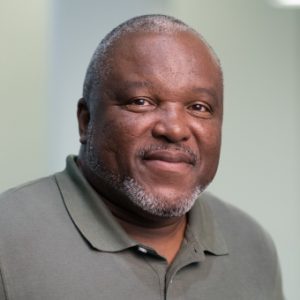
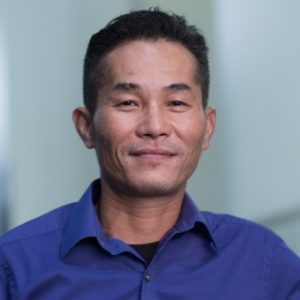
We are thrilled to announce that Prison University Project alumni, Troy Williams and Tung Nguyen, were selected as 2018 Soros Justice Fellows, emerging leaders who are pushing for meaningful criminal justice reform in the U.S. Open Society Foundation’s press release is excerpted below:

The Open Society Foundations today announced an award of $1.4 million to its 2018 class of Soros Justice Fellows, an exciting group of community organizers, journalists, lawyers, policy advocates, and artists who seek to advance reform and spur debate on a range of issues facing the U.S. criminal justice system.

“Open society values face countless threats in this country, and those threats seem to be coming at a truly head-spinning pace,” said Lenny Noisette, who oversees the Soros Justice Fellowships for the Open Society Foundations’ U.S. Programs. “We’re fortunate to be able to support a group of people who will work to ensure that criminal justice reform remains front and center in debates about fairness and justice in this country—debates that have more urgency now than ever.”
Working in 10 states across the country, the 16 fellows in this year’s cohort include: a lawyer who will fight to make the effects of America’s harsh “three strikes” drug laws more transparent; two formerly incarcerated advocates who will provide legal support to their incarcerated peers; a transgender rights activist who will work to help transgender and gender nonconforming people tell their own stories of how the criminal justice system impacts their communities; and a former probation and parole officer who will now advocate for more humane probation and parole policies.

[…]

Tung Nguyen will establish a model Vietnamese deportation support system in Orange County, California, that can be implemented nationwide.

Troy Williams will create a nationwide multimedia platform and community engagement program that helps formerly incarcerated people document their experiences and engage the public.

Read Story

Please note that the Prison University Project became Mount Tamalpais College in September 2020.

Filed Under: Awards & Recognition, Campus & Community, Current Affairs, MTC in the News, MTC News, People

How to Find Truth in Today’s Partisan World—Can Public Philosophy Teach Us to Think?

June 18, 2018 by Mt. Tam College

On February 13, 2018 members of the Prison University Project’s College Program competed against UC Santa Cruz philosophy students in an Ethics Bowl– a non-confrontational alternative to the traditional competitive form of debate. Held within the walls of San Quentin State Prison, this unprecedented event celebrated the pursuit of truth over persuasion and promoted healthy habits of thinking and reasoning as essential elements for a thriving civic society.

Reflecting on the Ethics Bowl, Scott Rappaport explores what it means to move philosophy “away from the stereotype of the old bearded man pondering in the mountains and instead apply its principles to crucial problems we all face in today’s world.”

Twice a month from last September to February, UC Santa Cruz philosophy lecturer Kyle Robertson woke up early, dropped his kids off at school, drove north for one hour and fifty minutes, crossed the Richmond Bridge, and went to San Quentin.

He would park in the prison lot, walk past a gift shop selling art created by death row inmates, and enter the main gate, where he would sign in at the first of three consecutive checkpoints. Finally entering the prison yard, he would walk past prisoners playing on the basketball courts and others engaged in games of chess, to get to the education center of the prison.

Robertson was there to teach a course in Ethics Bowl—a non-confrontational alternative to the traditional competitive form of debate—in collaboration with the Prison University Project (PUP). At the same time, he was also teaching an undergraduate course and coaching a team in Ethics Bowl at UC Santa Cruz. He soon suggested and arranged a very unusual debate between seven philosophy students from UC Santa Cruz and a team of prison inmates from San Quentin. It took place in the prison chapel—in front of an audience of nearly 100 inmates.

“This is the first time there’s been a debate inside San Quentin,” says Robertson, who served as moderator. “And it’s one of the first Ethics Bowls that’s ever happened in a prison.

“It was a smashing success, but it was no small feat logistically,” he adds. “Because in the prison environment, everything runs on a tight schedule, and control of that schedule is entirely in the guards’ hands, not mine. We had to alter the format a little—for example, we made a 10-minute break in the middle of the round, because all of the inmates had to file outside for a count at that point. All inmates in the state of California are counted around 4 p.m., whether they are relaxing on the yard or competing in an Ethics Bowl.”

The event at San Quentin is just one of the many outreach activities of the Center for Public Philosophy (CPP) at UC Santa Cruz. Founded in 2015 by associate professor of philosophy Jon Ellis, it is supported by The Humanities Institute, an incubator for humanities research on the Santa Cruz campus.

The center is also coaching and conducting regional Ethics Bowls for high schools throughout Northern California; creating short animated videos about philosophical problems that teach reasoning skills and how to avoid biased thinking; teaching moral philosophy and ethics in Santa Cruz jails; working with biologists to study how language affects conservation efforts; and even introducing philosophy, ethics, and critical thinking to children at three elementary schools in the local community.

The idea is to move philosophy away from the stereotype of the old bearded man pondering in the mountains and instead apply its principles to crucial problems we all face in today’s world. And in an era of intense partisanship, rabid fighting on social media, “fake news,” and “alternative facts,” the center promotes a new normal of how to talk about the really big issues confronting us today—in a civilized, rational, and much friendlier manner.

“The goal of the Center for Public Philosophy is to improve the caliber of deliberation and dialogue in the general public,” says Ellis, director of the center. “Our programs seek to promote healthy habits of thinking and reasoning by drawing on key insights from the history of philosophy and the findings of cognitive science.”

Ethics Bowl is the opposite of traditional forms of debate in this country—the “win-at-all-costs,” negative, whatever-it-takes debate that is typical of cable news, congressional debates, election campaigns, and our courtrooms. Both Ellis and Robertson believe that traditional debate competitions, a well-established part of the U.S. high school curriculum since early in the 20th century, ultimately strengthen and reward one-sided thinking.

“I think that the way we argue in courts of law, and in ‘forensic’ debate competitions, has undermined our ability to engage in the constructive debate that is necessary for democracy to function. Ethics Bowl, or something like it, could be a cure,” says Robertson, who earned a law degree from UC Berkeley and practiced for two years in Silicon Valley, before earning a Ph.D. in philosophy from UC Santa Cruz.

“Standard debate is reasoning with an agenda,” adds Ellis. “It is also what we find so corrosive in today’s politics. People have their favored view and then emphasize the information that fortifies their stance. Evidence that threatens their position is rationalized away, while problems for the opposing view are scavenged for, and then magnified.

“Not surprisingly, schools and communities around the country are pursuing alternative forms of debate, ones that switch the order of priority, and set the goal of truth and understanding over the goal of persuasion.”

Robertson notes that 13 prisoners were originally in his class training for the Ethics Bowl debate at San Quentin, but over the course of the semester, “two guys got out, so we lost them from the team.” The two-hour class covered topics such as moral theory and how to use ethics to justify a position in a case.

“They loved it—they were really into it,” says Robertson. “They would stay after class to talk to me; they would not want to stop talking,” he adds. “They read incessantly and were really well-prepared. I think also, pragmatically, they were learning moral advocacy skills for their own hearings—many have life sentences with a possibility of parole.”

But for the UC Santa Cruz students, training for the debate was a mixture of anxiety and adrenaline.

“Their first reaction was excitement; the fear came as they actually thought more about it, particularly on the day of the event,” says Robertson. As senior philosophy major Anna Feygin (Oakes,’18) notes, “It’s one thing to be forewarned about what to expect when you head inside a prison; it’s another to actually experience it.”

“I was nervous because I was essentially going and walking into a prison, but excited at the same time,” she recalls. “I’d never been to a prison—let alone talked to a prisoner, or an ex-prisoner, or a current prisoner—so it was pretty nerve-wracking at some points.”

Third year philosophy student Pedro Enriquez (Oakes, ‘19) also had some concerns.

“I thought it was going to be a lot more like the movies where they’re locked down, and you know, they’re going to be hollering or whatever. So when we walked in after we passed the security and they were just walking around, I was like, ‘Wait, is anybody gonna do anything, like where are all the cops, what if they do something?’

“I think I was nervous because it was such a new environment for me, and we were going to be in front of so many inmates,” he adds. “We came in thinking we were on the book-smart side, and they were very much on the street-smart side, so there was a different dynamic going in. That made me nervous, and I don’t know, it just seemed like a very important event.”

But their fears were soon alleviated.

“Once the prisoners started coming up and talking to us, they were really friendly,” says Enriquez. “And I remember looking out into the crowd and seeing the inmates and how attentive they were, and seeing all the volunteers and just thinking, ‘Wow, this is a big deal.’ You know, it’s easy for me to think of this as an extracurricular activity, but it means a lot more than that to a lot of people.”

“I just remember going around and shaking everyone’s hands and thanking them for letting us do this, because it really was a once-in-a-lifetime opportunity,” Feygin adds. “Overall, it was a remarkable and eye-opening experience, and I am very grateful to have been a part of it.”

“How many of you have been to San Quentin before?” says the warden, addressing the guests and UC Santa Cruz students just before the Ethics Bowl debate begins. “Is this what you thought prison was going to be like? For most people who come in who have never been to San Quentin, this isn’t what they expect … and we’re pretty proud of that.

“This doesn’t happen everywhere,” he adds. “We’re blessed to have people willing to come in and give their time for rehabilitation.”

One of those people giving their time is Amy Jamgochian, the academic program director for the Prison University Project (PUP), a nonprofit organization that supports the college program at San Quentin. One of the few on-site prison college programs in the country, its mission is to provide and support increased access to higher education for incarcerated people, as well as to encourage public awareness of higher education access and criminal justice.

“I hadn’t heard of the Ethics Bowl format before Kyle introduced it to us, and I love it,” says Jamgochian. “It offers components of argumentation that are missing in traditional debate and that create a more nuanced and analytical dialogue. I’m delighted that our students have the chance to be exposed to this particular format.

“We aim to offer a college experience inside prison that is as close to college outside prison as possible. This means that our courses are rigorous and we have high expectations of our students, but we’re also trying to build a campus community, which the event played a lovely role in.”

“Our students are humans embedded in communities, whether they leave prison in a week, in a year, or never,” Jamgochian adds. “They have cellmates, friends, wives, mothers, children, grandchildren, and friends. They write op-eds, short stories, novels, and letters to senators. They teach courses to other prisoners, and they advocate for themselves and for their friends and families. It may well be the goal of the prison system to strip prisoners of citizenship, but humanity can’t be squelched, and there are modes of citizenship that don’t require voting or physical freedom. The principles of Ethics Bowl are the principles of healthy democracy: understanding the issues, advocating for one’s beliefs, listening to others’ ideas, and engaging in respectful dialogue.”

The Ethics Bowl class and subsequent debate with UC Santa Cruz philosophy undergraduates affected the inmate participants in a variety of ways. Each had a personal reason for taking part in the debate, and afterward, most expressed a desire to participate in future Ethics Bowl debates.

“I decided that it would a great idea and learning experience to engage other students in some type of formal debate,” says inmate Randy Akins. “Just to be able to interact with the public made me feel whole again.

“I’ll do it again,” he adds. “I learned how to incorporate other people’s views into a cogent argument.”

Inmate Forest Jones had a different take on the experience.

“I wanted to represent my team and demonstrate the knowledge I’ve been learning in the Prison University Project classes,” says Jones. “I’d never participated in a debate and wanted to experience its setting.

“Coming into this Ethics Bowl class and debate, I struggled in the understanding of the concepts of ethics,” Jones adds. “But doing the exercise of applying them to real-life events has helped me better understand them. They are not some abstract concepts, but relevant and applicable in solving life’s problems.

“I enjoyed the conversation and exchange of knowledge with the students,” says Jones. “I would participate in another debate if you had one. But I may have to do it in a public university, because I appear before the parole board in a month and a half.”

One of the three judges for the San Quentin Ethics Bowl was Sandra Dreisbach, who cofounded the first Ethics Bowl team at UC Santa Cruz while still a graduate student. Now a lecturer in the Philosophy Department, Dreisbach observed that both the San Quentin team and the UC Santa Cruz undergraduate student team did more than have an ethics debate—they demonstrated what it means to be ethical.

“For me it represented the true spirit of what ethics and Ethics Bowl is about: being truly compassionate and respectful toward others by being fully open to all perspectives on moral issues that concern us all, regardless of what differences we possess,” says Dreisbach. “The San Quentin prisoners and the UC Santa Cruz undergraduate students may be deeply different in their experiences, their age, and education, but they all came together to share their moral views with true sincerity and full engagement with each other. In the end, what both teams exemplified in this San Quentin Ethics Bowl is what we all share—our human experience.

“It is one thing to understand in principle that there are people in prison for life and that inmates, as human beings, deserve to be treated with respect regardless of what crimes they have been convicted of,” Dreisbach adds. “It is quite another thing to leave the comfort and familiarity of UC Santa Cruz and trappings of everyday life, and willingly enter San Quentin prison, meet inmates, and actively discuss and debate with them. This is an invaluable life experience that instructs deeper than any classroom lesson could have provided.”

There’s no shortage of contentious topics that can be debated in an Ethics Bowl—ranging from the Trump Administration’s “Muslim Ban,” to the use of military drones, to political discussion on social media, to the ethics of marital infidelity. Not to mention ethical questions about birth control and the Affordable Care Act, video games involving virtual and augmented reality, working while sick, online privacy, banning religious garb, and “donor babies.”

At San Quentin, the students and prisoners grappled with just two cases: “Should we change a rule made by the American Psychiatric Association that states it is unethical for psychiatrists to give a professional opinion about public figures they have not examined in person?” (a rule that has recently generated public debate because of President Donald Trump), and “Is it ethical to boycott, divest, and sanction Israel for its actions in the West Bank and Gaza Strip?”

But perhaps the most stirring thing for UC Santa Cruz philosophy professor Jon Ellis was how genuinely excited the inmates in the audience were by the excellent job the San Quentin team was doing at this particular exercise of fair-minded reasoning and open-minded listening.

“There was an integrity there that really stood out to me, in the way that both teams—but especially the San Quentin team—engaged with the questions that were posed, showing a sincere respect for the complexities of the thinking and reasoning required by the difficulty of the issues,” says Ellis.

“It was very interesting. After the first round ended and the applause died down, an inmate in the audience stood up and said loudly, ‘You know that marginalization you all were talking about? Our being in here is the result of that.’ It was a tense and poignant moment that really stayed with me.

“I was no less impressed by the UC Santa Cruz team,” he adds. “It took a great amount of courage to do what they did. What was most impressive to me though was the poise and goodwill the students showed after losing the debate to the inmate team. If there was bitterness or disappointment, it didn’t come through at all; rather, directly after the event, they were genuinely and eagerly debriefing with the inmates, exchanging ideas, perspectives, and appreciation.”

Robertson says that he plans to co-teach a class next year with the Prison University Project at San Quentin, and that together they hope to hold future Ethics Bowls at San Quentin involving up to four new prison teams. He adds that the Center for Public Philosophy is also hoping to expand its outreach locally and host the first ever Ethics Bowl in the Santa Cruz County jail system.

“This type of event embodies the type of activity I value at the center for a variety of reasons,” says Robertson. “It reaches out to communities that are generally not included in our public deliberations about difficult ethical and political situations. I think that a good public philosophy program should spend a lot of time soliciting and amplifying voices that are not usually heard in philosophy, or political science, or public political discourse in general. The San Quentin inmates are often the objects of such deliberation, but rarely, if ever, participants.

“It also teaches students much more about what they believe, and why they believe it, than a traditional ethics classroom experience,” he adds. “The pressure of public performance induces students to work so much harder in preparation than they ever do to write a paper for an academic class. Plus, the public nature of Ethics Bowl makes the students get outside of the ‘what does the professor want to hear’ mindset. They don’t know who the judges will be beforehand, and they know they’re speaking to an audience of community members and peers. This pushes them, I think, to make arguments that they themselves believe in rather than trying to predict what others want to hear.”

As senior UC Santa Cruz philosophy student Pablo Fitten observed after the debate: “This was easily as an undergraduate the most applied philosophical endeavor that I’ve ever done. I think it was one of the most interesting and beneficial undergraduate experiences that I’ve had as a philosophy major.”

Attribution: This article originally appeared on UC Santa Cruz News.
Read Story

Please note that the Prison University Project became Mount Tamalpais College in September 2020.

Filed Under: Campus & Community, Campus Events, Current Affairs, MTC in the News

Redemption is Not Just for Me

February 12, 2018 by Mt. Tam College

Gov. Jerry Brown commuted my sentence in December from 67 years to life to 20 years to life — a rare act of mercy. I had imagined the effects of a commutation on my life; the commutation’s effect on incarcerated people at San Quentin State Prison, though, surprised me. The night of my commutation, men cheered in their cells like the 49ers had just won the Super Bowl. It felt fantastic to hear men call out to me with joy, but I also recognized that they weren’t cheering for me. They were applauding something much more important than me.

That “something” is difficult to convey, as it showed up in emotions more than in concrete events. In their questions, I heard a thousand times: Emile, why do you take so many self-help classes? Why are you always reading? Who are you trying to impress? These questions didn’t come from everyone; but when they came, they felt loaded with judgment.

I felt like people wanted to tear me down.

I was wrong, people hadn’t wanted to tear me down. Their concerns were analogous to those of Denzel Washington’s character in the film “Fences.” He degraded his son’s sports dreams in a misguided attempt to protect his son from disappointment. Listening to them cheering for my commutation, I realized that what I’d taken as judgment was fear for me. My questioners had anticipated my “inevitable disappointment” and wanted to protect me, in their imperfect way.

Now they cheered, because they’d been wrong. And they’d never been happier to be wrong.

“They don’t give that kind of stuff to people like us, you know?” one man told me. “That kind of stuff is only for other people.” He had a thunderstruck look that reminded me of my own arrival at San Quentin. I met dozens of free people (volunteers in the prison) who wanted me to succeed — which wasn’t consistent with my internal narrative about a society that wanted me to fail. I’d found a community that wanted me, and I had never admitted to myself how desperately I wanted that. It proved an epiphany in my rehabilitation.

Six years later, I witnessed a similar moment of realization by the man who thought commutations were only for white people or rich people. His narrative, common in prison, about an “entire system” arrayed against him, was cracking.

A father spoke to a room of incarcerated journalists who work on the prison newspaper and radio news program about the effects of my commutation on him. “Before Emile, I wasn’t doing anything,” he said. “I didn’t care … I was never going home. Now, I’m going to do something.”

His sentiment isn’t isolated; I’ve watched it spread from man to man all month. I’m at the middle of how Gov. Brown’s act of mercy fuels exponential change. People who said they “didn’t care” are admitting to themselves that they both want to care and can be restorative members of their communities. They’re energized to transform their lives; and their transformations can change the lives around them, just as my transformation ripples through the world around me.

Media coverage billed me as “a more obvious choice” for clemency and a model of rehabilitation. I’m humbled. And I respectfully offer that in 20 years I learned to be this man from a lot of worthy men who don’t have my writing skills and so don’t have my visibility. Hundreds of them will file for a commutation this year. Imagine the power to spread transformation in a hundred acts of mercy.

Attribution: This article originally appeared in the San Francisco Chronicle on February 1, 2018.
Read Story

Filed Under: Current Affairs, Open Line, Perspectives, Published Works

I Thought Being Gay Was a Sin Until I Saw My Friend Suffer in Prison

August 17, 2017 by Mt. Tam College

I was walking the prison track on a sunny southern California day in 2006 when a friend I’ll call Michael joined me. He looked like he could barely hold it together. His dark complexion was ashen, and there was dried toothpaste around his mouth. When I asked him how he was doing, it took a full four seconds before he answered.



“I’m going to kill myself,” Michael said.

He said it matter-of-factly, but when I looked at him to see if he was joking, his shoulders were slumped, his head down, his eyes focused on the track immediately in front of him. I wondered if he had the same feeling I had, that any verbal misstep could end in disaster.

“Come on man,” I responded, with a lightness that I hoped hid the nervousness I felt. “Nothing could be that serious.”

“There’s a guy in my building that won’t leave me alone. He’s pressuring me to have sex with him.”

This threw me for a loop. I knew just about everybody on the Yard, and I was skeptical of his claim of abuse. I remembered that Michael had a reputation in our circle of friends for being overly dramatic. Often, he would bring up “problems” that were just attempts to get attention.

After a few minutes, we rounded the track past the handball courts and came up to a row of picnic benches on the south side of the Yard.

“Let’s have a seat,” I said.

He took it like I was trying to create some privacy for us, but in truth, I was stalling for time. In my seven years of incarceration, I had never been propositioned for sex, let alone pressured. Of course, I’d grown up hearing the stories and the “don’t drop the soap” jokes that people tossed around so freely. But I still couldn’t shake my skepticism — why would this predator pick Michael, of all people?

Yet something about Michael’s demeanor seemed sincere. If he was making this up, what did he hope to get out of such an embarrassing story?

Slowly, Michael began to tell me what had happened, starting very early on in his life. He’d grown up in an abusive household — I’m talking about one of those homes where the kid never has a fighting chance. Beatings with extension cords, whole days locked in the closet. It seemed like everybody in his life either hated him or was indifferent.

One of his mother’s boyfriends had been different, though. He would let Michael hang out with him while he ran around the hood; he’d buy Michael brand new clothes, or take him out for pizza; he’d come into Michael’s room late at night to spend time with him.

It soon became clear that the only person who’d shown Michael any attention had also sexually assaulted him.

To me, this was clearly an abusive relationship, but Michael said he didn’t see it that way. He seemed to appreciate the positive attention that his older male companion had shown him, and spoke about their relationship with an affection he didn’t bother to hide.

By this time, I realized Michael was not lying about the guy pressuring him. I also realized that Michael might be gay and therefore, according to my way of thinking at the time, shared some blame for what he was going through.

“I know what the problem is,” I said. “You have a spirit of homosexuality. So does the guy pressuring you. If you reject that spirit, I believe he’ll leave you alone.”

“The fact that I’m attracted to men has nothing to do with this. Because I’m not attracted to this guy…”

I was extremely uncomfortable at this point. For some reason, Michael could not see that this person was reacting to Michael’s homosexuality. And to top if off, he was unapologetic about it.

Still, Michael was a friend of mine. I couldn’t let him continue doing what I then felt, like many inmates do, was a sin, a weakness that made him deserving of all he got in prison.

“It doesn’t work like that,” I told him. “You can’t play around with homosexuality and just think you’ll only attract people you like. In that lifestyle, predators come after you. Especially in prison. Besides,” I said, “you’re a Christian.”

Then he said, “Is that Christianity, or just your understanding of it?”

Looking back, I now realize that, like many survivors of childhood abuse and neglect — so many of whom are in prison — Michael was well-acquainted with shame. My response, which was to blame him, was as familiar to him as his name.

Over the next few months, Michael and I had many more talks. Though I prided myself on being a compassionate Christian, I never missed a chance to subtly attack him for his sins. And since my attacks fit the ashamed self-image that he had internalized as a child, we slipped seamlessly into our new roles.

Perhaps two years after our conversation, Michael propositioned a friend of his. The guy attacked Michael in the middle of the dayroom. It took three guards and a full can of pepper spray to pull them apart. They took Michael to the hole, and he never came back.

By 2014, he was a distant memory. I was in church listening to a visiting preacher give a sermon about godliness when he spotted two gay men sitting in the pews. Without hesitation, he said, “You can’t play with God. You can’t be swishing around here trying to entice men, and thinking you can just go to heaven.”

Every eye in the room focused on the men. People were smiling with approval, loudly proclaiming “Amen, brother!”

All I could see, though, was the hurt and embarrassment on their faces.

Anger started to burn inside of me. Here I was, sitting in a room full of men who had no problem stealing from the kitchen or lying to the guards. A thought struck me: Who were the sinners here? When it comes to women, I have little choice in who I feel attracted to, and I was sure these men didn’t, either.

I also realized that I was guilty of the same hypocrisy. The question Michael had asked me long ago came to mind. Was this Christianity, or just our — or my — understanding of Christianity?

Michael and I are no longer in the same prison. From time to time, I find myself wondering how he’s doing. I believe he’s still incarcerated; I just hope he has found some friends who are wiser and kinder than I once was.

Attribution: This article originally appeared in The Marshall Project on August 17, 2017.
Read Story

Filed Under: Current Affairs, Open Line, Perspectives, Published Works

TEDxSanQuentin: Life Revealed

May 26, 2017 by Mt. Tam College

On January 22nd, 2016, TEDxSanQuentin brought together incarcerated individuals and community members from the outside to share innovative ideas about criminal justice reform. The theme of the event was “Life Revealed,” and was aimed at using the global TEDx platform to bridge the divide between society and the incarcerated in order to promote safer and healthier communities. Many of the inside speakers are college students with the Prison University Project.

Read Story

Please note that the Prison University Project became Mount Tamalpais College in September 2020.

Filed Under: Campus & Community, Campus Events, Current Affairs, Perspectives

The Dignity of Education in Prison

May 4, 2017 by Mt. Tam College

Last week, I had the auspicious privilege of visiting San Quentin State Prison, the oldest prison in California and the largest Death Row prison in the country, with more than seven hundred condemned prisoners. While I have visited many prisons in different contexts over the course of my rabbinic career, I had never been afforded the opportunity to be invited to engage with a wonderful program called the Prison University Project, who invited me to spend a morning learning and interacting with prisoners at San Quentin. According to the Prison University Project website, the project is dedicated “To provide excellent higher education to people at San Quentin State Prison; to support increased access to higher education for incarcerated people; and to stimulate public awareness about higher education access and criminal justice.”

While at San Quentin, I had the opportunity to speak with various inmates. I asked them what social injustices and human challenges bother them most that they want to address. Some of their thoughtful answers included: suffering of children, socio-economic divides, transitioning from retributive justice to restorative justice, family planning support, religious conflicts, helping others unlock their inner potentials, poverty, treating Alzheimer’s, teaching kids emotional intelligence. They were spirited and thoughtful about these causes; they opened my heart.

These students, in prison garb, were deeply intrigued, committed, and insightful. In this neuroscience course, every one of them grappled with the limits of free will, the implications of new findings on how the brain works, and what it all means about human development. I was so moved and impressed by their thoughtful answers. In the course of my brief time with these men, I wondered how they learned as much as they had without having prior advanced degrees and with such little time at the prison for their studies. I was told that they don’t receive adequate time or space to do their homework, so they sit upon their toilets in their cells to do their work. In contrast, the Prison University Project treated the inmates with respect and dignity. They truly create a space of hope in their classrooms, moments of light amidst overwhelming darkness.

I witnessed teachers passionate about education within the prison system. I found students eager for these moments of freedom where they could break away from the harsh routines of prison life to actualize their minds. While racial groups segment themselves within prison, in the classroom they all came together and interacted comfortably. I walked away that day with a new sense of how the American justice system has failed prisoners by ignoring their intellectual growth. While I would never excuse the reason that many of the inmates were in there (if they had committed serious violent or sexual crimes), leaving them to languish negates their latent ability to enhance their inner selves and develop their character.

In a larger sense, teaching at San Quentin fueled my interest in the state of educational circumstances for incarcerated populations. Currently, there are 102 federal prisons, 1,719 state prisons, and 3,283 local jails that hold approximately 2.3 million Americans on a daily basis. Data from 2004 indicate that more than a third (36 percent) of those incarcerated lacked a high school education, versus 2015 Census data showing 88 percent of Americans had a high school diploma or GED. Those incarcerated, who are lucky enough to have access to educational resources, often have to pay for their education courses, and, obviously, most cannot afford such services.

Yet, today, programs that enrich the lives of prisoners are flourishing. In-prison and post-release educational organizations comprise vocational, GED, college readiness, and academic support services, and credits can be transferred from prison to local colleges. The hope is that the increased education will reduce the rate of recidivism and spur other states to enact similar programs. Indeed, the Inside-Out Center of Temple University in Philadelphia, Pennsylvania, conducts a program where incarcerated adults and students at the college study together. Since its inception in 1997, the Center has offered training to more than six hundred instructors in forty-three states, along with courses for 20,000 students from prison and the campus. On a broader scale, the Pathways From Prison to Postsecondary Education Project seeks to expand educational opportunities (vocational, GED, and college course, for example) for those incarcerated and those recently released. Without support from local, state, or federal budgets, Pathways has turned to private and philanthropic funds to augment its $9.6 million budget, which is supported by the Ford Foundation, the Sunshine Lady Foundation, the Open Society Foundation, the W.K. Kellogg Foundation, and the Bill and Melinda Gates Foundation. The Project includes programs in New Jersey (six prisons and seven colleges/universities), North Carolina (seven prisons, seven community colleges), and Michigan (two prisons, two colleges).

Efforts to provide education for prisoners in America go back to at least 1787. As the nation developed, the educational needs of prisoners grew, and various grants were offered to allow prisoners to pay for their in-prison education. In 1980, the U.S. Department of Education established a Correctional Education Office. In the ensuing period, however, as the prison population soared, the political tide turned against prison education. In 1994, Congress banned prisoners from obtaining Pell Grants on the spurious grounds that prisoners were taking grants away from other students (in truth, all qualified students get Pell grants), and that prisoners were using jail to get a free education. As a result, people incarcerated in federal or state prisons cannot get a Federal Pell Grant or federal student loan. They theoretically could get a Federal Supplemental Educational Opportunity Grant (FSEOG) or qualify for Federal Work Study (FWS), but FSEOGs are prioritized to those who also qualify for Pell Grants, and FWS jobs can rarely be performed by people in prison.

Overall, the lack of political support has been catastrophic for prison education. Before 1995, there were approximately 350 prison college programs. By 2005, only twelve remained. Recently, many states have cut their budgets for prison education by 10 to 20 percent, and Congress has consistently failed to fund Specter grants, which subsidized state prison system post-secondary programs. While the Obama Administration attempted to restore some Pell Grants as part of a research project, this only began during the 2016-2017 academic year, and will have only a negligible effect, as only Congress can restore the bulk of these grants.

Such a mean-spirited, punitive spirit defies credible research. A 2013 meta-analysis of three decades of data by senior policy researcher Lois M. Davis and colleagues for the RAND Corporation confirmed 2000 and 2006 studies that showed correctional education significantly reduced the rate of recidivism. The relative risk reduction for re-incarceration for those who received education (including vocational and GED preparation) was 13 percent. For those taking college-level courses, the risk reduction was 16 percent. In terms of dollars, each dollar spent for prison education could save $4 to $5 in savings in re-incarceration cost; this does not include the benefit of a comprehensively lower crime rate.

While it can be difficult for many of us to recognize, prisoners should be granted access to the same educational opportunities that any other person has. The question is: can we open our hearts and minds to such a venture? Education is a basic human right, even for those who have committed crimes. Ensuring inmates have access to education is crucial not only for their inherent dignity but also to ensure that they can obtain jobs when they re-enter society. Supporting the intellectual capacity of inmates reduces recidivism rates, which, when successful, makes society safer. If we wish to see our neighborhoods secure and crime reduced in our communities, then it should be our obligation to see that educational resources are allowed into prisoners in abundance.

Attribution: This article originally appeared in HuffPost on May 4, 2017.
Read Story

Please note that the Prison University Project became Mount Tamalpais College in September 2020.

Filed Under: Current Affairs, MTC in the News, Perspectives

Allow Parole for Lifers—Reformed Violent Criminals—Under Proposition 57

April 24, 2017 by Mt. Tam College

In November, 64 percent of California voters passed a proposition to allow early parole for qualifying non-violent offenders. But Proposition 57 also permits accelerating parole for prisoners who committed violent crimes by giving more good-time credits for exceptionally good behavior.

Some fear that paroling reformed violent offenders will increase violent crime rates, but the people the proposition would affect can actually reduce violence. They can reach youth caught in cycles of violence and save them.

When I was 19 years old, a violent felon saved me. He was a skeletal man in his 50’s with fingertips that were blunt and burned from hard labor and the hot glass of crack pipes. He’d been a high-ranking militant and former prison hit man decades ago.

I was a depressed teenager with father issues facing 67 years to life for two violent felonies. I would’ve made a perfect soldier. Instead of recruiting me, he spent nights in our cell convincing me to never join a prison gang. He stripped the romanticism from gang life and showed me that I would never find the love I wanted in a gang. I listened to him because he barely knew me, but he loved me.

Legislators meet this month about how Proposition 57 can cost-effectively reduce prison overcrowding while maximizing society’s safety. When they meet, they should remind themselves why Alcoholics Anonymous succeeds.

Recovering alcoholics make passionate and effective proselytizers for sobriety. Love born of empathy exists between recovering alcoholics and alcoholics who have not yet started AA. The same phenomenon operates in people sentenced to indeterminate terms, like 25 years to life — we call them lifers — who committed violent crimes in the past but have reformed.

I’ve dedicated my life to stopping violence, and I learned that dedication from violent felons. They taught me that my violence as a teenager stemmed from unresolved traumas I experienced as a child. I took classes taught by violent felons to learn how to help other incarcerated people stop their cycles of violence. And it works. Often the men who’ve found healing show the same urgency to pay it forward as I feel.

Most lifers become eligible for parole after a fixed term like 25 years. The corrections department reported that of the lifers released in the 2009- 2010 fiscal year, 0.3 percent returned to prison for new felonies. Compare this to the national recidivism rate of 60 percent. It’s clear that reformed lifers are the safest people to release.

Given that California is obligated under federal court order to stop deadly prison overcrowding, why not release people with passion and life experience to decrease violent crime? Imagine the social transformations that would be possible.

Actually, you don’t have to imagine. Several reformed lifers have been paroled and they’re changing their communities. For example, Malachi Scott was paroled in 2013, and today he’s leading restorative justice groups, teaching empathy and responsibility for one’s community in the Bay Area.

There are many lifers like Scott ready to serve. Under Prop 57, they’re eligible for 20 percent time reduction credits while other prisoners are eligible for 50 percent time credits.

I ask that legislators take steps to give these people back to their communities by making violent offenders eligible for Prop. 57’s 50 percent time reduction credits and by applying the credits retroactively. I ask that readers contact their local representatives and ask them to extend 50% time credits to people like me.

Attribution: This article originally appeared in The Mercury News on April 24, 2017.
Read Story

Filed Under: Current Affairs, Open Line, Perspectives, Published Works

My Daughter, My Hero

March 3, 2017 by Mt. Tam College

Prison University Project student Sam Johnson talks about how he found healing in prison through reconnecting with his daughter. After being incarcerated for 22 years, Sam was released on February 24.

Sam Johnson was Executive Chairman of the Men’s Advisory Council at San Quentin, meeting with the Warden and administration to represent the interests of the inmate population. He’s a facilitator for Insight Prison Project’s Victim Offender Education Group, and Co-Leader of the Alliance for Change Mentor Department.

Please note that the Prison University Project became Mount Tamalpais College in 2020.

Filed Under: Campus & Community, Campus Events, Current Affairs, Perspectives

When a Wedding Narrowed the ‘Emotional Distance’ of Prison

February 9, 2017 by Mt. Tam College

The first and only wedding I ever attended was in prison, when an inmate I knew only in passing invited me to serve as his best man.

Why would this virtual stranger invite me into one of the most personal moments of his life? Instinctively, I knew that his asking me suggested more about the walls inmates set up around our private lives than it did about any personal relationship I had with him. The truth is, Dee (at the time I only knew his nickname), was looking for someone who wouldn’t embarrass him in front of his family. Someone who wouldn’t talk about prison stuff all day — like who is snitching, or who owes who, or how corrupt the system is.

In fact, here in prison, family is off-limits. Many incarcerated men, when they receive mail, immediately rip off the return address and flush it down the toilet. If you see someone on the phone, the unspoken rule is that you never approach them for any reason. If you see someone you know in the visiting room, you should wait for them to make eye contact with you to see if it’s acceptable for you to approach, because they are in the presence of their family. It doesn’t matter if this is a prisoner you’ve known for 20 years. Family is off-limits.

So prison becomes a strange blend of intimacy and emotional distance. When you share a four-by-eight cell with a person, you get to know him pretty well, but only in certain ways. My cellie likes to get up about 4:30 a.m. to read while the building is still quiet; he’s passionate about politics — our most heated argument came when I made a dismissive remark about Bernie Sanders. He loves grilled-cheese sandwiches with ice-cold milk.

What I can’t tell you is if he has kids. Or if his parents are still alive.

When I arrived at Dee’s wedding, I was immediately overwhelmed — the smell of cologne in the visiting room was overpowering. The hundreds of incarcerated men in the small space had clearly attempted to drown out the stale prison odor.

The visiting room itself was bracingly loud with the squeal of children, and the joyful, foreign sound of women’s laughter.

I carefully stepped to where Dee and his family were seated.

I’d seen Dee plenty of times in the yard, but we ran in different circles and had never really conversed. He was in his mid-20s but didn’t carry himself like a lot of the other youngsters. Perhaps it was his slender build, or his state-issued glasses with the black plastic frames, or the way he always seemed to be headed somewhere.

But at the wedding, within minutes, I was learning that Dee is actually Daniel. He has a little sister who will begin her first semester of college very soon. She’s interested in social activism. Her love for her brother was clearly capable of trumping her fear of being in a prison for the first time. She adoringly caressed his hair.

And Daniel: gone was the weary, wary look and the body language that is universal to the incarcerated male. In its place was an attentive, respectful demeanor that left no doubt his mom ran a tight ship. He was polite and humble, and his eyes shone a light that you never really see in prison.

Suddenly, I realized that around the visiting room, that same, rare light was everywhere: genuine smiles, open expressions, intimacy.

The wedding itself was brief. I expected a state bureaucrat with a certain grudging efficiency, the type who is impatient with anyone who doesn’t already know the routine, to lead the ceremony with one eye on the clock. Instead, a retired military chaplain came in and within moments said something that blew me away.

“I can tell that you two really love each other,” he said, with a kind smile.

Most state employees, or free people who come into prison, can’t see past our state-issued uniforms. They rarely look us in the eye, and usually don’t say anything to us at all.

But this chaplain hung out with us as we took pictures, ate microwaved buffalo wings from the vending machine, and laughed and joked as we did. And not once was there a disapproving glance at the bride-to-be for marrying an incarcerated man.

Occasionally, as the couple said their vows, one of the incarcerated men in the room would see me gazing his way, and immediately his walls would snap back into place.

What exactly are we so on guard against, I thought? Was it that soon enough someone would be sympathizing with you, and then demanding that you help them out with a few things, like commissary? By now, didn’t we know that each of us was basically alike, a person just trying to get through the day so that one day we can get home to our family?

But that final level of trust eludes us.

As Daniel and I re-entered the yard after his marriage, he lightly touched my arm to get my attention, then looked me straight in the eyes. “Thank you,” he said. I wanted to tell him that he had given me a far greater gift than I had given him. But as I searched for the words, I felt the prison environment washing back over me.

“It was nothing,” I replied.

Attribution: This article originally appeared on The Marshall Project on February 9, 2017.
Read Story

Filed Under: Current Affairs, Open Line, Perspectives, Published Works

How a Second Chance Led Ex-Con Jay Ly to Some Stinkin Crawfish

October 27, 2016 by Mt. Tam College

For Jay Ly, every workday is different.

Sometimes, he gets up at 6 a.m. to meet with contractors at the two currently under construction locations of a Cajun restaurant that he co-founded with friends called Stinkin Crawfish. Other times, he’s at the restaurant’s three existing branches, fixing the occasional clogged drain or broken power outlet.

He’s also busy coordinating with a friend and business partner about the two new locations, which are slated to be up and running by early 2017, perhaps even sooner.

It’s a major change of pace from how Ly used to spend his days several years ago, when he was an inmate at four different correctional facilities, including San Quentin State Prison.

“The last 20 years of my life have been a whirlwind of events,” he told NBC News. “Most times, I’m grateful, and I just enjoy the fresh air, the ability to walk down the street, buy what I want and eat what I want to eat.”

From Vietnam to East Los Angeles

Born in Vietnam, Ly spent his childhood between Saigon and Nha Trang, a coastal city in the southern region of the country, he said. No adult figures were present during his early years: His mom was absent in his life, and he didn’t meet his father until he was 5 years old, he said. He lived with his grandmother and uncle for a few years, but was essentially on his own.

“I had a dog. I just woke up every day and me and my dog would just go around and meet my friends,” Ly said. “I literally had a pair of shorts and ran around barefoot my whole childhood till they made me go to school.”

Ly was about 9 years old when he journeyed to the United States. He said it was an abrupt move involving a pitch-black bus ride and swimming to a boat where he and his dad spent four to five days before arriving on an island.

“I didn’t know I was leaving,” Ly said. “I didn’t even know where I was going.”

Ly and his father wound up spending several months at two refugee camps, including one in the Philippines, before coming to the country in 1989 and settling in East Los Angeles.

Once he and his father arrived, it wasn’t long before he was exposed to gangs, Ly said. In the fifth grade, his friends told him to bring a knife before going out to play basketball so that they wouldn’t get jumped.

“So I came with a kitchen knife and sure enough, about a half hour or an hour later [after we started playing], about 10 to 12 Mexicans climbed the fence and started walking toward us,” he said. “We grabbed our knives, chased them, and they ran the opposite way.”

His affiliation with gangs continued into his middle and high school years. Ly said being part of one at that time was more about bragging rights than anything else. Oftentimes, gang activities consisted of tagging whatever they could, including desks and folders, he said.

Ly also began using and selling drugs, including crack cocaine and methamphetamine. He said he discovered he didn’t like them much. And after witnessing the visible effects of drugs on his body, he decided to stop using them.

In his later teenage years, Ly felt the urge to escape the life he was living, but felt stuck and didn’t know how to break away from his situation.

“I just did whatever my friends wanted. I didn’t really have a voice,” he said.

It was that attitude that would land Ly in prison.

One night 20 years ago, a person in a car that was involved in a road rage incident with a car Ly was driving was shot dead, according to Ly. In 1997, Ly went to trial facing 25 years to life on counts of first- and second-degree murder, according to court records acquired by NBC News.

Ly and a friend went to trial separately, and Ly was offered a plea bargain to testify against his friend, he said. He opted to decline the offer because he wanted to do the right thing and take responsibility for his actions, he said.

Although he rejected the deal, he was given what he calls a “second chance.” Ly was found not guilty of the charges, and was instead convicted of a lesser count of manslaughter, according to court records. As a result, he received a reduced prison sentence of 12 years, of which he served 85 percent.

A Second Chance

Since that turning point in his life, Ly went on to attend San Francisco State University where he took on a course load of 15 to 18 units per semester and worked two to three jobs, he said. He graduated in 2009 with a degree in business administration with a concentration in computer information systems.

After leaving prison, Ly worked at the Community Youth Center of San Francisco, a non-profit organization, from 2009 to 2013. There, he worked with Eddy Zheng, a formerly incarcerated Chinese American who served 21 years in prison for a crime he committed at the age of 16.

While he was in the Bay Area, Ly also established called Bayview Youth Advocates (BYA), a multicultural group of high school students dedicated to making a positive impact on its community. BYA further conducts outreach to monolingual Chinese youth and families to offer public service assistance in multiple areas including housing applications and public safety awareness.

Today, Ly is largely focused on the expansion of Stinkin Crawfish. He’s also meeting with potential investors about a new restaurant chain he’d like to open.

Ly credits a large part of the reason he is where he is today, despite his prior conviction, to an elderly female juror who, along with two other Asian jurors, helped persuade the others to vote him guilty of manslaughter instead of murder. The lady kept in touch with Ly while he was in prison and even attended his graduation ceremony when he obtained his associate’s degree while he was at San Quentin.

Other contributors to his achievements, Ly said, are the volunteers who dedicated their time to work with prisoners in San Quentin and the attorney who fought for him during his trial.

“Those things are meaningful and not recognized,” he said.

As an Asian American ex-convict, Ly said that a number of aspects need to be changed to prevent new immigrants to the United States from landing in prison like he did. Among these including immigration reform, providing resources for new immigrants, reforming the school system, and reconsidering felony disenfranchisement, as most states do not allow inmates to vote.

“Taking away someone’s right to vote is not a punishment. It’s a punishment against the other people who are voting,” he said. “If you take away my vote, I cannot vote to help you when the time comes.”

“We don’t need to make a decision,” he added. “We just need a voice. That’s all we’re asking for.”

Ly added that understanding each other is crucial if people wish to see more tales of success from formerly incarcerated individuals like himself.

“In order for all of this to happen, we all need to understand the pain and suffering that everyone has, and do something to help each other to end the cycle of violence among all people,” he said. “When we do that, it makes us human and makes the world a better place.”

For him, it was the understanding of the female juror who made his second chance possible,.

“When I got out, I always visited her and [took] her to lunch when I [came] to L.A.,” he said. “I haven’t talked to her the last two years with the restaurants, but I’ve been planning to take her here to show it off to her.”

Attribution: This article originally appeared on NBC News on October 27, 2016.
Read Story

Filed Under: Current Affairs, MTC in the News

  • « Go to Previous Page
  • Page 1
  • Interim pages omitted …
  • Page 10
  • Page 11
  • Page 12
  • Page 13
  • Page 14
  • Interim pages omitted …
  • Page 16
  • Go to Next Page »
mtc seal

Contact Us

PO Box 492
San Quentin, CA 94964
(415) 455-8088


Please note: Prior to September 2020, Mount Tamalpais College was known as the Prison University Project and operated as an extension site of Patten University.


Tax ID number (EIN): 20-5606926

Quick Links

CONTACT US
CAREERS
PRESS KIT
ACCREDITATION
PUBLICATIONS
DONATE


Join Our Mailing List

© 2026 | Mount Tamalpais College | Photography by RJ Lozada | Design & Development by //DESIGN AGENCY//

  • About
    ▼
    • Mission & Values
    • Staff & Board
    • Accreditation & Institutional Research
    • Careers
  • Academics
    ▼
    • Admissions
    • AA Degree
    • College Prep
    • Faculty
    • Apply To Teach
  • Students & Alumni
    ▼
    • Students
    • Alumni
    • OpenLine Literary Journal
  • Resources
    ▼
    • Practitioner Support
    • Resources for Incarcerated Students
    • Research on Prison Higher Education
  • News
    ▼
    • Top MTC Stories
    • Recent Press
    • From the President
    • Commencement
    • 2026 Gala
  • Give to MTC
    ▼
    • Donate
    • Shop