• Skip to primary navigation
  • Skip to main content
  • QUICK LINKS
    • CONTACT US
    • CONNECT
      WITH US
    • FACULTY APPLICATION
    • PUBLICATIONS
    • PRESS KIT
    • CAREERS
  • About
    • Mission & Values
    • Staff & Board
    • Accreditation & Institutional Research
    • Careers
  • Academics
    • Admissions
    • AA Degree
    • College Prep
    • Faculty
    • Apply To Teach
  • Students & Alumni
    • Students
    • Alumni
    • OpenLine Literary Journal
  • Resources
    • Practitioner Support
    • Resources for Incarcerated Students
    • Research on Prison Higher Education
  • News
    • Top MTC Stories
    • Recent Press
    • From the President
    • Commencement
    • 2026 Gala
  • Give to MTC
    • Donate
    • Shop

Mount Tamalpais College

Campus & Community

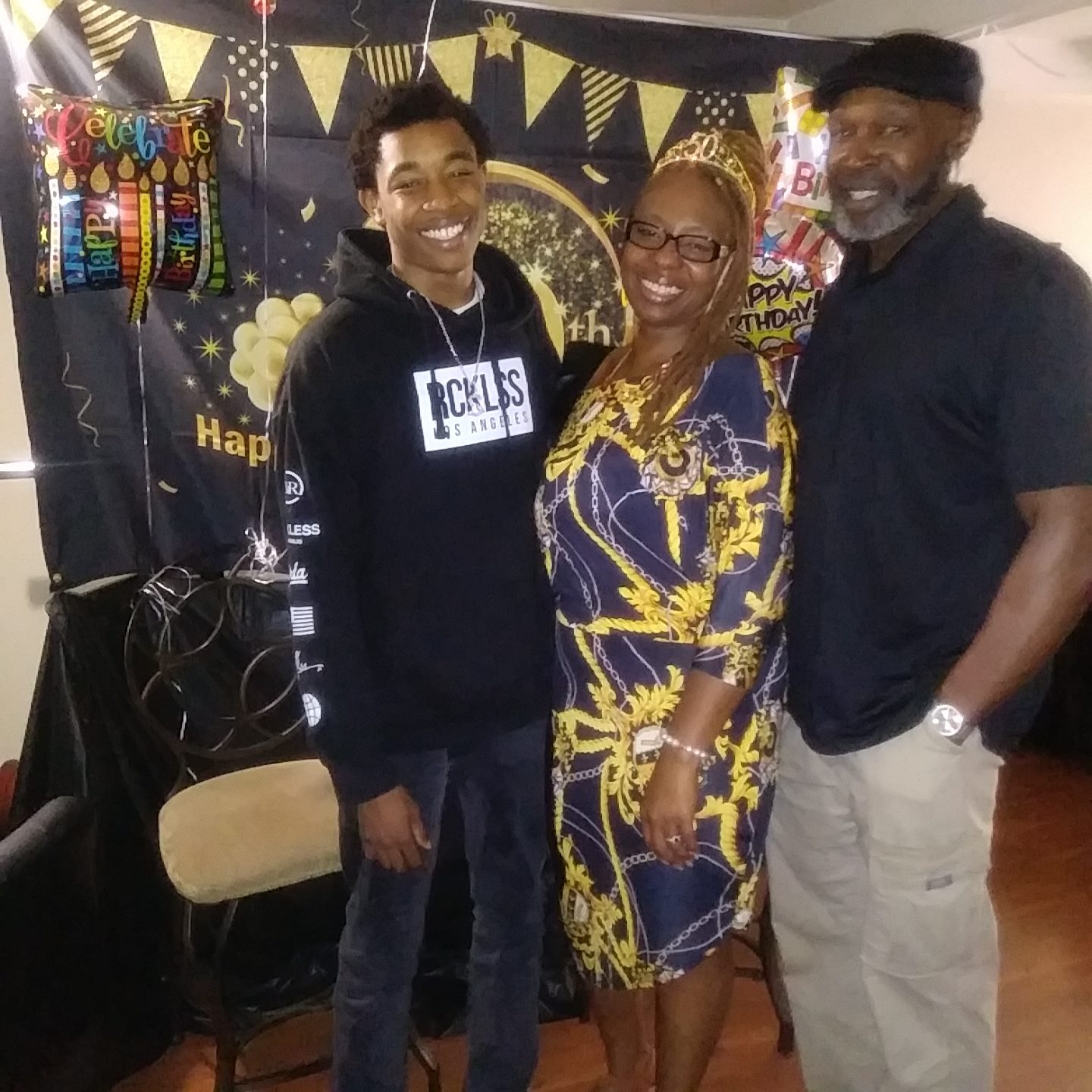
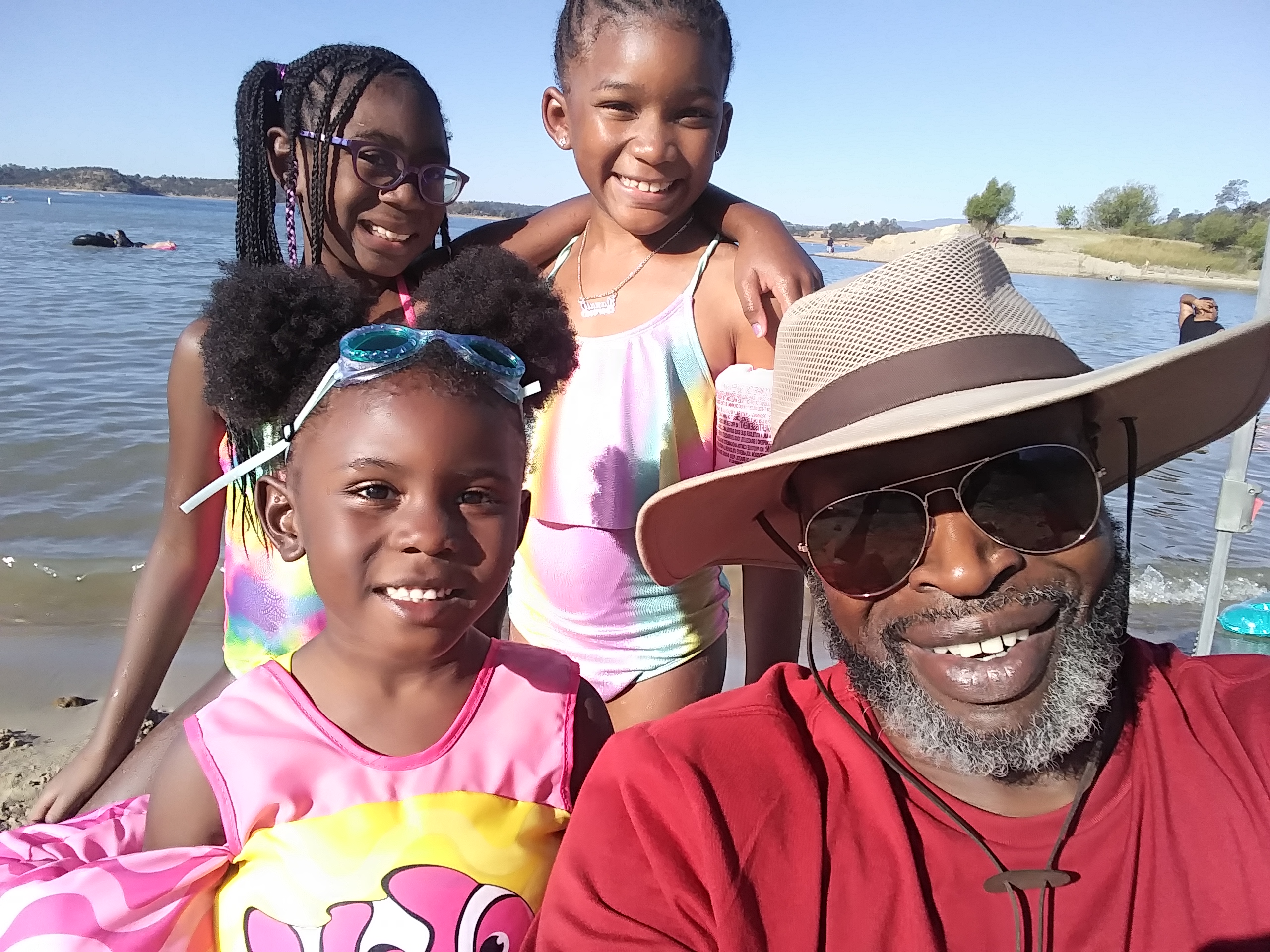
Alumni Spotlight: Rodney Scott on Fatherhood

June 16, 2020 by Mt. Tam College

During the summer of 2020, we’re celebrating the fathers, grandfathers, and other parental figures in our community. We are proud to share their reflections on what it means to be a parent and how their lives have been enriched by the experience.

I had a very brief relationship with my father. He and my mother split up before I was born, I was the youngest of three. My mother came to California, from Georgia in 1963 with me and my older brother. I distinctly remember my father being referred to in derogatory terms by my mother. It was always, “You aren’t going to be shit just like your father,” or “You lazy as hell, like your nothing ass father.” After getting in some trouble in the summer of 1976, I was sent back to Georgia to stay with my grandmother. While I was there she asked if I wanted to meet my father. I jumped at the opportunity to meet this guy that I so much did not want to be like. He arrived with what later turned out to be my younger step brothers. He had another family, with three boys and two daughters, and he was a deputy sheriff of the county that he lived in. He told me that the reason he and my mom broke up was because while he was off to the Korean War, he sent his money home. When he came home his money had been spent, and he got upset. I stayed with them for two weeks. He and I hugged, and I told him I loved him. I came back to Georgia again in 1978 while in the Marine Corps. Spent a few days with my father. He passed away in 1986, I believe it was a heart attack. I was in the California prison system at the time on a fire. I was in the fire camps. I was taken off the fire line and taken to the local county jail in Eureka, and transported back to Susanville. That was the extent of the relationship I had with my father.

I just wanted to be a part of my children’s lives. I did not want them to learn about me from others. Just before my last term in prison, I was riding with my mom and my son, and I asked my mother to always let me be a part of my son’s life. I knew I was coming back to prison, because of my drug use. I mentioned to my mom how negative she had always been about my father, and it turns out he was a good guy. I said if I would have listened to her I would have thought my dad wasn’t shit. He was a dignified man, who was respected, and he took care of his family. I begged her not to let my son find out about me from others. A year or so later I started my last prison sentence, and shortly after that my mom passed away. Mom’s son was left in the guardianship of others, who chose not to allow me to visit, call, or write my son. With the help of people like Jody Lewen who told me to continue to write to him even if he doesn’t get the letters. After six years my son wrote me, and we have been in touch since then. It has been rocky at times. He has recently moved out of his adoption home, and he speaks with me regularly. I have the relationship I wanted with my son today.

Prior to having my son, I did have a daughter in 1980, and her mother didn’t want to have anything to do with me. I located her in 1982 after getting released from prison the first time. It was the height of the crack era, and I was a full blown addict. I wanted to be a father, but when offered the opportunity to walk away I did. I later regretted that decision. You see so many of my friends were having children and settling down. I was coming home from prison for the second time and I wasn’t even 30. I tried to find her again, in 1988, but the people who knew them, had no way of contacting them. I returned to prison again in 1992 and upon my release I put in a good effort to locate her. No one knew how to find her or her mother. In the meantime, I had two women tell me that the baby they were having was mine. In both cases they were lying, and playing on my desire to be a father. Well during my last term in prison a relative of hers saw me and gave me her address. I wrote to her in 2014. The person she knew of as her dad had just passed away on fathers day. She was 34 years old with 4 kids, about to move to Berkeley along with her mom. Upon my release in 2015 I met with her and my three granddaughters. My grandson, her oldest, was in prison. A year later I got a place in Berkeley, In 2017 I took my daughter to Georgia to meet some of her other uncles and aunts. We have a great relationship to this day, and I am the father I want to be.

Having children had a profound impact on my life. I wanted to be better, and do better for them. Not being in their lives for so long has had a negative effect. Me and my children have made a deal to just move forward from here. We realize the past was not the best, we could try and place blame, and waste energy on something that could never be fixed. So I try to keep us in the here and now. Although every time I have a drink with my daughter, she will revert back to wanting to know. Why? It clears up in the morning.

Some things I implement into the relationships with my kids is I ask them, “How am I doing?” Here is an example of the last time my youngest granddaughter and I had that conversation. “So, how have I been doing as a grandfather?” “You, okay, I guess.” “As a granddaughter. You suck. You don’t call, or come by. I only stay up the street. Only time I see you is if you want a ride somewhere.” “Okay old man, I will call you.” She does now that I have moved to Arizona. All my grandkids call me regularly. I learned in group [therapy] that you can’t take it for granted that you are doing alright. You have to ask, that way there is no room for misunderstandings. I ask how I am doing?

I really wish this world would allow my kids the opportunity to be self expressive without censorship. I wish they could go through this life and not be judged by their skin color. I want them to have the same opportunity to earn and learn as the most privileged kids in the world. I wish they never have to see the inside of a prison.

Filed Under: Campus & Community, People

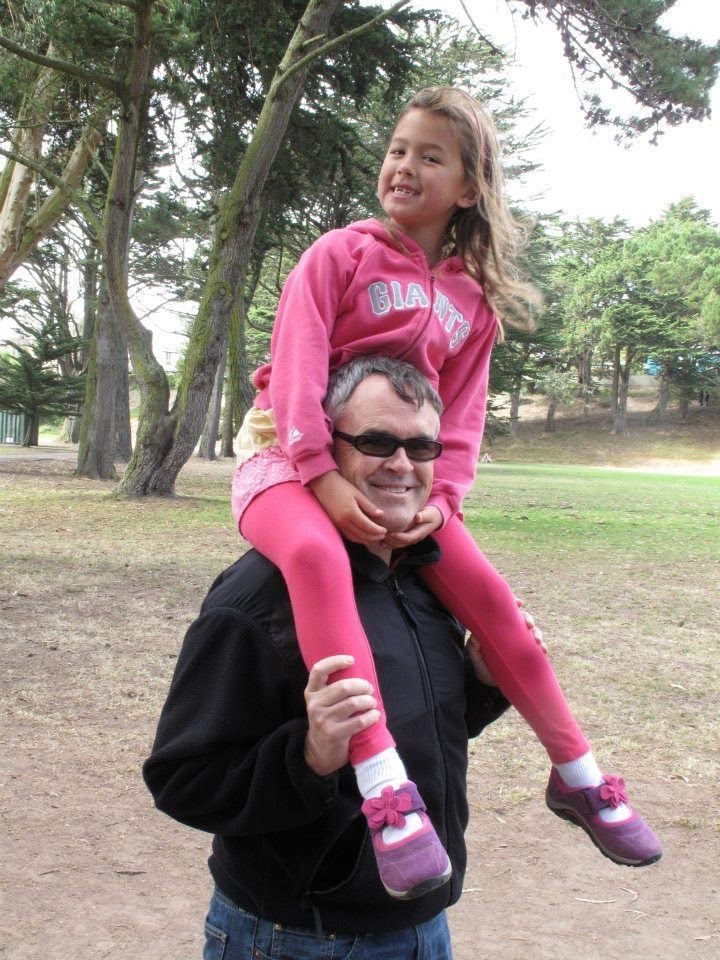
Alumni Spotlight: Wayne Boatwright on Fatherhood

June 16, 2020 by Mt. Tam College

During the summer of 2020, we’re celebrating the fathers, grandfathers, and other parental figures in our community. We are proud to share their reflections on what it means to be a parent and how their lives have been enriched by the experience.

Father’s Day approaches. I rarely think of such milestones and I have no memories of my father. Yet, I have two children and in their eyes I am FATHER. This is a responsibility I take to heart. How do I share values I would have my children learn and practice in their young lives?

Here is my attempt to explain why I was in prison and branded a felon and criminal in the eyes of both society and my children. An early step in reconnecting with my children that I have continued in this past year after serving sentence in San Quentin State Prison.

As my Daughter sat on my lap in San Quentin’s visiting room for one of our monthly visits, I realized that both my girls wanted to understand the exact same thing: why I used to drink.

WHY DADDY?

(Explaining Alcoholism to a Young Child)

Why Daddy?— This eternal query of young children has pleased and perplexed parents from time immemorial. This particular “why question” I had been preparing to answer for over two years. Still, I was startled by my girl’s presumptuousness. As only a Daughter could ask a father, without rancor or guile:

WHY DADDY?

Wife was frustrated that day. In the past, I would have misread her as ANGRY, just as our Daughter did now. The source of wife’s short temperedness, however, was more one of frustration-driven disappointment. Wife found her single-parent responsibilities daunting. An amazing mom, it took all her abilities to keep our children in a normal childhood—easily lost given my crime and incarceration.

WHY DADDY?

Early on during my recovery and as a family, we discussed how I was drinking and driving that night of my accident. I explained that accidents happen, but drinking and driving was WRONG—a crime. A crime I would have to answer for in court. After all, I was a citizen and had a duty to answer to any crime I might commit against other people. I would be judged by the state and have to pay for my crime.

What was left unasked was WHY I drank in the first place, let alone on that fateful night. Like a hidden splinter under the skin, this gap in understanding was the source of Wife’s festering discontent and Daughter’s question as well.

“Dad drank because he had been depressed for a long time,” Wife had told our children after I was gone to prison. This explanation deeply troubled Daughter. She understood depression was worse than sadness but was vexed by my depression.
I remembered when Daughter had suffered under the misconception that she had contributed to Wife’s breast cancer diagnosed four months after my crime. This time I sensed Daughter’s concern that dad had been depressed because of our family life. I could not let this misconception stand.

As I gathered my thoughts, she asked again:

WHY DADDY?

I have asked myself those very same questions each and every day since the accident. If there is a grace to serving at San Quentin, it is the array of groups that provide psychic tools to delve into the mind. I had taken full advantage of these opportunities. Now was time to squeeze my hard-won realizations into a shape Daughter would understand. My goal was to both assure her I had indeed been the very happy daddy she remembered, and share what I had learned about myself over these past long years of prison work and seclusion.

What follows is the story of THE HAND OF MAN. I present it as a seamless whole, minus the pauses, false starts, and redundancies which are the timeless modulations of story-telling.

AND SO…

DAUGHTER! While you consider yourself a human girl, you are also a HAND, THE HAND OF MAN. While a hand provides humanity with the amazing ability to make wonders in the physical realm, know Daughter that I speak of a different hand. This is a magical HAND. Just like with physical hands, humans do the most amazing thing with THE HAND OF MAN.

I took her hands in mine and asked “Did you know that each one has 106 bones? All these bones work together to make and control the sources of the hand’s power, its fingers. You can hold just about anything with your hand.”

“I shall explain the FINGERS of THE HAND OF MAN to you this day. These are true magic and work to hold a life force, the very soul, and help it on the path to enlightenment.”

“But I’m a girl Daddy,” Daughter said with a shy smile.

“Yes, you are! And this Magic Hand is yours too,” I replied with all the warmth I could muster.

I had captured her complete attention that cold but sunny day in San Quentin’s visiting room and planned to use this moment to show as well as tell my girl my hard-won knowledge. In this magic hand, I would explain the parallel structure of a psychic state based on a physical hand.

INDEX: This is the mind. It points the way we would go. To keep this finger healthy and strong, we must learn, explore and teach. We solve mysteries with a healthy mind, just like Harry Potter and his friends.

MIDDLE: This is the body. It is the biggest finger. We need to exercise, nourish and rest it to keep it strong.

“Look at mom. She exercises every day. Mom is really strong,” I said with a mischievous smile to Wife as I continue the story. Wife had found a real focus in Soul Cycle as an outlet and solace during these lean years.

RING: This is creativity, work, and accomplishment. You use it to do school projects and make bracelets. If you look at adults, they wear rings on this finger. That’s how it was named. Adults wear such rings because they believe accomplishment should be recognized and rewarded.

“Look at mom’s ring finger! In fact, watch people, many of them wear such rings,” I said hoping her skills of observation would be put to use.

LITTLE: This is true love. You may wonder why such an important finger is so small, but it makes perfect sense. It can be broken like a heart.

“Look at my little finger. See how it is crooked. That is because it was broken and healed — bent. Always be careful with love — protect it and keep it safe,” I solemnly stated.

THUMB: This is the true secret of the HAND. It is not even a finger, but the opposable thumb is what makes everything else work. You would call it HAPPINESS as it allows you to hold onto your soul. Another word for it is VITALITY. To fully experience life, you need the thumb of VITALITY. With it, you will be able to accomplish any goal and live a complete life.

My Precious Daughter, you have this magical HAND too. You use it every single day of your life. You can use your fingers one at a time or in groups—like signally ‘okay’, counting, or using your smartphone. But when a task is really important, you use all five fingers. Remember the first time you held Milky as a kitten? I bet you used all five fingers!

Daughter nodded solemnly remembering that special day.

“Mikly is so big now Daddy,” she exclaimed.

They all are necessary to do the most important things. I know you are distressed because daddy was depressed and drinking. You worry that my depression had something to do with our family life…

NOPE.

Nothing could be further from the truth. You see, each human uses all five fingers of this magic HAND to hold onto life and keep it on course. Daddy was having many struggles with his RING FINGER of accomplishment/work. Then when Nana was very sick and uncle had so many problems, I bent my LITTLE FINGER of love way back. Even though I was holding onto my life with my other fingers (especially my thumb of HAPPINESS), my grip loosened.

I used alcohol to hide from this pain. That was not smart. I made a BIG MISTAKE the night of my accident and while alcohol was involved, the real cause was my damaged magic hand. My mistake was so big it is called a CRIME. I am here at San Quentin to both show that I understand it is a crime and learn from my mistake.

Now, I am working very hard by attending groups and taking classes and practicing to use all FIVE FINGERS to make them strong, healthy and flexible. I promise to adjust my grip to keep hold — not to clench or clamp — and use them all to hold my life and keep my family.

DO YOU UNDERSTAND?

As with any answer to a BIG QUESTION, we played with it for a long time. Each of us needed to assure the other that we understood the importance of the magic HAND to our family’s JOY.

Filed Under: Campus & Community, People

Alumni Spotlight: James Metters on Fatherhood

June 16, 2020 by Mt. Tam College

During the summer of 2020, we’re celebrating the fathers, grandfathers, and other parental figures in our community. We are proud to share their reflections on what it means to be a parent and how their lives have been enriched by the experience.

Son… you better get your s*** togetha! The white man will make you dis-ap-pear!” My father shouted, fuming at my teenage disobedience. Up until the ninth grade, my father, Mr. James R. Metters Sr. was a ghost—appearing and disappearing throughout the course of my adolescence. He was distant, absent, macho, a buddy-type dad, and unpredictable. All of those characteristics would ultimately shape my ideology of what it meant to be a father.

In 1989 when my son, James R. Metters, III burst into the world, I had no real idea of what had just happened. There I was, standing there in the maternity ward holding this little cute fellow in my hands. After the coos and innocent baby talk, I passed him back to his mother and scurried back into the world to continue living a life of my own. I put myself first rather than realize a significant part of my life had ended. His birth signified it was now time to live for him. But—I did a lot of what my father did.

After failing miserably to be a father and spending over two decades in prison, I’ve learned a lot. Things like generational trauma, childhood trauma, and character defects that many people suffer from. My father had his own issues and in the midst of that, he loved me and could raise me the only way he knew how. I, in turn, raised my son the only way I knew how. James III, if he has a son, will raise him the way he knows how. This is why I am thankful for my relationship with my dad and my son today. After serving 25 years to life in state prison, we have reconciled. We are free to build a healthy relationship and discover the joy of what it means to be a grandfather, father, and son.

Filed Under: Campus & Community, People

Alumni Spotlight: Adnan Khan on Fatherhood

June 16, 2020 by Mt. Tam College

During the summer of 2020, we’re celebrating the fathers, grandfathers, and other parental figures in our community. We are proud to share their reflections on what it means to be a parent and how their lives have been enriched by the experience.

I always say that my own father was an absent father. He was in and out of my life, and during my incarceration, I wondered how my life would have been if he was all the way in my life or all the way out of my life. The fact that he was in and out until I was 14 created more of a tease for me, wanting his love, wanting his acceptance, wanting a positive male role model, which he was not.

I want to be a loving father, a present father. I want to also be an encouraging father and supportive. I know as a youth I always needed support. People always say what would you tell the youth now and my answer is that there isn’t anything I would say, I would more so listen. I want to be an active listening father to see what his needs are and how I can best address them.

My son’s name is Aidan Mallick Khan. My wife’s from Paris and her dad’s an immigrant from Ireland and so we were looking for a name that is Arabic or Islamic on my side and somewhat also cultural on her side. We found that Aidan in Irish means “little ball” or “little fire ball” and in Arabic it means wise, intelligent, or thoughtful.

I never thought fatherhood would ever be because I was sentenced to life at the age of 18. At the time if you were sentenced to life, you could not get family visits meaning legally I could not have children. But before that, growing up in a broken home, even as a kid, as a teenager, I always said to myself, when I get older, I’m going to grow up, get married, and have kids and I’m going to do it right. Mostly in spite of how I was treated. Then at 18, regretfully, I committed my crime and was sentenced to life which meant my dream of having children was not just shattered, but basically gone. I think it was around 2017 where a law changed where lifers were able to get family visits, almost 14-15 years into my incarceration. But by then I didn’t think I wanted to raise a child from prison. I imagined fatherhood to be many things, but then I didn’t even imagine the possibility for me anymore. Then it became a dream and a desire that I thought at the time was unable to be acquired.

I think that there’s this love you always hear parents talk about, and you smile when you hear about it and you engage in the conversation, but you have no idea what they’re talking about because you haven’t felt it. It’s like even with incarceration, you can tell people what it’s like to be incarcerated, but until you feel it you actually don’t know it fully. You can get it, you can understand it, you can be an advocate for it, but you won’t know. For me it’s this love that I heard about but never thought it could be. But once I felt it, even with the pandemic and with the uprisings happening, I find myself still living on a cloud. His cries or him waking me up in the middle of the night don’t even affect me at all. People say you’re not going to get sleep anymore, but I just feel so happy getting up in the middle of the night to his cries and to change him. Maybe it’s because I was woken by correctional officers for 16 years and my cellie, so that’s probably why being woken up by my baby is not a problem for me.

I would love to lead by example of overcoming the impossible. I really want him to know that my existence and his existence is because Alex and I, in the San Quentin media center one day decided to change the law. A law that’s been around since California first started. She’s not a lawyer, I’m not a lawyer obviously, but we ended up doing it. We were secretly in love when we passed the law, and that’s why I’m out. I just want to instill in him support and love and also understand what proper discipline and consequences are. I don’t believe in punishment. I think punishment is harmful. I do believe in consequences and how consequences are helpful to the person. It may not look like it in the moment, it may not be visible, but consequences are important. I also want to be very fair and instill that in him. But more importantly understand his needs and try to address his needs.

I wish for an equal world for my son. An equal opportunity one. The one everyone is protesting and begging for right now. One that provides people who have privilege to use it as a responsibility and not so much as an entitlement, that’s the world I want him to live in. It seems like people have been saying that forever.

Filed Under: Campus & Community, People

Alumni Spotlight: Ray Harts on Fatherhood

June 16, 2020 by Mt. Tam College

During the summer of 2020, we’re celebrating the fathers, grandfathers, and other parental figures in our community. We are proud to share their reflections on what it means to be a parent and how their lives have been enriched by the experience.

I became a father at the young age of nineteen. I remember my girlfriend at the time, who is now my wife, sharing the news with me while I was standing on a street corner where I sold crack cocaine. Prior to learning that I would soon be a dad, I never gave much thought about what fatherhood would be like, or what it meant to be a father. But once hearing the news, I remember feeling joyful. The crazy thing is, looking back, most of that joy came from me feeling a sense of machismo. I had graduated high school, worked part-time at a local retailer, sold drugs, carried a gun, and had a girlfriend who was having my child. At nineteen, what it really meant to be a father…the responsibility of being a father…was far from mind. Sadly, at that time becoming a dad was more of a pride thing.

Yet, after learning that I would be having a son, my thinking began to shift. I began thinking about my relationship with my own father and about how he was never really there for me. I began to think that I would never be like my Dad. Unfortunately, I didn’t take into account the systemic oppression he faced as an African American man growing up in the 60’s and 70’s. I didn’t have any notion of what it may have been like to be a part of the baby boomer generation, to live through the Civil Rights Movement era, to see African American leaders such as Martin Luther King Jr, Malcom X, and Medgar Evers murdered, to witness the Vietnam War and its protest. It never crossed my mind that my Dad, with all of the inequities he faced, coupled with the injection of heroin into black communities after the war, just maybe was a product of his environment. Without a doubt, I always knew that my Dad loved me, but that didn’t matter to me. What mattered was the fact that he spent many years addicted to heroin and was pretty much absent throughout my adolescent and teenage years. At nineteen, I mostly equated being a Dad with not being like my Dad; not really knowing what it meant to be a father.

After having my son, my life didn’t change all that much. I continued to find jobs and also continued to sell drugs. Still not realizing my full responsibility of being a father, fatherhood became more about being a provider and trying to keep a smile on my son’s face. At twenty-four I had my second child, a daughter. My thinking still had not shifted, all I had to do was provide for them and get them into a good school.

Then, one day, my life changed. All the days of carrying a firearm had finally caught up to me. When faced with a confrontation, I used my firearm. This decision landed me in prison for eight and a half years. This is when I began to think about what it meant to be a father. I began to reexamine my childhood and think about the factors that played a role in my decision making. I thought about what my life may have been like had my father been present and nurtured me with encouragement, compassion, and a sense of well being. I figured my life may have been a lot different. Perhaps I would have gone to a four year college, maybe grad school, established a career, traveled, and gotten married prior to having children. Perhaps having waited until I matured a bit and learned the meaning of fatherhood before having children, I wouldn’t have put myself at risk of becoming an absent father, similar to what my Dad had been to me. Nonetheless, being physically distant from my children taught me that presence wasn’t all there was to being a Dad. Because I couldn’t be at home with them, I learned that nurturing my children and helping them to build their self-confidence was also very important in their development. Thanks to my amazing wife, for doing an excellent job with allowing me to co- parent our children even from behind the prison walls, I think we did a pretty good job with our children. I’m proud to say that our twenty-six-year-old son recently received his Masters degree from Duke University, our twenty-two year-old daughter received her Bachelors from Clark Atlanta University, and our seven-year-old-son is excelling in grade school.

I’ve learned that fatherhood is a full time commitment. I now view fatherhood as taking into account how my decisions might shape my child’s life experiences. I want my children to live exceedingly joyful, healthy, and long lasting lives. It’s up to me to do my best at being a father to make this happen.

Filed Under: Campus & Community, People

Alumni Spotlight: Felix Lucero on Fatherhood

June 16, 2020 by Mt. Tam College

During the summer of 2020, we’re celebrating the fathers, grandfathers, and other parental figures in our community. We are proud to share their reflections on what it means to be a parent and how their lives have been enriched by the experience.

I became a father when I was fifteen so I can’t really say that I understood what it meant to be a father. I had an idea that it included providing and making sure Desiree didn’t topple over and hit her head. I knew that I loved her, but I was caught up in my own quiet insanity. When she was born, I told myself that I wouldn’t be like my own absent father; I heard that somewhere, but it had as much meaning to me as “where do you see yourself in ten years”. Before I realized how much she would mean to me, I was gone. I saw her walk, changed a few diapers, and watched her cry at her first birthday party.

The next 18 years, I watched her grow up in pictures and in the prison visiting room. I did my best to let her know that I loved her and missed her. I used to make her birthday and holiday cards with a special personal poem in each one. I’d say in my mid-twenties I became aware of the time I was losing with her. Every night after the evening security count, I’d listen for the guard passing out mail and hope there was a letter from her. I remember the occasional fifteen-page letter written over a few months covering every detail of her life. I devoured every single word.

Desiree was my hope. She was the lighthouse that was often too distant to see. I knew I couldn’t be there to take her school, or teach her to ride a bike, but I could do things that made her proud of me. I think I did a decent job. She was eighteen when I paroled and living in San Diego. One of the first adventures we had outside of prison was trekking through Berkeley and eating at a vegan restaurant. If I had to choose the greatest benefit to fatherhood, it would be that despite all my shortcomings at any given moment, I can be a hero, even if it’s just for checking shoes for spiders.

Filed Under: Campus & Community, People

Program Status and Our Path to Accreditation

June 1, 2020 by Mt. Tam College

Dear friends,

I’m writing several months into the pandemic, which has closed our staff and faculty off from our students, and which has begun to spread among prison populations throughout the US, at rates often far higher than in the general public. It seems at this point that it could be many months before our regular courses are up and running again.

From the start of the pandemic, we’ve been confronted with questions and decisions that feel like ethical thought experiments, but that are all too real: initially—should we keep plowing through the semester, at the risk of bringing the virus into the prison, or to pull our faculty and staff out, severely diminishing the quality of life inside the prison, interrupting students’ academic pathways, and compounding their vulnerability and isolation at the worst possible time? How do we balance risk to life against quality of life? And then, when the answer to that set of questions started to seem more and more obvious, the question that has dogged much of the world of prison higher education swiftly emerged: should we try to devise a way to continue offering credit classes at a distance, even though we know that the quality that we see as the cornerstone of our work would be severely compromised? Or more generally, once we determined that it would not be feasible to continue to offer legitimate credit-bearing coursework inside the prison, where should we focus our energy and resources? What is a college when it can’t run classes?

It seems to me that part of the pandemic experience for almost everyone has included such a barrage of practical and existential questions, at every level, exhaustingly, every day. Should I pull my children out of school? Visit my parents? Teach outdated math to my 6th grader? Am I doing everything I can to flatten the curve? Is technology saving us or poisoning us? What activities put me and others too severely at risk, and what can we or must we continue to do, to preserve our sanity? How has it all come to this? Who am I to complain, when I can sit so comfortably, in full health, on this couch, and go for a run safely?

I’m powerfully aware that my education and access to conversation and consultation with thoughtful and experienced colleagues make it possible for me to think these questions through from multiple angles and to make difficult and sometimes painful decisions with confidence. To wade through this time of crisis and unrest in America and globally, we all need access to trustworthy information; we must be able to think critically and ethically; we need to understand public health principles and basic math; we have to have a grasp of history and politics; we need to have the tools to consider claims about identity and difference carefully; and we have to have opportunities to consider others’ opinions. These and so many other areas of thought and intellectual life are vital for everyday survival, for ethical decision making, now more than ever.

So when we ask what a college is when it can’t run classes, the current calamity is teaching me that our most fundamental responsibility as a college is to help ensure that all people have access to information, learning, and productive dialogue, so that they can take care of themselves, their families, and their communities. Those who are most vulnerable are precisely those who don’t have access to these things. Our students are people who are equally owed these pursuits as rights and whose voices are equally and urgently needed in civic exchanges. Course credits and degrees are critical, but education is more than the semester grind. If we aren’t able to run classes, we can still agitate for and facilitate these crucial skills and dialogues.

So our work continues. As Jody’s letter recounts, our first thought has been for the wellbeing of the community that our campus is embedded within—that is, the entire community of San Quentin. Without physical and emotional safety, learning and thinking are difficult and sometimes impossible. And in voluminous responses to our care packages, we have heard again and again that people at San Quentin are hungry for information and intellectual stimulation. Thanks to the support of iTVS we are now planning a documentary film series to be aired on the prison television channel during the summer. We’re also working with San Quentin to make a large quantity of books that we have stored inside the prison available to the entire population. No amount of academic materials can duplicate the classroom experience, but intervening in the barren intellectual landscape of the prison however possible is especially crucial right now.

Although communication with our students is somewhat delayed by the now-overwhelmed prison mail system, it is still possible, and vital, to hear from them. Specifically related to the current crisis, we are asking how the lives of incarcerated people during this pandemic can be witnessed, so that their social invisibility doesn’t mean their history goes unrecorded. To this end, we have begun an oral history project, which we will be working with students on throughout 2020. Students will learn oral history techniques, then interview others in the prison about their experiences, and develop written narratives to document life inside San Quentin during the pandemic. Through this project, we hope to learn about and disseminate to the broader public a set of experiences and accounts that would otherwise go unseen.

We are also taking this time to continue to building out key features of our program for when we are able to get back inside the prison, exploring ways we may alter and supplement the curriculum during interruptions like the pandemic, lockdowns, and quarantines without compromising quality, rigor, and student support. We’re working with faculty and with our Chief of Institutional Effectiveness and Accreditation, Melanie Booth, to review college preparatory and credit course curricula, as well as to develop regular cycles of learning assessment. Melanie has also been leading the work of constructing the infrastructure and processes required for us to achieve Initial Accreditation status with ACCJC. We remain on track with our accreditation timeline.

During this break from the usual demands of the semester, we’re also turning attention back to our long-standing efforts to bring laptops into this prison. This would greatly improve our students’ access to research materials and other crucial learning tools, as well as prepare us better to continue providing students access to education in the future when we cannot enter the prison. In partnership with leadership at San Quentin and in CDCR, we hope to be able to provide a vastly improved technological education to our students by the time we return to the prison.

Finally, we have been reaching out to alumni and developing plans about future alumni relations. Our team has been working to locate and contact every former student who has been released from prison, to learn about their well-being and needs. In consultation with David Cowan, our Director of Operations and Co-Director of the re-entry organization Bonafide, our Director of Student Affairs, David Durand, has been working to develop our alumni services program. Our aim is to eventually maintain regular contact with our former students, and to provide them with ongoing academic and professional guidance, information, and resources, as well as other critical support services and professional development and networking opportunities.

In the wake of recent horrific reminders of the brutality of racial inequality in America, in the midst of a public health crisis that is unequally ravaging already vulnerable populations, it is clear to me is that the path forward requires a new dedication not only to the safety of the vulnerable, but also to equipping all people with skills, information, tools, and resources, and outlets for their voices and life experiences to be expressed, heard, and learned from. We miss our students terribly, but it’s some relief that we can continue to serve them from afar for now.

Amy Jamgochian
Chief Academic Officer

Please note that the Prison University Project became Mount Tamalpais College in September 2020.
Filed Under: Academics, Accreditation News, Announcements, Campus & Community, In the Classroom, MTC News, Student Life

David Cowan on Reentry Support During COVID-19

May 31, 2020 by Mt. Tam College

Since returning home from San Quentin eight years ago, Prison University Project’s Director of Operations and Director of Bonafide David Cowan has been committed to fostering opportunities for formerly incarcerated people and has worked to ensure that people affected by incarceration have the material, emotional, and advocacy support they need to both integrate into society and build healthy, productive lives going forward. We spoke to David about Bonafide and how his reentry work has been affected by the COVID-19 crisis. David was honored last year by UnCommon Law at its UnCommon Heroes event.

What does Bonafide do to build social networks?

Bonafide builds social networks mostly by supporting the natural network that exists between people who have been incarcerated for long terms, “lifers” in particular. We make sure that as people are released they know that they have a community to turn to for any type of support. We also try to inject structure, funding, and facilitation into this community.

What drives your work?

There are many drivers for the work but a couple of major ones. I’m very uncomfortable with people being completely lost in the world when they are suddenly released after decades of incarceration. They are at such a huge disadvantage when it even comes to functioning in a modern society. I want to reduce the trauma that comes with that situation. Another driver for this work is that when I was incarcerated and thrust into an environment that I was unfamiliar with, the lifers helped me, encouraged me, and taught me. I spent nearly half of my life with them. Now I get the chance to return the favor.

How has your own experience of reentry informed your current work?

While I was reentering, I had the benefit of a super support system. I had a network of people that I could turn to that were available to teach me everything from how to use the internet to how to use the bike routes. I want everyone to have the same kind of support that I did. I’m saddened to think of what it is like to reenter the community without such support.

What are some misconceptions people have about reentry? What should the public know about people returning home from prison?

I used to think that the biggest misconception about reentry is that everyone coming home is a monster, but I now think that is more of a “war on crime” era misconception. Now I think that the biggest misconception is that the greatest need for people coming home is to learn how to write a resume. Although that and all of the other functional skills are necessary, I’ve learned that they kind of pale in comparison to the need for a returning person to feel supported and emotionally connected to the community. A network of people who care goes a long way to make people feel less out of place.

What challenges are you facing with reentry support right now? How has COVID-19 impacted your work and the reentry experience?

I think that it has been difficult for many of the Californian counties as well as the state to make complete adjustments to support people returning from incarceration during this crisis. However, many community organizations have come to help and depend on each other in ways that they hadn’t before COVID-19. For example, a person leaving incarceration and getting to a destination is no longer just a matter of finding transportation, but now is also a matter of doing it without contracting or spreading the virus. So organizations have been coordinating and sharing supplies to make that happen in many cases. The virus has also limited the in-person time that we spend with people. For now, we don’t run the technology workshops and teaching people to use their phones and to do things online has been a difficult remote task but we’re getting better. 

With so many businesses shuttered, have you found returning citizens struggling to find or keep a job?

Both fortunately and unfortunately most of the types of places that hire formerly incarcerated right away are low-paying “essential” services so many people in that position still have jobs. Though there are some that have lost their jobs too. The biggest barrier to looking for employment at this time has been the inability to get identification cards, which are necessary to be hired because the DMV has been closed.

With the world now essentially living online, how are you helping people with little or no experience with technology adapt?

Our technology workshops have been canceled until it is safe to gather again. Now we help people remotely. Sometimes that means getting on the computer while the person you’re helping is on the phone and being their fingers for them as we fill out forms or other things. For people who have computers, we’ve been sharing screens so that we can walk them through whatever they are doing. We’ve also started installing screen sharing apps to people’s phones so that we can remotely help them learn how to use it.

Have you been able to adapt to the conditions? What are your workaround solutions?

When it comes to meeting people at the gate, our adjustments have been to make sure that their backpacks also include hand sanitizer and masks. Our drivers wear masks and have sanitation supplies as well. We stopped going into diners for breakfast but instead go to places that will bring the food out to us. We also paused shopping for now.

What other organizations or service providers do you work with?

One of the bright spots to come out of the pandemic is that we’ve worked more closely with organizations that we only occasionally worked with in the past such as the California Reentry Program, the Insight Garden Program, the Anti-recidivism Coalition, Project Rebound, and a handful of others.

Are there any resource guides or websites you’d recommend for people who are returning home?

San Francisco has a great resource guide that I’d recommend to anyone paroling to the county. Many reentry programs have their own reentry guides. Another good one is from Root and Rebound.

How can people support Bonafide? How can they support reentry work broadly?

Bonafide could always use financial support. We’ve started paying our welcome home drivers. We could also use people with good practical experience using Android phones and have a good knowledge of how private and public systems function like banking, looking for housing, paying for things online, how to use email, etc. I think that an easy way to support reentry work more broadly is get to know people who are trying to reintegrate from incarceration. They are just trying to get jobs but they are trying to normalize their lives and that really happens when we are a part of a community.

Please note that the Prison University Project became Mount Tamalpais College in September 2020.
Filed Under: Campus & Community, COVID-19, Current Affairs, Partnerships, People

Featured Winter Events: Open Mic, Ethics Bowl, and Book Club Discussions

February 27, 2020 by Mt. Tam College

Over the past few months, the Prison University Project hosted a number of extracurricular events for students to connect and engage with outside guests.

  • On December 27, we celebrated students’ creative expression and talent with our annual Open Mic event. Students shared poetry, dance, short stories, stand up comedy, and music.
  • On January 16, students and outside guests discussed Ta-Nehisi Coates’s The Water Dancer, a magical realist take on slavery and the Underground Railroad, as part of a series of book discussions the Prison University Project hosts to facilitate connections between students in the College Program and free people.
  • On February 14, a team of students from the College Program at San Quentin faced off against a team from UC Santa Cruz in our third annual Ethics Bowl competition. Over the course of two rounds, both teams applied principles from moral philosophy to the issues of student loan forgiveness and reproduction in the era of climate change.
  • On February 21, author Daniel Handler (aka Lemony Snicket) visited San Quentin for a short reading, question and answer session, and discussion based on his bestselling novel Adverbs. Students appreciated the opportunity to learn about Daniel’s inspiration for the book, his writing process, and his advice for pursuing the creative arts.

Please note that the Prison University Project became Mount Tamalpais College in September 2020.
Filed Under: Campus & Community, Campus Events, Student Life

Board Member Spotlight: Sia Henry

February 16, 2020 by Mt. Tam College

Sia Henry, Prison University Project board member and Senior Program Associate at Impact Justice reflects on her experience teaching and tutoring at San Quentin.

When I tell people I volunteer in San Quentin the usual reactions are: “that’s fascinating, what’s it like going into a prison?”; “It’s great that you’re doing that”; and, my favorite, “do you ever get scared?”

The overall sense seems to be that I am a “good person” for going into a “dangerous” place to “help” “dangerous” people. I understand where this sentiment comes from, after all, few people have been inside a prison unless they themselves have been incarcerated. Still, however, I would love nothing more than to change the woefully flawed yet seemingly ingrained assumption that incarcerated people are “those” people on the other side of the wall. They are somehow different simply because they have been found guilty of behavior that has been deemed a crime in the eyes of the law.

The reality is that “those” people on the other side of prison walls are no different than the ones on our side. Between teaching in classrooms and tutoring in study hall, I’ve met published authors, poets, carpenters, entrepreneurs, surfers, fishermen, journalists, actors, musicians, lawyers, social justice activists, budding horticulturists, dancers, financial investors, playwrights, historians, loving sons, committed fathers, first-generation immigrants, indigenous people, bilingual scholars, young boisterous dreamers, and wise pensive elders.

So, “what’s it like going into San Quentin?” For me, it’s like going to Thanksgiving with my large Caribbean family. I’m filled with joy as I greet people during my walk to the education building. Someone rushes over to show off photos from a recent visit with a now adult child they had not seen in over a decade. I run into a student I taught during a previous semester and we chat briefly about a new assignment he’s working on. As I make my way into study hall, students are having lively debates about politics, music, and even Shakespeare. Two men approach me about helping them with a math problem. Just as I insist that math is at the top of the list of things I simply cannot help them with, another student chimes in, asks to see what they are working on, and spends the next fifteen minutes talking through the equation with them.

Meanwhile, someone is translating the original Hebrew and Greek versions of the Bible into English and explains he’s getting ready to start on the Latin text. People exchange words of encouragement as they commiserate together over their thesis statements. As I sit with one student who’s struggling to develop an outline for a research paper writing class, another incarcerated person, who already passed that course, joins us to help brainstorm ideas. A young man, probably in his early 20s, wanders in to ask how he can enroll in the college program and, before I answer, a student jumps in to offer an explanation. Later, a Prison University Project graduate, who recently had his sentence commuted by the governor of California and is now serving as a teaching assistant for a pre-college English course, stops by to explain that he developed a handout to guide other incarcerated people through the process of applying for commutation.

Each evening the line separating volunteers and students is blurred and all that is left is a singular noise, the collective sound of people picking each other’s brains, searching for meaning, and finding it together. It’s easy to get lost in the beautiful chaos of it all. Before I know it I look up and it’s 8:01 pm. The building is suddenly quiet and there are only a few students who have lagged behind and are now packing up their books to return to their housing units.

I always feel strange leaving prison after an evening inside. I trace my steps back past concrete walls with thick metal doors, past metal detectors and correctional officers, then beyond gates and barbed wire fences. Walking back outside into the moonlight, back to my car and on with my life in the “free world,” it’s in that moment that I feel how fortunate I am. Fortunate for having both parents in my life that have always supported me, fortunate for my upbringing, fortunate for my academic opportunities. Most importantly, it is in that moment that I feel fortunate to be able to walk away. Our students, and the thousands like them, don’t share that luxury. Even the ones who will one day be released will have a criminal record that will follow them to every job interview, housing application, and attempt at upward mobility. What’s more is we all suffer because we as a society have chosen to deprive ourselves of the brilliance that is each and every person behind those walls.

I have come to understand that “no one is free until we are all free.” (Dr. Martin Luther King, Jr.) I therefore celebrate our students’ triumphs as if they were my own because I believe their accomplishments and liberation is ultimately and intricately entwined with my own—with all of ours.

Please note that the Prison University Project became Mount Tamalpais College in September 2020.
Filed Under: Campus & Community, People

  • « Go to Previous Page
  • Page 1
  • Interim pages omitted …
  • Page 4
  • Page 5
  • Page 6
  • Page 7
  • Page 8
  • Interim pages omitted …
  • Page 10
  • Go to Next Page »
mtc seal

Contact Us

PO Box 492
San Quentin, CA 94964
(415) 455-8088


Please note: Prior to September 2020, Mount Tamalpais College was known as the Prison University Project and operated as an extension site of Patten University.


Tax ID number (EIN): 20-5606926

Quick Links

CONTACT US
CAREERS
PRESS KIT
ACCREDITATION
PUBLICATIONS
DONATE


Join Our Mailing List

© 2026 | Mount Tamalpais College | Photography by RJ Lozada | Design & Development by //DESIGN AGENCY//

  • About
    ▼
    • Mission & Values
    • Staff & Board
    • Accreditation & Institutional Research
    • Careers
  • Academics
    ▼
    • Admissions
    • AA Degree
    • College Prep
    • Faculty
    • Apply To Teach
  • Students & Alumni
    ▼
    • Students
    • Alumni
    • OpenLine Literary Journal
  • Resources
    ▼
    • Practitioner Support
    • Resources for Incarcerated Students
    • Research on Prison Higher Education
  • News
    ▼
    • Top MTC Stories
    • Recent Press
    • From the President
    • Commencement
    • 2026 Gala
  • Give to MTC
    ▼
    • Donate
    • Shop