• Skip to primary navigation
  • Skip to main content
  • QUICK LINKS
    • CONTACT US
    • CONNECT
      WITH US
    • FACULTY APPLICATION
    • PUBLICATIONS
    • PRESS KIT
    • CAREERS
  • About
    • Mission & Values
    • Staff & Board
    • Impact
    • Accreditation & Institutional Research
    • Careers
  • Academics
    • Admissions
    • AA Degree
    • College Prep
    • Faculty
    • Apply To Teach
  • Students & Alumni
    • Students
    • Alumni
    • OpenLine Literary Journal
  • Resources
    • Practitioner Support
    • Resources for Incarcerated Students
    • Research on Prison Higher Education
  • News
    • Top MTC Stories
    • Recent Press
    • From the President
    • Commencement
    • 2026 Gala
  • Give to MTC
    • Donate
    • Shop

Mount Tamalpais College

Open Line

Change from Inside

June 22, 2018 by Mt. Tam College

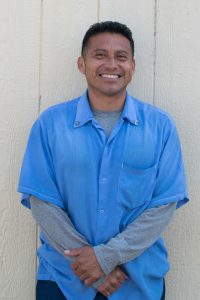
When they send you to prison, they don’t think or seem to care about the reason why you acted in the way that you have. They sentence you according to the crime you committed, and you’re shipped off like cattle to slaughter. Most of us aren’t physically slaughtered, but mentally is another story.

Prison should change a man; it has me. Yes, I’ve been in prison before, but the other times it didn’t seem to hit me, and it never made me look at myself and wonder why I’ve done the things I’ve done in the past. Fifteen and a half years later, I have a fuller understanding of my actions and decisions.

Feeling that I was not loved and that something was wrong with me created a false sense of self-worth in me. Not dealing with feelings by asking questions and looking for answers, even the ones that could hurt, is one of my biggest regrets. I’ve come to know myself in a personal way without baggage or fluff. Lying in this bed at night with no one to talk to will make a man look at himself in a real way if he has a heart and mind to.

Prison makes or breaks you. The system wants you to act in a certain way, and the people in blue want you to hold a false sense of loyalty that brought you to prison in the first place. I have come to understand that education is the key; but before education you have to have the want to change and the desire to follow it through no matter what someone may think about you. The biggest question is what are we hiding from? Who are we trying to be or impress? What do I want out of this life and do I love myself? Answering these questions has helped me to move forward and not look back. I am very apologetic for the crimes and the pain that I caused people and the drug use that I was involved in, which pushed me into this lifestyle of criminal activity. That hurts me in a way that runs deep and that I have to ask God to forgive me for every day.

Prison isolation is damaging; no family can come visit and no physical contact in an affectionate way with the opposite sex. This does something to the humanness of a person. Watching and praying that you don’t get that phone call from the counselor, where you have to call home because you have lost a loved one, is heartening. One has to be very strong not to give into the destruction that is always lurking around the corner—personal self-destruction.

Today with the way the prison system is with rehabilitation at the forefront, anyone that doesn’t take advantage of its personal benefits is not trying to benefit themselves nor are they trying to find a way home sooner. In my case, I started rehabbing in 2008 because I wanted to change, and I felt the need to be able to help my child and my grandchildren. I also thought about what I still owe to society as a whole. I cannot live the way of my past, I have to be a productive member of society and to my family. So change has come from the inside—heart, mind, and soul. Being real with one’s core moral values is the only true way to walk behind these bars and these walls and expect to make a change in himself.

There has been tremendous support from the outside volunteers that come into San Quentin State Prison, be it self-help groups or the Prison University Project. These people come in and show their humanness and give all the knowledge and compassion they have so that we can become more educated and self-respecting individuals. This is the true rehabilitation that all prisons need, human kindness on the inside.

Please note that the Prison University Project became Mount Tamalpais College in September 2020.
Filed Under: Creative Writing, Open Line

My Past, Present, and Future Experiences in Education

April 9, 2018 by Mt. Tam College

I began my primary education in 1965, in the public school system of Tuscon, AZ. I was taught the Three Rs: arithmetic, reading, and writing. In junior high school, I showed promise in my athleticism, so my teachers did not push me academically. When I entered high school, I used my muscles from the neck down, because that is what seemed to be required of me. I was a mediocre student when it came to studying any part of the curriculum in high school. In fact, all I had to do was show up for class.

At the tender age of 16, I had two devastating tragedies. The first event: my mother passed away from open heart surgery and I did not handle her death well. I had one foot in school and the other foot in the school of hard knocks (sidewalk high school). The second event: I totaled a car and messed up my right foot and left knee. I was in a lot of pain (mentally, physically, and spiritually). I began self-medicating with alcohol and licit or illicit drugs to dull my senses. I spiraled out of control and eventually ended up in prison. There were some vocational trades being offered, but most of them were obsolete. It was like being put on a shelf until the release date. I became a repeat offender for the lack of confidence and self-worth.

In 1993, I acquired a GED in prison, and yet I lounged in the CA Dept of Corrections (Rehabilitation was added in 2007). The CDC system had nothing to rehabilitate a person other than religious services and the library. I decided to take advantage of those subjects to rehabilitate myself by learning to speak Spanish, some Arabic, and man’s fallible laws.

I came to San Quentin at the end of 2011 and enrolled in the Prison University Project’s College Program. It took a little over two years to get called for an assessment for placement. I fared better in English than in math. I was placed in 99A to acclimate myself in the structure of writing. I found everyone in this program wanting to see us learn and succeed in the curriculum as well as in life. I have a fever/spark that has been ignited and there is no rest for the weary — I have learned quite a lot of things about world views and most importantly myself.

I am grateful for this opportunity because it has changed me from a cocky individual to a self-assured individual. My extended family can hear and see a different person today. I have a deep appreciation and gratitude for everyone who sees the need to educate and reform what seem to be society’s “throwaways.”

Filed Under: Academic Writing, Creative Writing, Open Line

Biology with Lab

March 13, 2018 by Mt. Tam College

One of the most observable transformative moments for me is my first experience giving an oral presentation on “HIV Latency,” an independent research project of my choosing, because of my nerves, courage, and the intellect it took to give an oral presentation, which I didn’t think I possessed.

I enrolled in “Biology with Lab” in the summer of 2014. Going into it I didn’t know what to expect. Listening to the instructors outline expectations for the semester, I was somewhat relieved at the prospect of having to focus my attention on a mere single topic of my choosing. Using research material provided by the instructors, I was required to write a thesis and ultimately give an oral presentation at the end of the course on my findings. Taking for granted that my final work and oral presentation was due at the end of the course, I didn’t think much about what it would be like to give an oral presentation in front of an audience. Consequently, when choosing my research topic, I chose HIV latency — a complex issue at the heart of cutting-edge AIDS research because of the absence of data around the world about the persistence of HIV in the human body. According to the material provided by the instructors, current work suggests that small numbers of AIDS-causing viruses go into “latent” periods in infected individuals. Since latent viruses are not easily detected using traditional diagnostic procedures, an individual may be considered virus-free. Unfortunately, these latent viruses can start infecting the immune system again later in life with grave consequences. This process is called “virus activation” and is poorly understood.

I was nervous when I hear my name called. For the first time in my life, I was expected to get up in front of an audience of about 30 people that includes fellow inmates, outside spectators and biology professors, to give an oral presentation on an issue that 12-weeks earlier I knew very little about. Spending the entire semester conversing with fellow students, tutors, and biology instructor on the issue of HIV latency, I was feeling fairly confident that I knew much more about HIV latency than I did at the beginning of the course.

I’m transformed by the whole experience — the stress from the commitment to speak publicly; the ability to retain pertinent information learned throughout the course and to apply it to the issue of HIV latency and articulate in front of an audience; the shortness of breath doing my presentation; feeling like an idiot, sounding stupid; and the yearning for all of it to be over and done with.

At the end of my presentation, in spite of applause by fellow students, outside guests and course faculty, I felt mediocre about my presentation. In fact, it wasn’t until I receive my final grade for the semester — “A+” — that I begin to believe that with the support of the many wonderful people involved in the college program, I can do this! I can give an articulate oral presentation in front of an audience.

Filed Under: Academic Writing, Academics, In the Classroom, Open Line

Redemption is Not Just for Me

February 12, 2018 by Mt. Tam College

Gov. Jerry Brown commuted my sentence in December from 67 years to life to 20 years to life — a rare act of mercy. I had imagined the effects of a commutation on my life; the commutation’s effect on incarcerated people at San Quentin State Prison, though, surprised me. The night of my commutation, men cheered in their cells like the 49ers had just won the Super Bowl. It felt fantastic to hear men call out to me with joy, but I also recognized that they weren’t cheering for me. They were applauding something much more important than me.

That “something” is difficult to convey, as it showed up in emotions more than in concrete events. In their questions, I heard a thousand times: Emile, why do you take so many self-help classes? Why are you always reading? Who are you trying to impress? These questions didn’t come from everyone; but when they came, they felt loaded with judgment.

I felt like people wanted to tear me down.

I was wrong, people hadn’t wanted to tear me down. Their concerns were analogous to those of Denzel Washington’s character in the film “Fences.” He degraded his son’s sports dreams in a misguided attempt to protect his son from disappointment. Listening to them cheering for my commutation, I realized that what I’d taken as judgment was fear for me. My questioners had anticipated my “inevitable disappointment” and wanted to protect me, in their imperfect way.

Now they cheered, because they’d been wrong. And they’d never been happier to be wrong.

“They don’t give that kind of stuff to people like us, you know?” one man told me. “That kind of stuff is only for other people.” He had a thunderstruck look that reminded me of my own arrival at San Quentin. I met dozens of free people (volunteers in the prison) who wanted me to succeed — which wasn’t consistent with my internal narrative about a society that wanted me to fail. I’d found a community that wanted me, and I had never admitted to myself how desperately I wanted that. It proved an epiphany in my rehabilitation.

Six years later, I witnessed a similar moment of realization by the man who thought commutations were only for white people or rich people. His narrative, common in prison, about an “entire system” arrayed against him, was cracking.

A father spoke to a room of incarcerated journalists who work on the prison newspaper and radio news program about the effects of my commutation on him. “Before Emile, I wasn’t doing anything,” he said. “I didn’t care … I was never going home. Now, I’m going to do something.”

His sentiment isn’t isolated; I’ve watched it spread from man to man all month. I’m at the middle of how Gov. Brown’s act of mercy fuels exponential change. People who said they “didn’t care” are admitting to themselves that they both want to care and can be restorative members of their communities. They’re energized to transform their lives; and their transformations can change the lives around them, just as my transformation ripples through the world around me.

Media coverage billed me as “a more obvious choice” for clemency and a model of rehabilitation. I’m humbled. And I respectfully offer that in 20 years I learned to be this man from a lot of worthy men who don’t have my writing skills and so don’t have my visibility. Hundreds of them will file for a commutation this year. Imagine the power to spread transformation in a hundred acts of mercy.

Attribution: This article originally appeared in the San Francisco Chronicle on February 1, 2018.
Read Story

Filed Under: Current Affairs, Open Line, Perspectives, Published Works

Strengthening Democracy

November 14, 2017 by Mt. Tam College

Providing education inside prisons strengthens a democracy by giving people a chance to level out the playing field. If there are disenfranchised sectors of our society then there is no way we can call ourselves a democratic society. How can we reach democracy, or even equality, if the disenfranchised don’t know the definition of the word? Becoming educated helps people see injustice and the need for change, which will galvanize the people most affected by criminal justice and empower them to stand up against injustice and strive for the changes they want to see.

In studying for my AA, I took US history, Ethics, and various English classes. It was through these classes I expanded my world view and reassessed my place in it. History helped me look at the origins and beginning of our nation. I saw slavery, injustice, and control. My Ethics class helped shape my views of right and wrong. It also gave me a glimpse at the importance of treating each other how we would like to be treated. My English classes helped me to write about it. That’s what I do to impact the larger society; write about it.

The thoughts and realizations I learned in class put a solemn duty on my shoulders to do all I can to impact the larger society by opening their eyes to the injustices that occur in this country everyday. This is no easy task. Given the infinite amount of challenges and restrictions in prison, it is very difficult to have a voice. It’s even more difficult to have that voice heard. So, if one cannot find an avenue to put that voice out there, I would say, explore every avenue that you can for more knowledge and utilize every opportunity you have to demonstrate the education that you’ve been given. If every incarcerated person did this, the perception of us in society would change. If public opinion changes in regards to criminal justice, then so does public policy around it.

Hopefully, one day, high quality education will be a mandatory part of rehabilitation. It’s part of a well-rounded understanding of self and the world. It’s a strong foundation for building empathy. If it were accessible to everyone in prison, then we’d be taking a real step towards equality, democracy, and consideration for each of our citizens. To quote the great Mike Farrell, who recently visited San Quentin, “Either all of us count, or none of us do.”

Filed Under: Creative Writing, Open Line

Friendship is a Blessing Beyond Measure

November 7, 2017 by Mt. Tam College

Friendship is a blessing beyond measure. Stereotypes abound about prisons, and one of them is that someone who is incarcerated has no friends. I tell you that idea is not true. Friends can come from anywhere and be anybody.

Growing up, I did not have many friends. I never fit in with the “cool kids” or the “in-crowd” or whatever name the popular children may adopt. I have always been an outcast. I found friends among other outcasts, but they were few and far between.

When I found myself in the penitentiary, I was all alone. My co-defendant is one of the cool kids that liked me, but he fit in and I did not. I spent my life being shunned and fighting bullies, so sometimes I prefer my own company, but, in truth, I had no idea how to be a true friend because I was never a friend to myself. I spent the first five years of my incarceration learning how to become my own friend.

During my time spent with outcasts, I got heavily into games and puzzles. Imagine my surprise when I found out there was a group of gamers at San Quentin. When I first arrived, I was all alone again because I left my few friends behind in other institutions. When some of them arrived here, I found out they were only fair-weather friends, and they were too involved in their own issues to be friends, so I had to look elsewhere. Looking around any prison yard, people are separated by ethnicity or affiliation or both. When I found the gamers here at San Quentin, they accepted me unconditionally. Here was a real group of real friends, bonding over Dungeons and Dragons and assort snacks. I saw an opportunity to forge lasting friendships and the camaraderie we as humans seek our entire lives. We gamers have no separations or restrictions. All are welcome to come sit with us and have some fun!

A true friend is there for you no matter what happens. A real friend will stand by your side during the good and the bad times. A true friend wants the best for your life, and has genuine concern for your mental, physical, emotional, and spiritual well-being all the time, not just when it’s convenient for them. A real friend is family you chose for yourself.

Call us nerds, call us geeks, calls us outcasts, dweebs, dorks, whatever you wish, but I can tell you we gamers at San Quentin are about the closest-knit group of friends you would ever want to meet because we associate with each other without obligation, without manipulation, without restriction. Our group is not perfect. Indeed, there are many who have come and gone, some due to parole, others due to their own choices. A friend leaves you to choose your own way, but will say something if it looks like you are going down a bad path, and will stand with you no matter what.

Friendship is one of the greatest things ever. To know there are people who want to be your friend because they enjoy your company and respect you, your ideas, and your life is a great feeling indeed. May you find true friends and real friendship as well in your life. If you ever come to San Quentin, we gamers will be here, either in the gym or on the yard, and you are welcome to come hang out with us, too! Peace.

Filed Under: Creative Writing, Open Line

Four Poems

October 31, 2017 by Mt. Tam College

Why We Cry

They wonder why we cry,

But they can’t see the pain in our eyes.

Why, why did it happen?

If you would open your eyes

You would see our cries.

They say that they don’t understand

Why, but if you can’t see this

You don’t cry.

My heart, my eyes, they cry

Why, why, why,

Empathy, sorrow, compassion,

To me this is the same cry.

Open your eyes so that you

Can see all our lives cry.


What Is Pain? What Is Suffering?

The heart of man

Seeing the emptiness within

His soul, the eyes of his child

Love that cannot be reached

The starts in the sky

Far off dreams

This is pain and suffering

Voices in the wind

The destruction from a cold winter day

The touch, the intimacy

The woman, the new born child

Fourteen Long years

Life of the unknown known

This is true pain. This is true suffering.


STARS SHINE BRIGHT

The stars shine bright but

You cannot reach them

Far off places, dreams hopes

Things that give pause

But you cannot reach them

Mountains in the distance

Thunder in the sky

Things that cannot be touched

Freedom, birds in the air

Smell in the wind

Things that cannot be touched

SPACE              DISTANCE        TIME


Seen A Man Cry

It is a shame to see a man cry

When they see the pain in our mother’s eyes

Why is it so hard to see our child

Trayvon Martin

When you see your own child?

Today lies the lives of broken hearts

Tears of so many broken spirits

Michael Brown


Roots that once grew to be thick

Now are no more than sticks.

Freddie Gray


Where will the truth come from;

The truth that there is still

Abundant racism in this country.

The Black man and the Black woman.

The children that play together

Stay together.

Racism breeds hatred and separation

This is what changes the game.

Andy Lopez


We are all one, isn’t that

what is said?

One for all, and all for one

God created man and woman, God

Did not create race.

Let this be a lesson, each one teach one, see one be one…

STOP THE CRIES


Filed Under: Creative Writing, Open Line

Two Ways My Perceptions Have Changed

October 24, 2017 by Mt. Tam College

My perceptions have changed a lot since I started attending college classes through the Prison University Project at San Quentin. I believe that one of the main reasons I came to prison was because of the limitations I set upon myself. As a child I’d heard that I could do anything I wanted to, but I never believed it. If anything was possible, why were we living under the circumstances we were in? I’m not really sure how it happened, but I developed a very fatalistic view of the world. College seemed impractical, at best. The notion of working full-time for minimum wage, and going to college on the side, left no room for me, and I was far too undisciplined to stick to a plan like that. Even if I did find a way to go to college, what would I have in common with the other students? How long would it take before I was exposed as a fraud?

My first classes in college were traumatic, but I worked hard, and somehow managed to finish my first English class with a “A-“. Soon, I started to realize that I could succeed in the classes; all I had to do was put in the work. I attended every class, read every assignment over and over again, and did numerous rewrites on my papers. Soon other students would ask me for my opinion or for help with their assignments. That was when my self-perception began to change.

One semester, I took a communications class, in which every student gave multiple speeches. Again my perceptions were challenged. I’ve always thought of criminals as dumb. That’s how they are always portrayed on television and in the news, but my fellow students were brilliant! They spoke about scuba diving and wind mills and the essence of cool with such insight and eloquence that it blew my mind. My fellow students were much more than just felons, they had real life experience, some of them were well-traveled, and their speeches were well thought out. I realized that, just as I’d unfairly limited myself, I’d also done the same disservice to my fellow students.

College put me in a challenging situation, and I’ve learned that’s o.k. I can rise to the occasion. As for my fellow students, it sounds trite, but I’ve learned not to judge a book by its cover. When we push ourselves, amazing things happen.

Please note that the Prison University Project became Mount Tamalpais College in September 2020.

Filed Under: Creative Writing, Open Line

Why I Wanted to Go to College

October 17, 2017 by Mt. Tam College

In prison, it’s easy to sit in the cell watching programs like Maury, Jerry Springer, and Dr. Phil, never maturing. It scared me to see how simple it was to be another CDC Number, like an old broken-down appliance that just sat in the garage collecting dust; how I too could quietly just be taking up space. Because I reject being on the yard playing basketball, working out, or telling old war stories all day, never growing, I’m in a constant search for ways to improve who I am. Even though I’m incarcerated, I want more out of life than what a prison cell offers, more than the stereotypical idea of what an inmate can achieve. I want to be my best self, which includes being active, persistent and educated. Otherwise, what purpose does my life have?

In moving forward toward achieving my goals, an education is one of the most important pieces. Growing up I was always taught that in order to be successful, you must be educated. At that time, I failed to realize that life was about more than playing sports and hanging out, that my dreams would only come to fruition if I gained the knowledge to carry them out. I now see the importance of an education, that it is the foundation of my success, providing a platform to build my career upon.

Attending college was an avenue for solving the problems of being stagnant, feeling worthless, and having nothing to strive for. My goals were now attainable, given hope through the prospect of completing my education. Prison University Project allows me to learn about more than “twerking” or “selfies,” or other topics presented on the various television programs that have no real value. I can make the most of my time by receiving information that’s progressive, beneficial to my growth and those I share it with. By furthering my education, I feel as if I’m able to contribute to my family and the rest of society. My feeling of self-worth magnifies as a result of putting in the hard work it takes to complete college courses, helping further develop as a man. This development gives me motivation. For where the absence of opportunity is, there is also the absence of motivation. As I’m able to see a chance to grow, I’m moved to take the necessary steps to do so, as is a person sitting still in darkness until a glimmer of light appears.

Please note that the Prison University Project became Mount Tamalpais College in September 2020.

Filed Under: Creative Writing, Open Line

Change the Game

September 19, 2017 by Mt. Tam College

Just about every class I have taken in my entire academic career has changed my perceptions. Learning will often bring about new ways to interact with the world around us.

Periodically, I see some students have difficulty with the array of curricula offered by the Prison University Project. Now, I am not the best student, but I know when to shut up and listen, and I know when to speak up and ask questions. Some students are too stubborn to give up their ways and spend valuable class time trying to teach the professors how to teach them, and then blame the teacher for their poor grade instead of taking that time to ask question to clear up confusion.

This is not a complaint, but an instance of changed perceptions. On a modern-day plantation, trying to teach an instructor or a staff member is met with swift retribution, which results in either confused students remaining confused for want of asking a question or students biting the bullet and putting their education at risk. Not so with the Prison University Project.

Instead of disciplinary action to stave off disruptions in classes, volunteers and staff do their best to work with students to gain a clear understanding of the task at hand. That is not to say they are lenient on instances of academic dishonesty or inappropriate behavior, but it is refreshing to know that there are people willing and able to help students along their educational paths instead of putting up walls and fences to imprison mental growth.

I have a feeling you may be asking, “When is he going to get the part about changing perceptions?” Well, I mention the first instance from a place where disruptive behaviors were once met with stiff punishments and even suspension or expulsion, thereby hindering educational progress. It has been my experience that disruptive behavior was to be punished and dismissed. Instead, I see one-on-one time with staff members and volunteers. I see discussions on how to improve classroom etiquette and assignment choices designed to better facilitate learning. I see people interacting with students on a level field rather than teachers and staff condescending to their students. I see lives changing for the better.

Perhaps I should dig a little deeper. The volunteers here could be doing anything with their lives: teaching at Ivy League schools, or their alma maters, watching their children play soccer, or watching TV all day, or even skiing in Aspen… Instead they choose to come in here and help us get a good education. They take time out of their precious human lives to helps us repair our own lives. I grew up in the ghetto. I did lots of learning running the streets, and one thing I learned is that everyone is out for themselves and that no one is on your side. That is a perception I had to unlearn and it is due to the good people at the Prison University Project.

Talk about changing perceptions? I learned that the question I just asked was a sentence fragment and indicative of colloquial speech. Ethics class gave me a new outlook on right vs. wrong. English taught me the power of words. Algebra showed me how to solve for x in my life. Public speaking taught me that great emcees have to be great orators. The Prison University Project taught me that it is okay to hope.

Please note that the Prison University Project became Mount Tamalpais College in September 2020.

Filed Under: Creative Writing, Open Line

  • « Go to Previous Page
  • Page 1
  • Interim pages omitted …
  • Page 8
  • Page 9
  • Page 10
  • Page 11
  • Page 12
  • Go to Next Page »
mtc seal

Contact Us

PO Box 492
San Quentin, CA 94964
(415) 455-8088


Please note: Prior to September 2020, Mount Tamalpais College was known as the Prison University Project and operated as an extension site of Patten University.


Tax ID number (EIN): 20-5606926

Quick Links

CONTACT US
CAREERS
PRESS KIT
ACCREDITATION
PUBLICATIONS
DONATE


Join Our Mailing List

© 2026 | Mount Tamalpais College | Photography by RJ Lozada | Design & Development by //DESIGN AGENCY//

  • About
    ▼
    • Mission & Values
    • Staff & Board
    • Impact
    • Accreditation & Institutional Research
    • Careers
  • Academics
    ▼
    • Admissions
    • AA Degree
    • College Prep
    • Faculty
    • Apply To Teach
  • Students & Alumni
    ▼
    • Students
    • Alumni
    • OpenLine Literary Journal
  • Resources
    ▼
    • Practitioner Support
    • Resources for Incarcerated Students
    • Research on Prison Higher Education
  • News
    ▼
    • Top MTC Stories
    • Recent Press
    • From the President
    • Commencement
    • 2026 Gala
  • Give to MTC
    ▼
    • Donate
    • Shop